Every product undergoes raw material inspection,surface finish testing,hinge strength testing,soft-close life testing(over 50,000cycles),and load/durability testing before packing Our QC departmentstrictly follows AQLinternational standards,ensuring stableper formance and consistent quality.
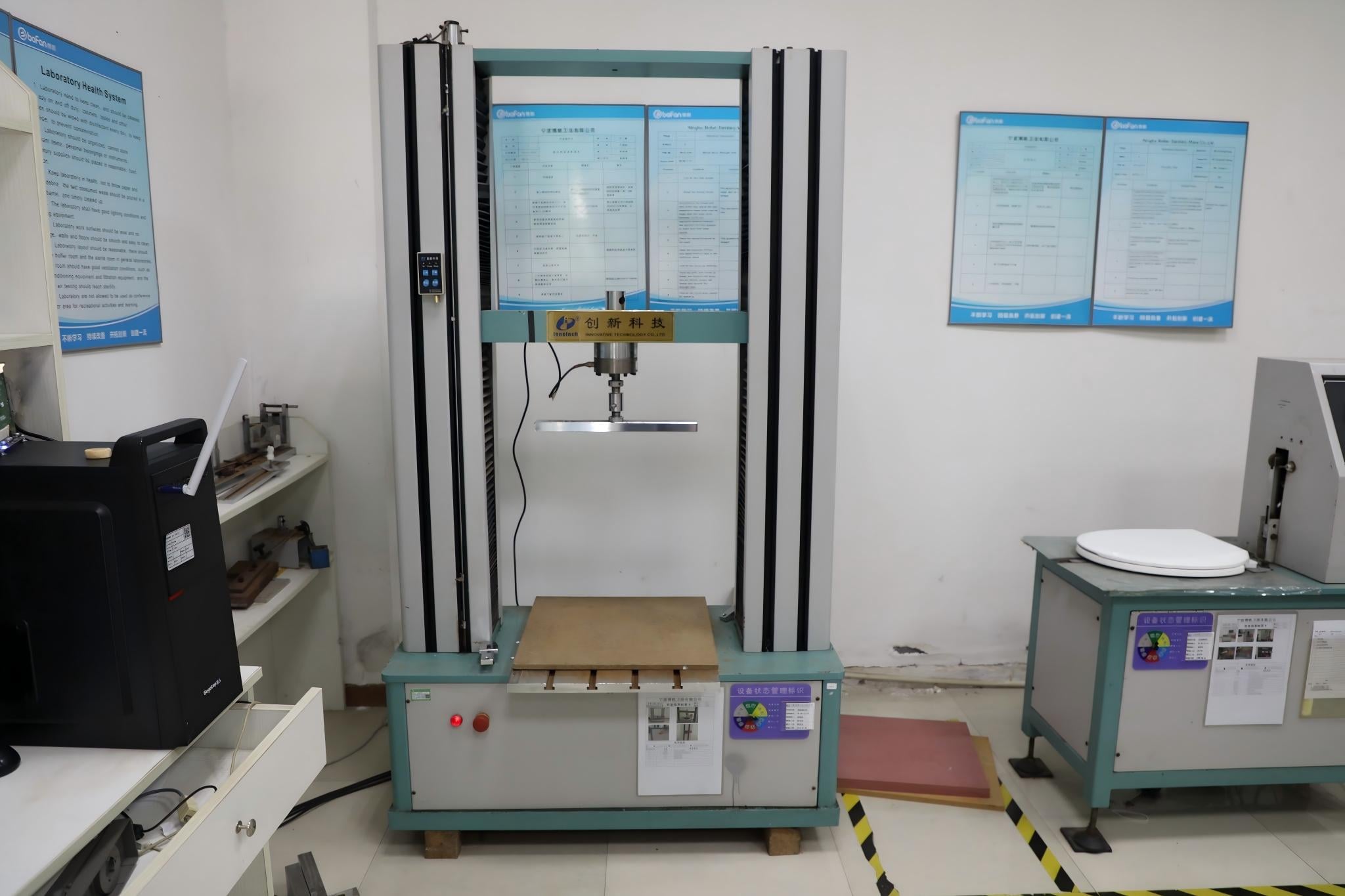
Main functions: Apply static or quasi-static forces to the toilet seat cover and its accessories, and measure mechanical indicators such as failure load, deformation and stiffness.
Testing items: Maximum bearing capacity (failure load), yield/rupture position, deformation amount, elastic recovery, stiffness.
Remarks: Used for structural strength verification and design validation. Loading rate and termination conditions can be set according to customer or national standards.
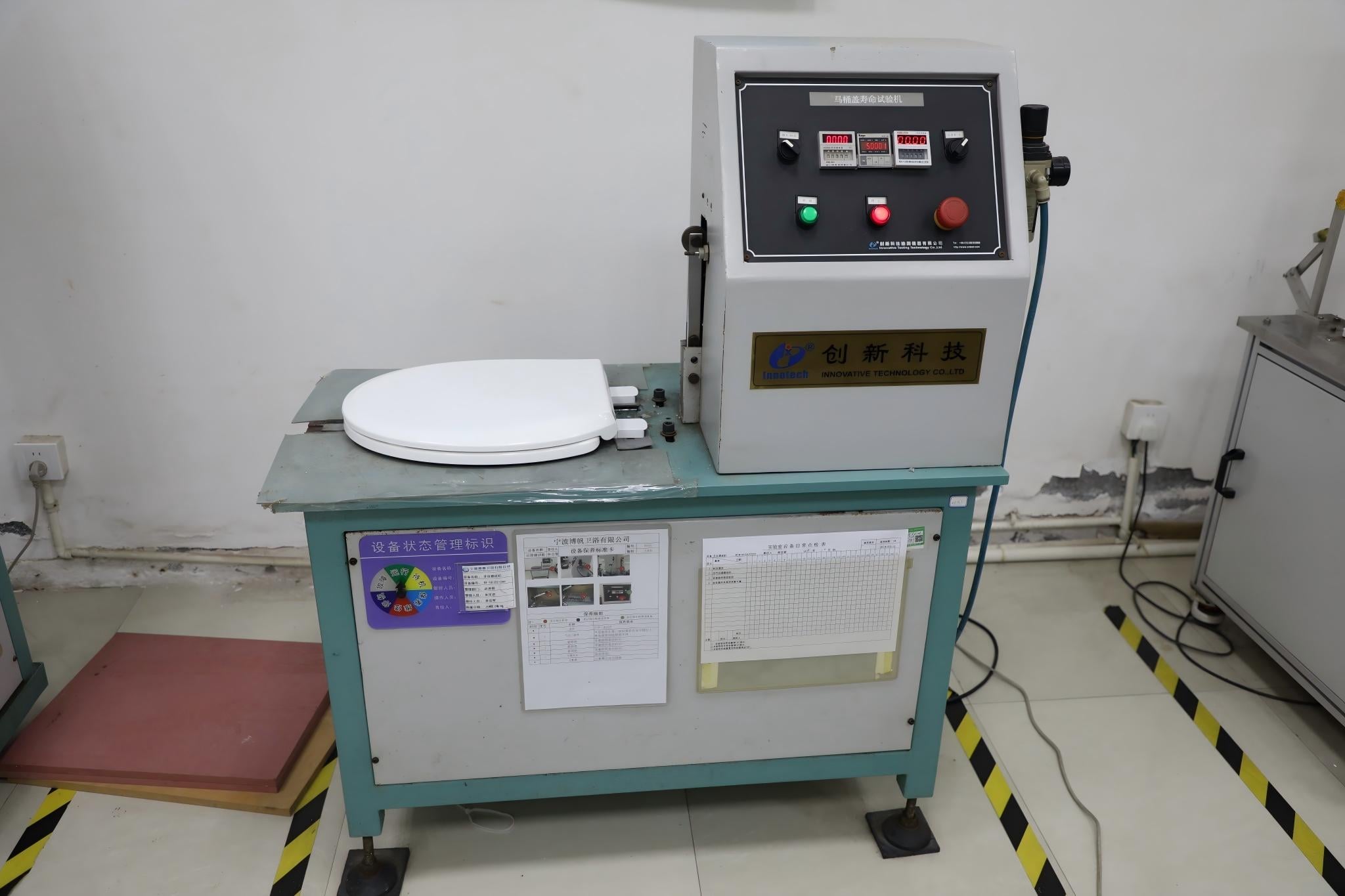
Main functions: The durability performance and failure modes of hinges and connecting components are evaluated by repeatedly opening and closing to simulate usage scenarios.
Testing items: Failure due to the number of opening and closing cycles, loose hinges, jamming, and fatigue damage of connecting parts.
The common setting is 25,000 or 50,000 cycles;
Remarks:The number of failure cycles can be recorded and the failure forms can be checked.
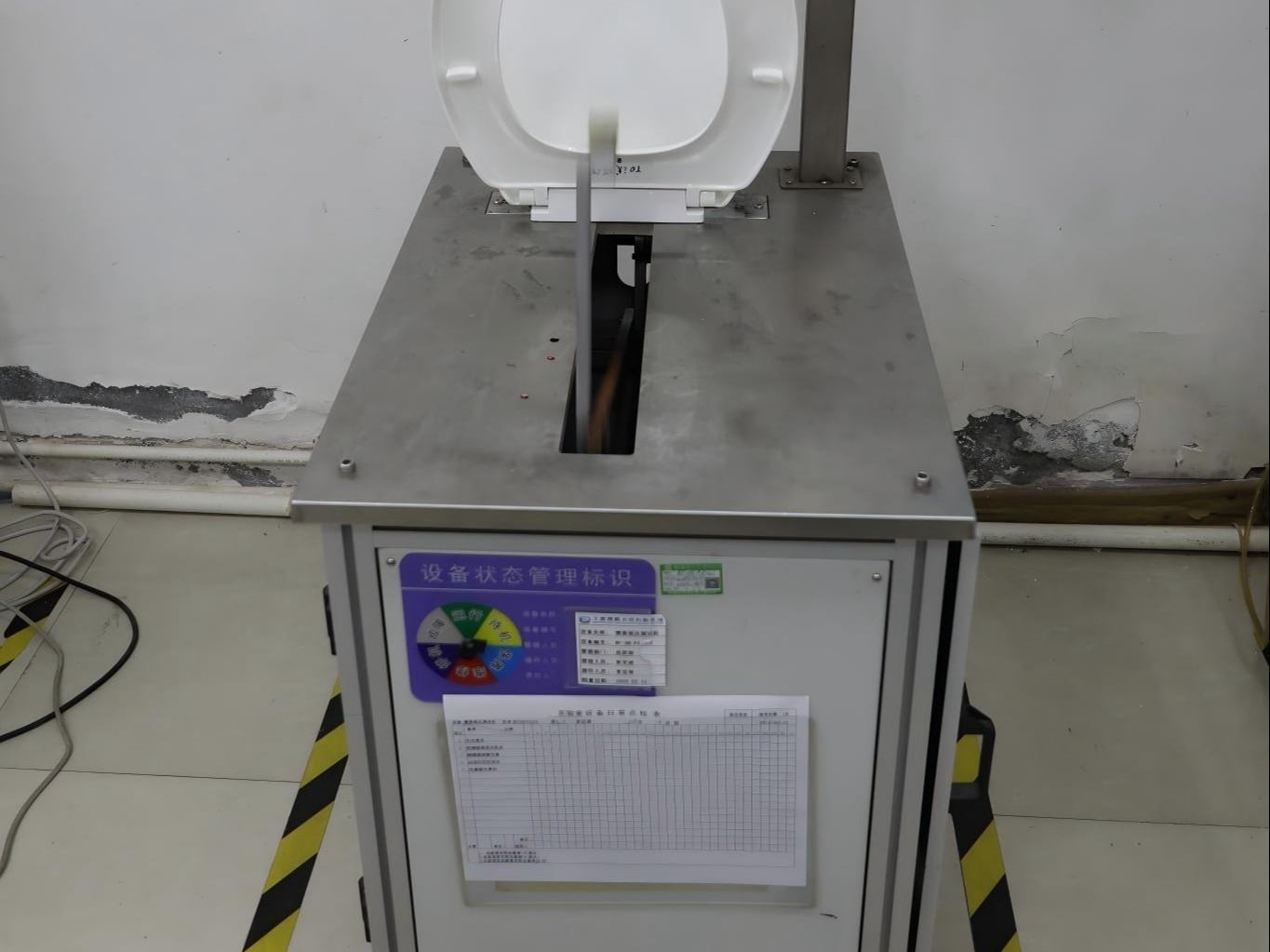
Main functions: Simulate the deceleration and pressure impact behavior of the cover plate to test the performance of the decelerator and the impact resistance and pressure resistance of the cover plate.
Testing items: Deceleration behavior of the decelerator, cracks/fractures after impact, indentation and rebound capacity, functional failure.
Remarks: It is suitable for verifying the impact safety of the descent mechanism and the cover plate. It can be tested in conjunction with the hinge test.
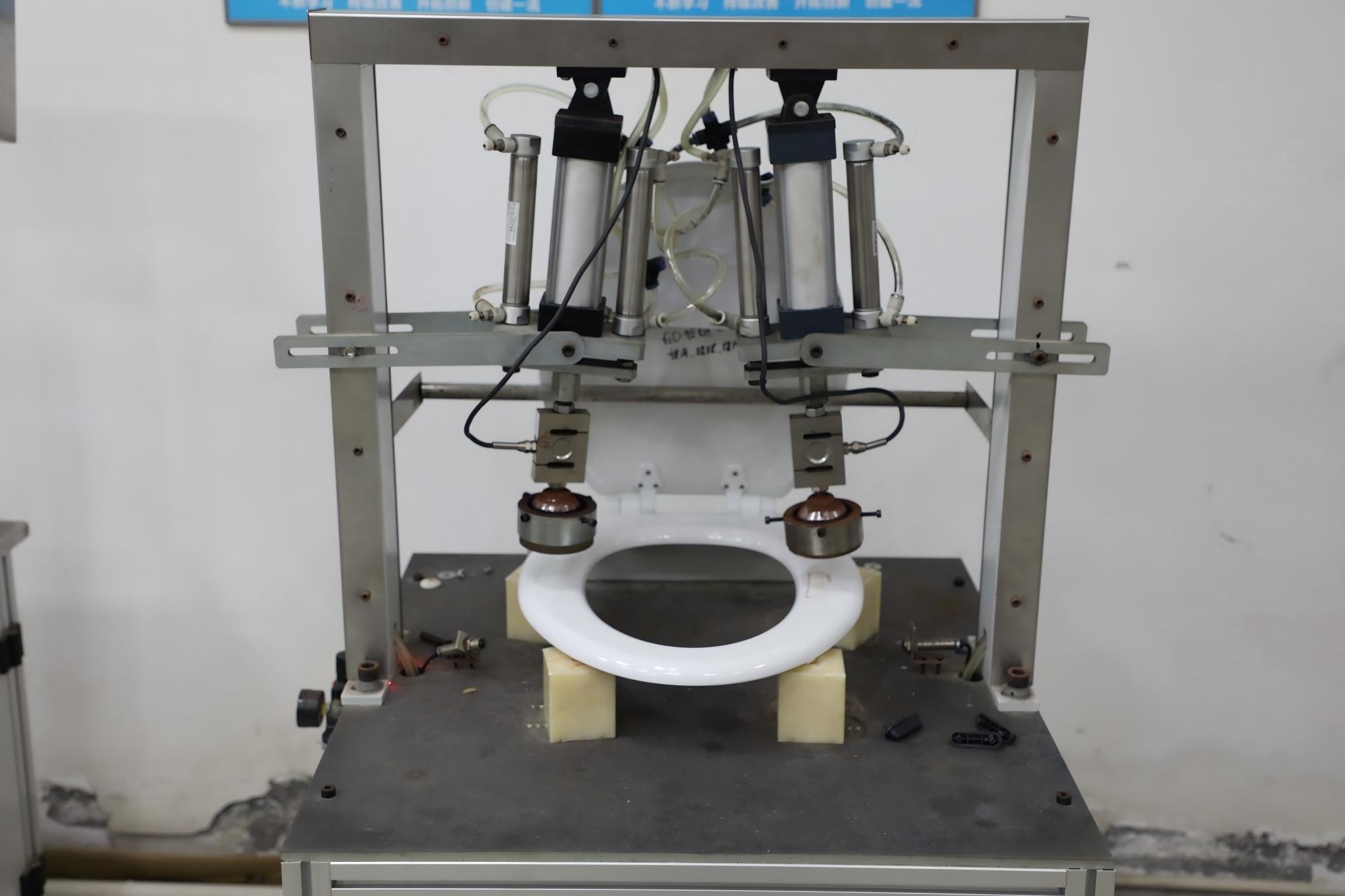
Main functions: Apply cyclic loads that swing left and right or front and back to simulate the dynamic stress generated after the user sits down and evaluate the fatigue life of the seat ring.
Testing items: Swing cycle number, crack/fracture, loosening of fasteners, long-term deformation amount.
Remarks: Usually, 1200N or other load-bearing values are set according to standards, which are mostly used for durability life and fatigue failure assessment.
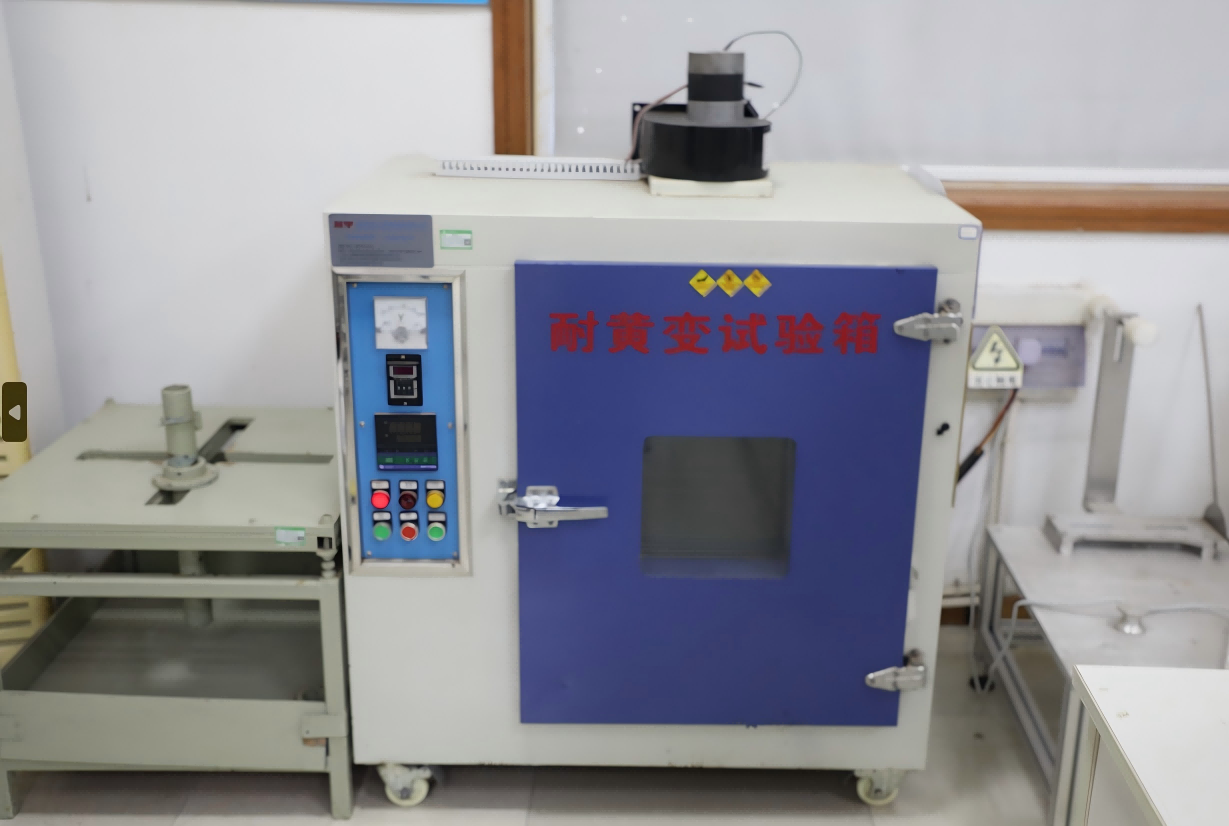
Main functions: The yellowing and color difference changes of plastic parts are evaluated through long-term use simulation of UV light exposure or high-temperature aging environment.
Testing items: ΔE color difference value, degree of yellowing in appearance, surface powdering or cracking, performance degradation.
Remarks: It is often used in conjunction with a colorimeter to record quantitative color differences, and the yellowing resistance grade is determined according to the accelerated aging time/temperature standard.
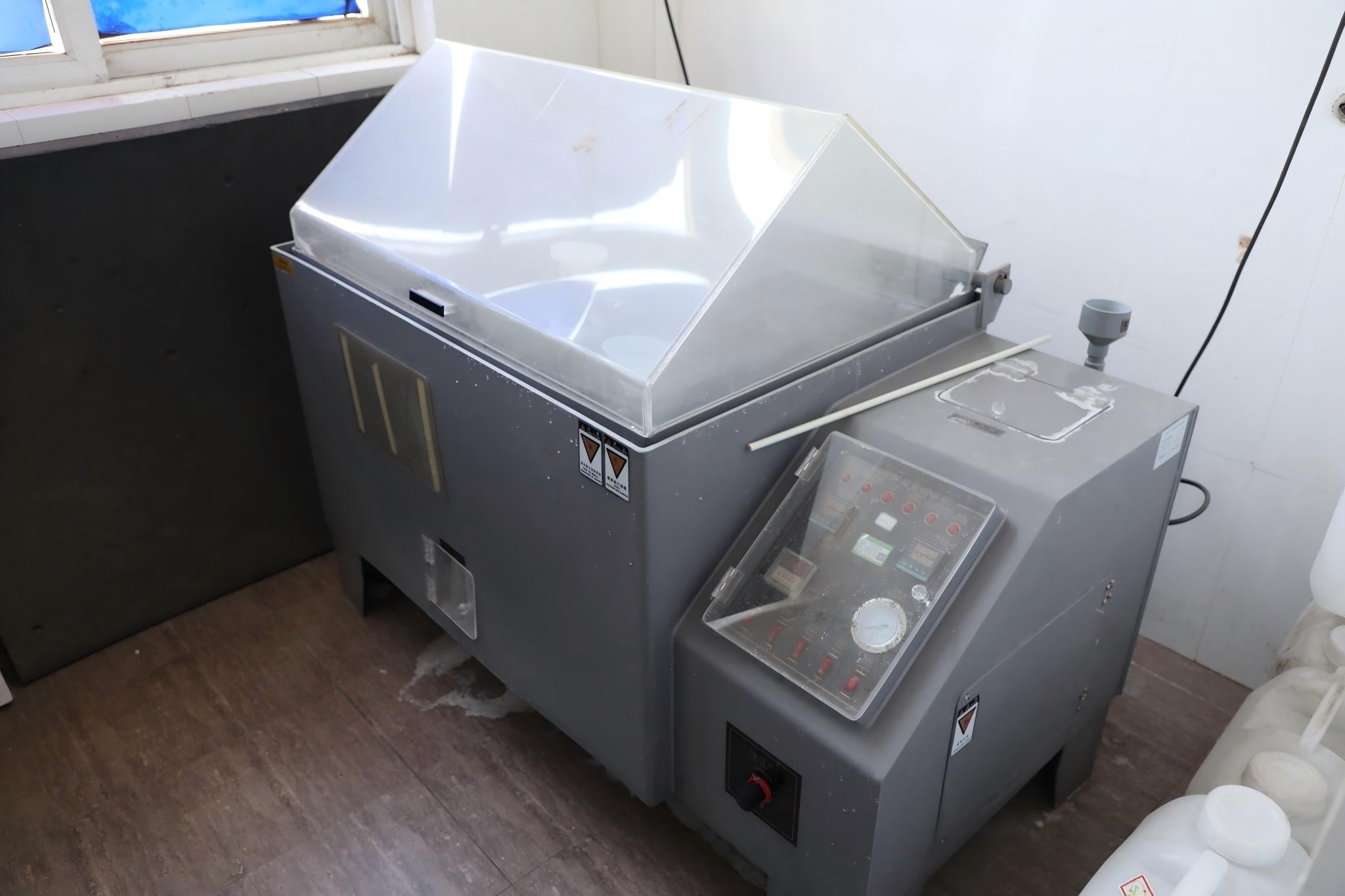
Main functions: It accelerates the corrosion process in a salt spray environment and is used to test the corrosion resistance of metal hinges, screws and surface treatment layers.
Testing items: The time of rusting occurrence, the area of corrosion spots, coating peeling, and the depth of corrosion.
Remarks: It is recommended to conduct comparative tests by setting the concentration, temperature and cycle time in accordance with the GB/T or ASTM salt spray standards.
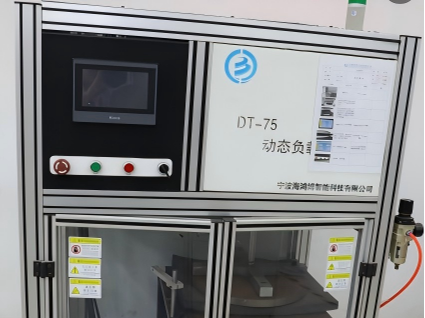
Main functions: Conduct multi-condition dynamic loading tests (such as vibration, torsion or shock) to evaluate the reliability of the product under complex dynamic loads.
Testing items: Dynamic fatigue life, loosening/fracture point, resonance and fatigue crack propagation conditions.
Remarks: It is recommended that the equipment parameters and test plans be aligned with the equipment manual or third-party testing standards to confirm the specific test capabilities.