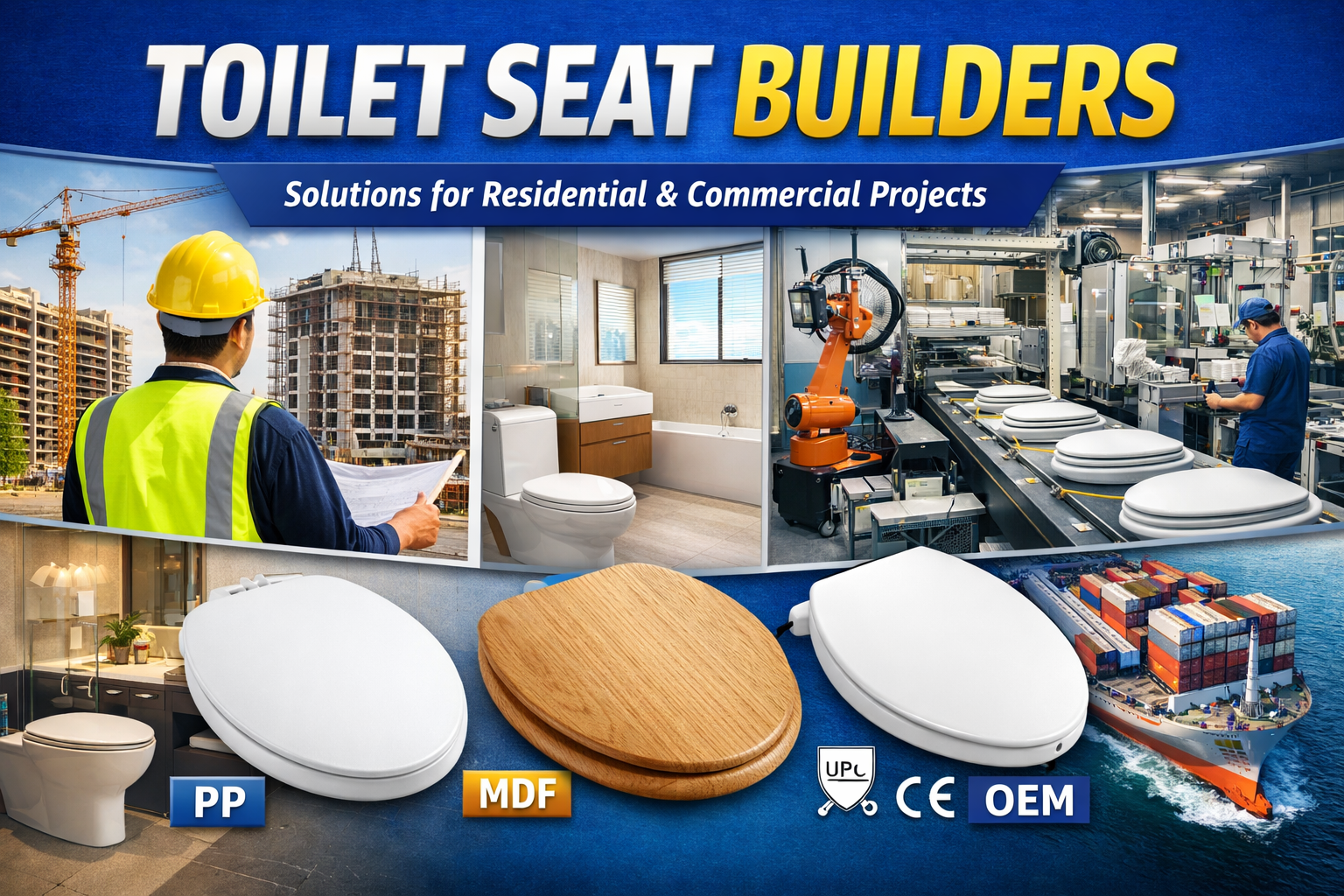
Toilet Seat Builders: Complete Guide for Residential & Commercial Construction Projects
When planning a residential development, hotel project, or commercial complex, most builders focus on structural systems, tiles, and sanitary ceramics. However, one small but critical component often determines long-term user satisfaction and maintenance cost — the toilet seat.
Professional toilet seat builders and OEM manufacturers play a vital role in construction supply chains. For property developers, contractors, procurement managers, and engineering companies, selecting the right toilet seat supplier impacts durability, compliance, cost efficiency, and installation speed.
This complete guide explains how toilet seat builders support construction projects and how to choose the right manufacturing partner.
Who Are Toilet Seat Builders?
The term “toilet seat builders” can refer to two different roles in the industry:
- Construction builders and developers who require bulk toilet seat supply for projects.
- OEM toilet seat manufacturers who design and produce seats for residential and commercial installations.
In large-scale projects, builders typically collaborate with specialized manufacturers that provide:
- Bulk production capacity
- Standardized sizing compatibility
- Certified products (UPC, CE, etc.)
- Custom packaging or branding
- Flexible delivery scheduling
Professional toilet seat builders are not simply product suppliers — they are long-term engineering partners.
Why Toilet Seat Selection Matters in Construction Projects
In multi-unit developments, a single product decision gets multiplied hundreds or thousands of times.
Choosing the wrong toilet seat supplier can result in:
- Installation mismatches (wrong hole distance or shape)
- Early product failure
- High maintenance costs
- Negative tenant feedback
- Delayed project handover
Choosing the right toilet seat builder ensures:
- Stable product quality
- Compliance with local regulations
- Fast installation
- Reduced long-term maintenance
- Consistent visual aesthetics across units
Key Factors Builders Should Consider When Choosing a Toilet Seat Manufacturer
1. Certification & Market Compliance
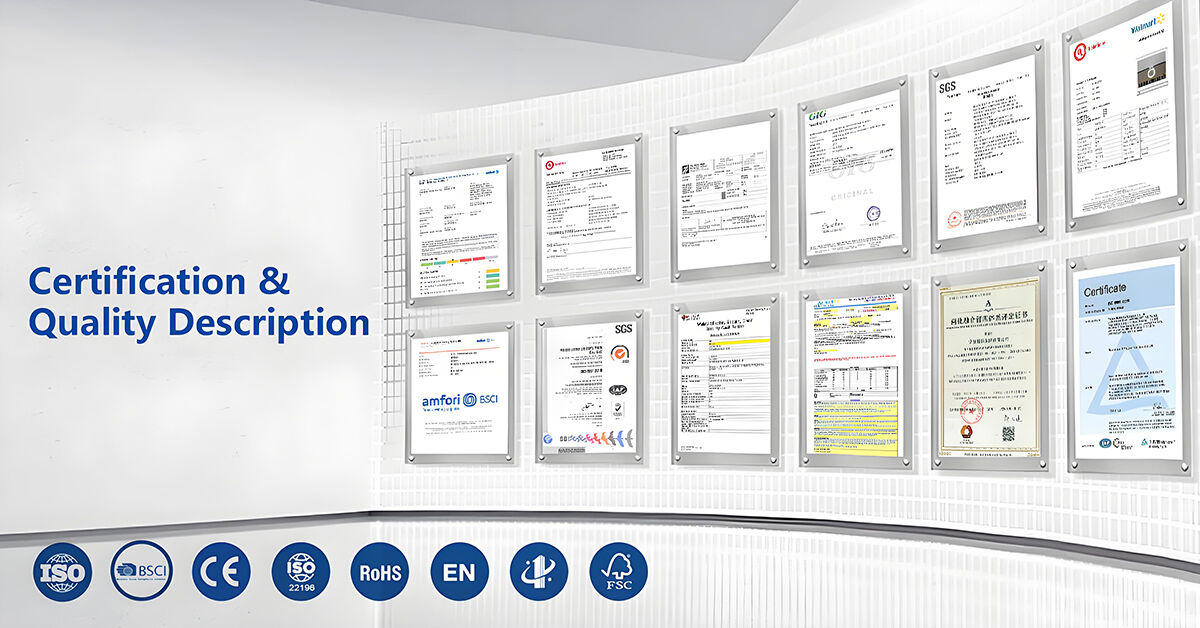
Different regions have different regulatory standards.
- North America: UPC / CSA compliance
- Europe: CE & REACH standards
- Australia: Water efficiency standards
- Commercial projects: Anti-bacterial material requirements
Professional toilet seat builders must provide certification documentation and testing reports to ensure smooth customs clearance and project approval.
2. Production Capacity & Lead Time
Construction timelines are strict. Delays can cause cascading project costs.
Builders should verify:
- Monthly production capacity
- Typical lead time (20–35 days is standard for bulk orders)
- Emergency production flexibility
- Raw material stability
A reliable toilet seat builder should handle both large OEM orders and smaller project-based shipments.
3. Standard Size Compatibility
One of the most common installation issues comes from incorrect sizing.
Builders must confirm:
- Round vs Elongated shapes
- U-shape vs V-shape
- Standard hole distance (US, EU, Asia differ)
- Adjustable hinge systems
Experienced manufacturers design adjustable hinge systems that reduce installation errors and speed up project completion.
Best Materials for Builder Projects
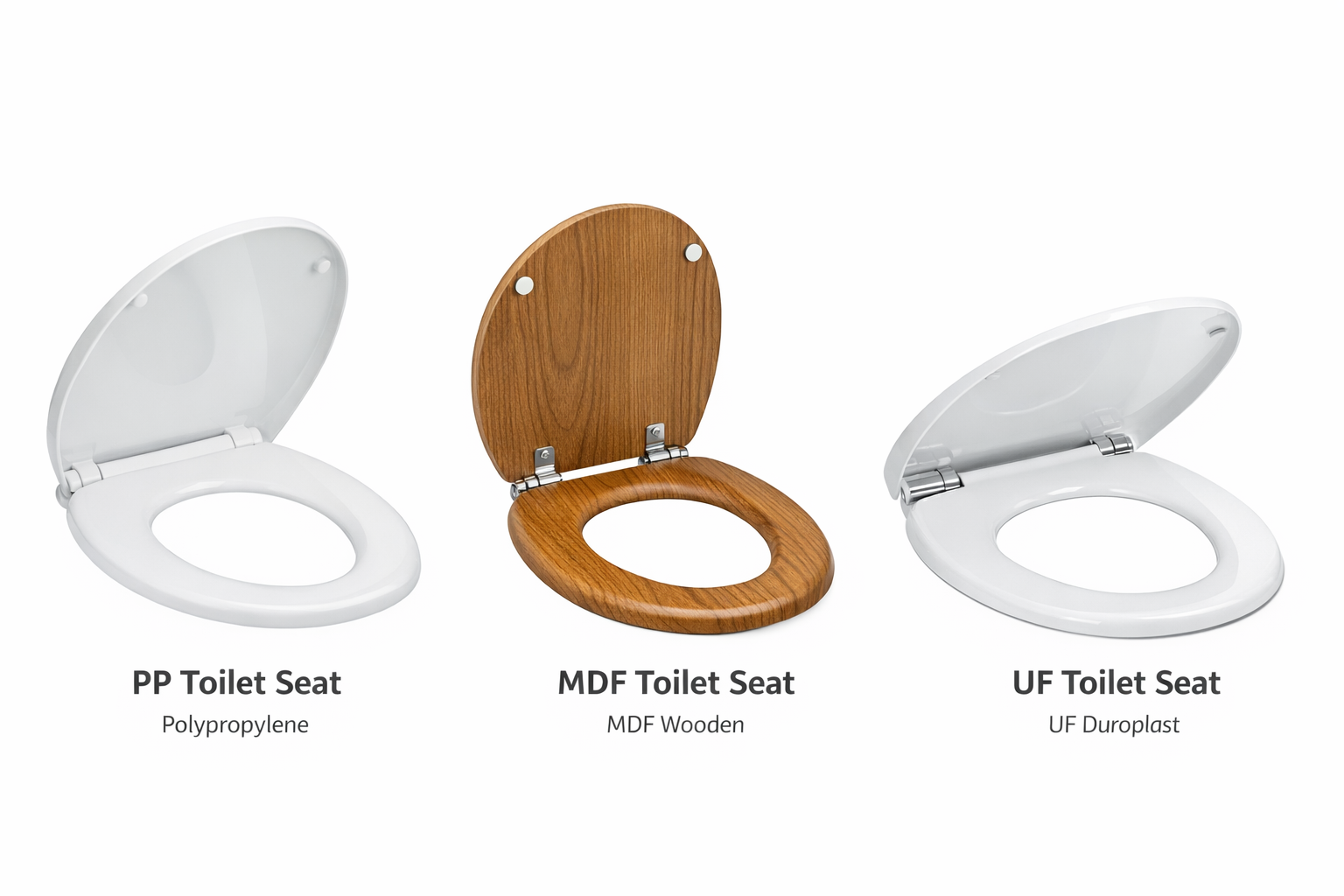
Different construction budgets require different materials. Below is a practical breakdown.
PP (Polypropylene) – Cost-Effective & Lightweight
- Affordable
- Moisture resistant
- Suitable for rental properties
- Easy maintenance
- Compatible with soft-close hinges
Best for: Mid-range apartments, large-scale housing projects
MDF / Molded Wood – Durable & Premium Feel
- Heavier and more solid
- Premium surface finish
- Better perceived quality
- Custom print & veneer options available
Best for: Residential developments & hotels
UF (Duroplast) – High-End & Commercial Grade
- Scratch resistant
- Anti-yellowing
- Hard thermoset material
- Premium European standard
Best for: Commercial buildings & high-end projects
Residential vs Commercial Applications
Residential Projects
- Focus on aesthetics
- Balanced cost-performance ratio
- Soft-close functionality preferred
- Easy installation required
Commercial Projects
- High durability required
- Anti-bacterial surface important
- Strong hinge system
- Heavy usage resistance
Professional toilet seat builders must understand usage differences and recommend accordingly.
Importance of Hinge Technology in Builder Projects
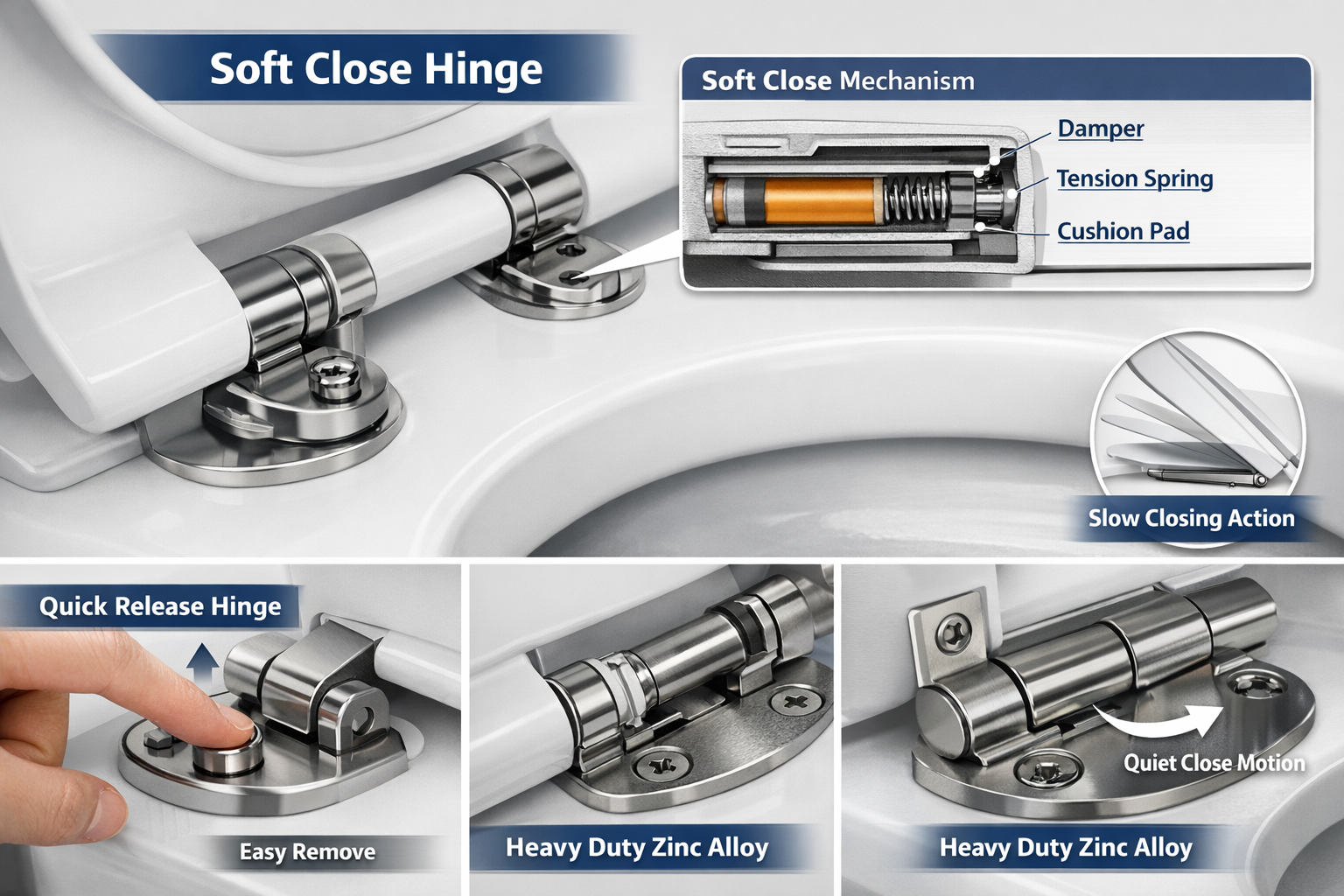
The hinge system is the core technical barrier in toilet seat manufacturing.
Hinge variations include:
- Soft-close (with damping system)
- Quick-release (easy cleaning)
- Top-mount installation
- Bottom-mount installation
- Zinc alloy vs stainless steel components
High-quality hinge systems reduce:
- Return rates
- Installation time
- Maintenance requests
Builders should prioritize suppliers with strong hinge R&D capability and patented systems.
OEM & Customization Solutions for Developers
Large-scale developers often require:
- Custom logo engraving
- Project-specific packaging
- Color matching
- Anti-bacterial material integration
- Special hinge strength requirement
- Environmentally friendly materials (coffee fiber, straw composite)
Professional toilet seat builders offer flexible production lines capable of adapting to project needs.
Customization is no longer a luxury — it is a competitive necessity in modern real estate.
Manufacturing Capabilities: What Builders Should Verify
Before signing contracts, builders should evaluate:
- In-house mold design capability
- Injection molding or compression molding lines
- Surface finishing (printing / coating / spray)
- Quality inspection procedures
- Packaging standards
- Supply chain backup systems
Factories with integrated production lines ensure better consistency and shorter lead times.
Sustainable Materials & Environmental Trends
Modern construction increasingly demands sustainable building materials.
Leading toilet seat builders now offer:
- Coffee fiber composite
- Straw composite
- Recyclable PP materials
- Low VOC surface finishing
These options help developers meet green building standards and ESG reporting requirements.
Cost Control for Large-Scale Projects
In project procurement, toilet seats are considered standardized fixtures. However, small savings per unit can translate into large budget differences.
Cost optimization strategies include:
- Material selection adjustment
- Bulk packaging
- Standardized hinge systems
- Shared mold systems
- Long-term supplier agreements
Experienced toilet seat builders assist procurement teams in balancing quality and budget efficiency.
Typical Lead Time & Order Structure
For construction projects:
- MOQ: Negotiable depending on model
- Sample lead time: 3–7 days
- Mass production: 20–35 days
- High season: Advance booking recommended
Builders should align procurement timelines with factory production schedules to avoid delays.
Why Many Developers Work with Asian Toilet Seat Builders
Asia-based manufacturers offer:
- Competitive pricing
- Large-scale capacity
- Mature export experience
- Flexible OEM/ODM support
- Integrated supply chain systems
For North America and Europe, many factories also operate overseas production facilities to reduce tariff impact and improve shipping efficiency.
How to Build a Long-Term Partnership with a Toilet Seat Manufacturer
Builders should evaluate:
- Response speed
- Technical communication clarity
- Documentation accuracy
- After-sales service commitment
- Replacement part availability
Long-term supplier relationships reduce project risk and improve negotiation leverage.
Final Thoughts: Choosing the Right Toilet Seat Builder
Toilet seats may appear to be a minor fixture, but in large-scale developments, they directly impact user experience, brand perception, and maintenance budgets.
Professional toilet seat builders provide more than products — they provide engineering support, certification compliance, flexible customization, and stable mass production.
Whether you are developing residential apartments, commercial complexes, hotels, or public facilities, partnering with an experienced OEM toilet seat manufacturer ensures:
- Stable quality
- Efficient installation
- Regulatory compliance
- Long-term durability
- Competitive pricing
If you are sourcing toilet seats for your next construction project, working with an experienced and flexible toilet seat builder can significantly improve project outcomes.
Table of Contents
- Toilet Seat Builders: Complete Guide for Residential & Commercial Construction Projects
- Who Are Toilet Seat Builders?
- Why Toilet Seat Selection Matters in Construction Projects
- Key Factors Builders Should Consider When Choosing a Toilet Seat Manufacturer
- Best Materials for Builder Projects
- Residential vs Commercial Applications
- Importance of Hinge Technology in Builder Projects
- OEM & Customization Solutions for Developers
- Manufacturing Capabilities: What Builders Should Verify
- Sustainable Materials & Environmental Trends
- Cost Control for Large-Scale Projects
- Typical Lead Time & Order Structure
- Why Many Developers Work with Asian Toilet Seat Builders
- How to Build a Long-Term Partnership with a Toilet Seat Manufacturer
- Final Thoughts: Choosing the Right Toilet Seat Builder