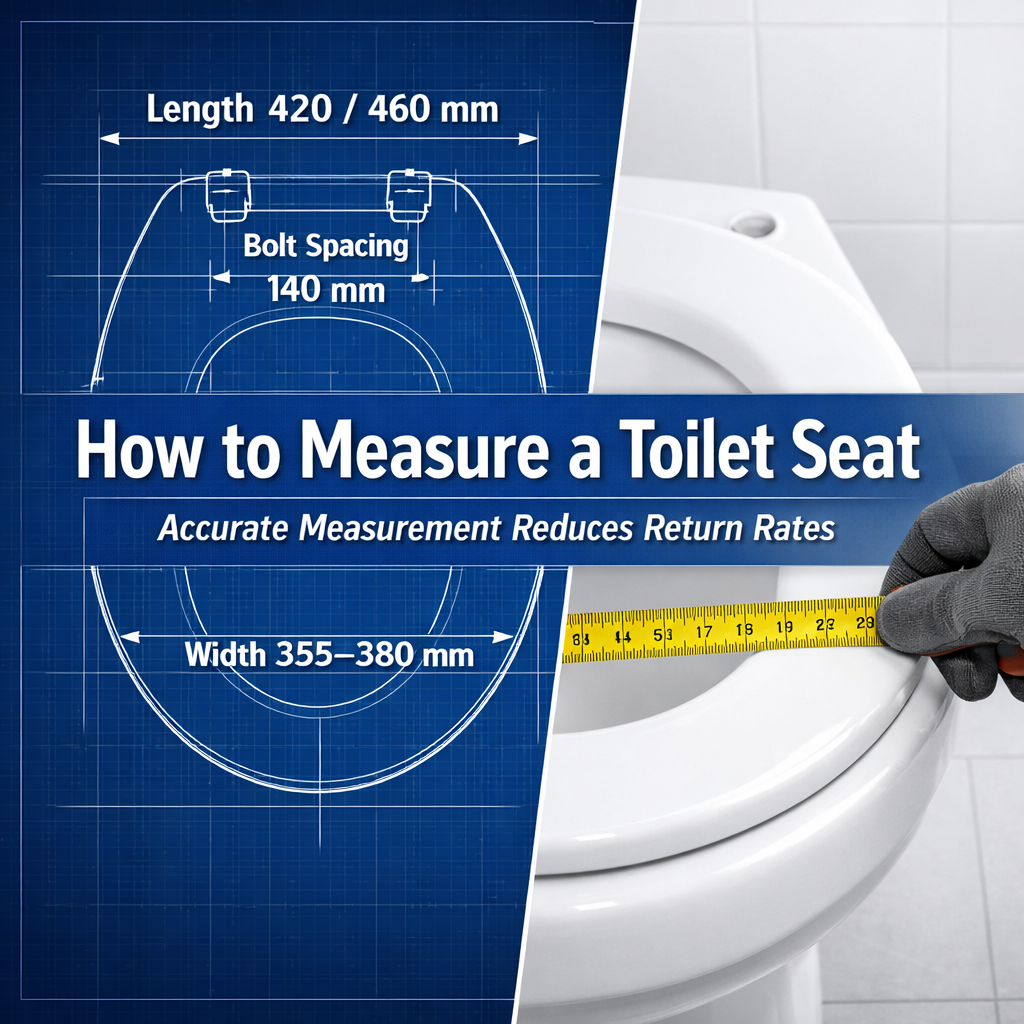
How to Measure a Toilet Seat
Accurate measurement is the first and most important step before replacing or sourcing a toilet seat. Choosing the wrong size can cause installation problems, customer complaints, and higher return rates — especially for retail and distribution projects.
Whether for home use or bulk orders, knowing standard toilet seat dimensions ensures proper fit and long-term stability.
1. Identify the Toilet Bowl Shape
Start by identifying your toilet bowl shape.
There are two main types:
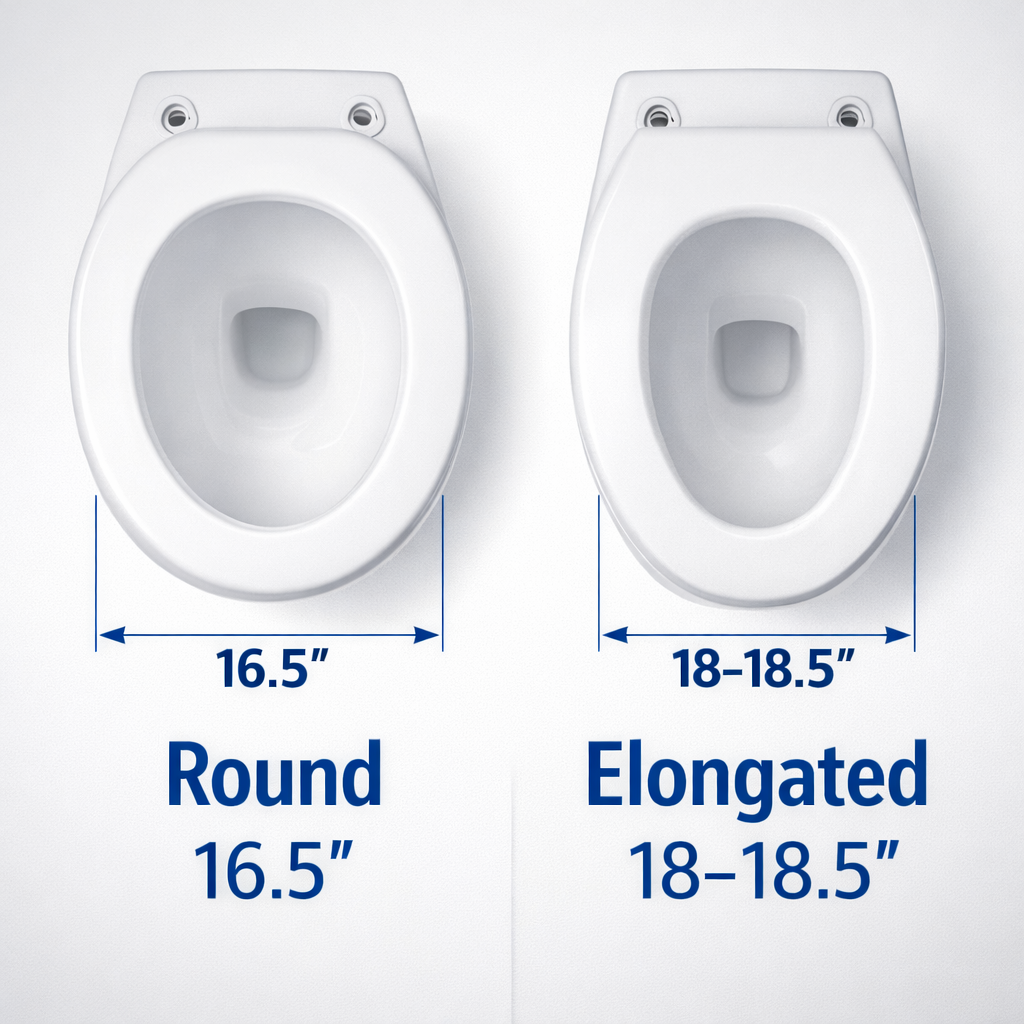
- Round Toilet Bowl – About 16.5 inches (420 mm) in length. Common in compact bathrooms.
- Elongated Toilet Bowl – About 18–18.5 inches (460–480 mm) in length. More comfortable and increasingly popular in modern markets.
Tip: Using the wrong shape is one of the main reasons for returns and replacements. For distributors, knowing regional preferences (like elongated bowls in North America) helps with planning and compatibility.
2. Measure the Bowl Length
Use a measuring tape to measure from the center of the bolt holes to the front edge of the toilet bowl.
- Keep the tape straight for an accurate measurement.
- Record both inches and millimeters for international sourcing.
- Most toilet seats allow a tolerance of ±5 mm. Adjustable hinges can provide more flexibility and reduce compatibility risks.
3. Measure the Bowl Width
Next, measure the widest part of the bowl.Typical width: 14–15 inches (355–380 mm).Width affects seat alignment, stability, and appearance.Slim-design seats may require more precise width matching.
4. Measure the Bolt Hole Spacing
- Standard spacing: 5.5 inches (140 mm).
- Most residential toilets follow this, but commercial or specialty models can vary.
- Accurate bolt spacing ensures proper hinge installation and prevents wobbling.
5. Check Hinge Compatibility
Measuring the bowl is not enough — hinge type is also crucial.
Common hinge types:
- Bottom-fix hinges
- Top-fix installation systems
- Adjustable hinges
- Quick-release hinge systems
For bulk buyers or OEM projects: Adjustable hinges offer flexibility when working with multiple brands. Benefits include:
- Reduced installation errors
- Lower return rates
- Higher distributor satisfaction
6. Common Measurement Mistakes
Avoid these common mistakes: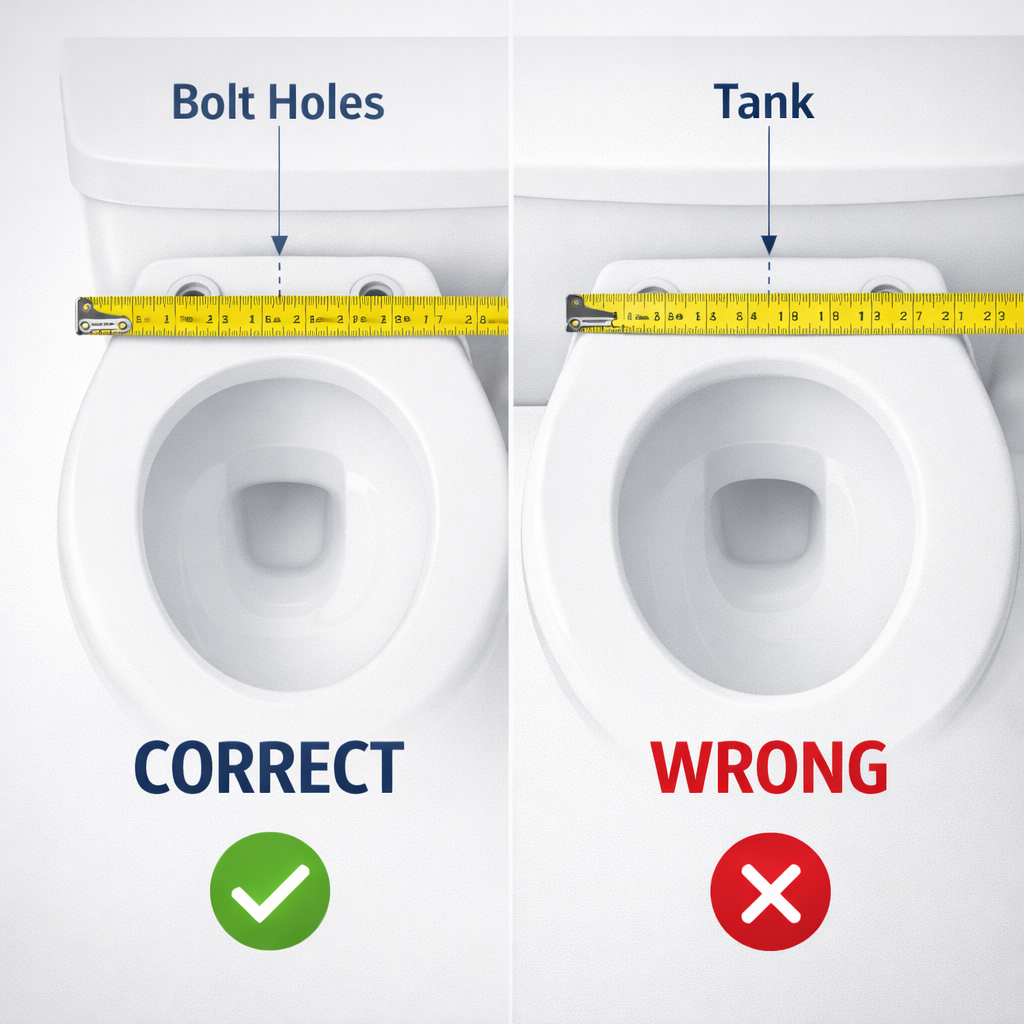
- Measuring from the tank instead of the bolt holes
- Ignoring the bowl shape
- Assuming all seats fit every toilet
- Overlooking hinge type
Even small errors can lead to poor alignment or instability.
7. Measurement Considerations for Replacement Projects
When replacing a seat, also consider:
- Switching from plastic to wooden seats
- Adding a soft-close feature
- Changing from standard hinges to quick-release hinges
Note: Different materials may affect fitting slightly. Molded wood seats are heavier and more stable but require precise hinge alignment.
8. Why Accurate Measurement Matters for Bulk Buyers
For manufacturers, distributors, and project contractors, proper measurement impacts business performance:
- Reduces return rates
- Minimizes post-installation complaints
- Improves compatibility across brands
- Enhances end-user satisfaction
- Protects retail reputation
Understanding standard dimensions and tolerance ranges ensures smoother distribution and installation.
Conclusion
Knowing how to measure a toilet seat correctly is essential for replacement and sourcing.
Steps to follow:
- Check the bowl shape
- Measure length and width carefully
- Confirm bolt spacing
- Check hinge compatibility
This ensures the seat fits well and lasts longer. For distributors and project buyers, accurate measurement reduces risk and improves customer satisfaction.
If you are sourcing molded wood or soft-close toilet seats with adjustable hinges, understanding standard dimensions is the foundation for choosing the right product.
Table of Contents
- How to Measure a Toilet Seat
- 1. Identify the Toilet Bowl Shape
- 2. Measure the Bowl Length
- 3. Measure the Bowl Width
- 4. Measure the Bolt Hole Spacing
- 5. Check Hinge Compatibility
- 6. Common Measurement Mistakes
- 7. Measurement Considerations for Replacement Projects
- 8. Why Accurate Measurement Matters for Bulk Buyers
- Conclusion