Standard Toilet Seat Solutions for Multi-Unit Housing
For multi-unit housing, the most effective toilet seat solution is usually a small, standardized range rather than a different model for every apartment. Developers should define the toilet bowl shape, dimensions, fixing method, material, hinge function and replacement requirements before ordering. PP seats are often suitable for standard and rental units, while UF or MDF may be used for upgraded apartments. Standardizing one primary model and one approved alternative can simplify installation, spare-stock management and future replacements while still allowing different specifications for standard, premium and accessible housing units.
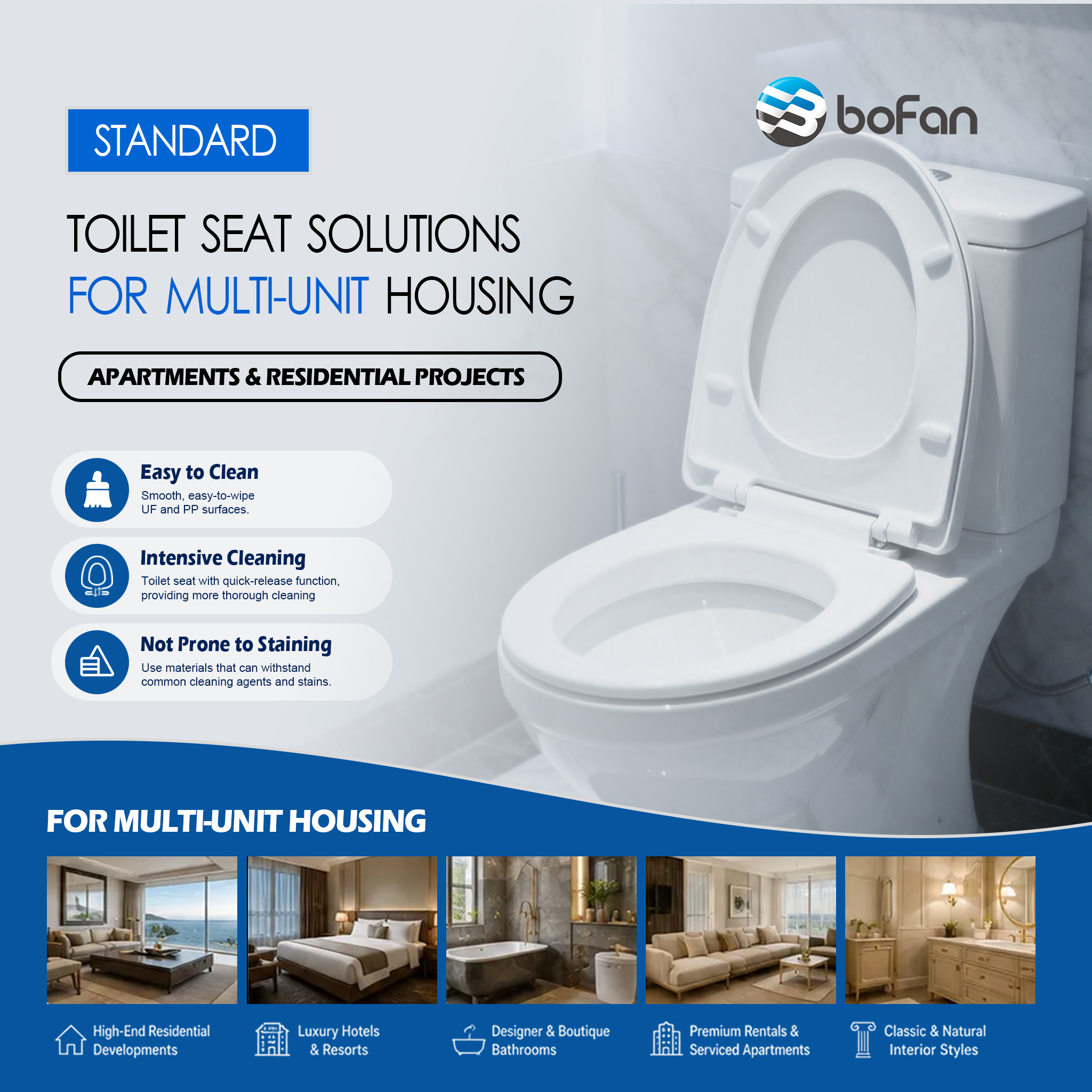
Brief: A modern multi-building apartment development combined with a close-up of identical white toilet seats installed across several bathrooms.
What Are Standard Toilet Seats for Multi-Unit Housing?
Standard toilet seats for multi-unit housing are models selected for repeated installation across apartments, condominiums, student accommodation or long-term rental properties.
“Standard” does not mean that every residential project must use the cheapest or most basic seat. It means that the developer defines a controlled specification that can be purchased, installed and replaced consistently across many units.
A complete standard normally covers:
- Material and surface finish
- Round or elongated shape
- Overall length and width
- Hinge-center distance
- Top-fix or bottom-fix installation
- Standard or soft-close hinge
- Quick-release requirement
- Color and appearance
- Individual and master-carton packaging
- Spare-unit and repeat-order requirements
BOFAN’s toilet seats for apartments and residential projects are organized around this project logic, including options for new residential buildings, rentals, student housing and renovation programs.
Why Does Standardization Matter in a Multi-Unit Project?
A single apartment may require only one or two toilet seats. A multi-unit housing project may require hundreds or thousands. At this scale, small specification problems become project-wide problems.
If several seat models are used without a clear reason, installers must identify which product belongs in each bathroom. Property managers may also need to hold multiple replacement models, hinge sets and fixing components.
This creates four common risks.
Installation errors
A seat can look suitable but still fail to fit correctly because the bowl length, width, shape or fixing distance is different. Clear standardization allows installers to work from one approved specification.
Inconsistent resident experience
Two apartments in the same building should not receive visibly different products unless they belong to different fit-out tiers. Consistency supports a more professional handover.
Complicated spare-stock management
If a property operator uses many seat models, the maintenance team must identify the exact model before each replacement. One primary SKU makes future service easier.
Difficult repeat ordering
When specifications are not documented, a repeat order may not match the original installation. A controlled product code, drawing, sample and packaging record make replenishment more reliable.
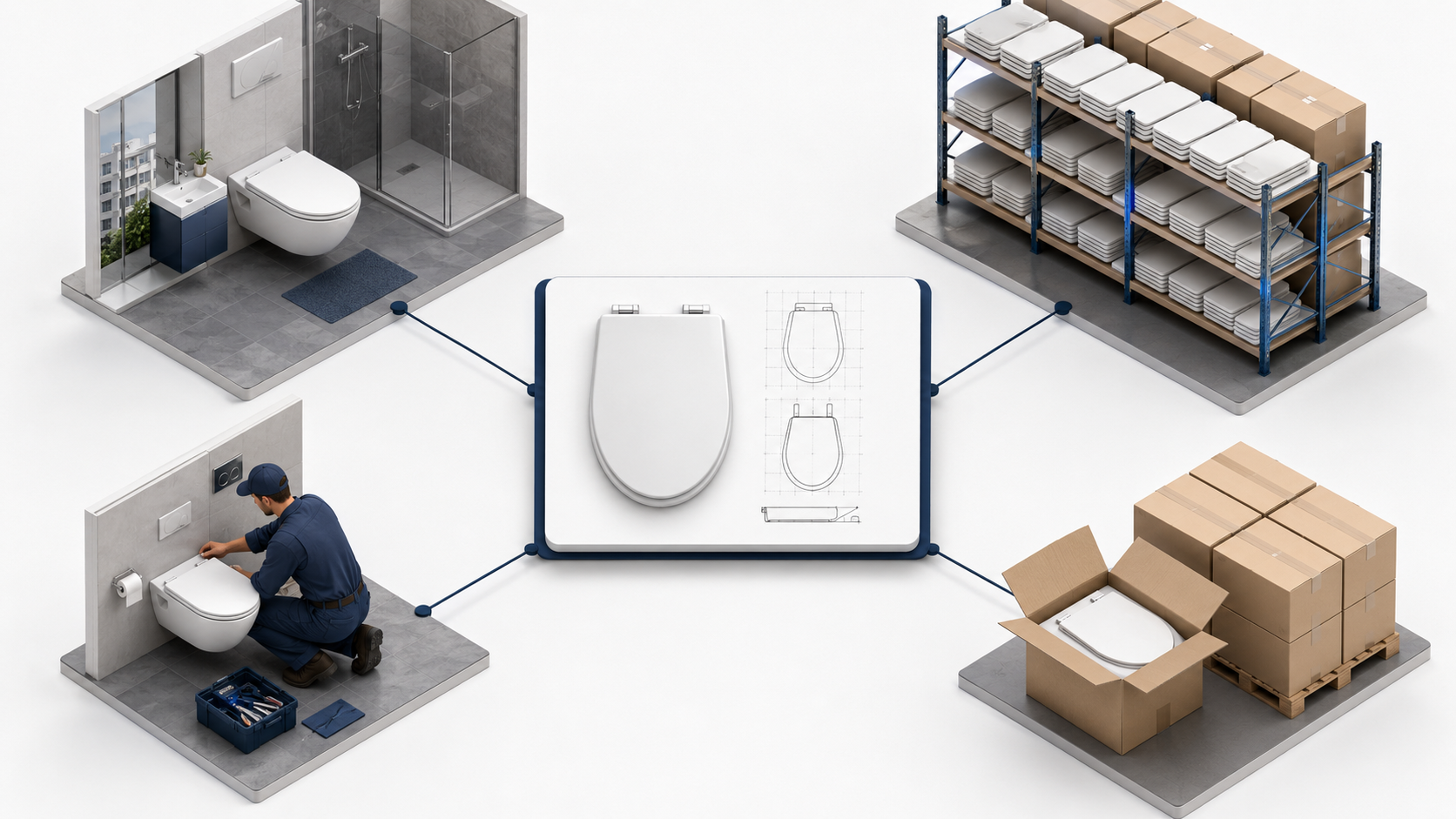
Brief: One approved toilet seat model flowing into installation, spare stock, maintenance and repeat ordering.
Which Specifications Should Be Standardized First?
The specification should begin with compatibility rather than appearance.
1. Toilet bowl shape
The main categories are round and elongated, but actual ceramic dimensions still vary by market and manufacturer. Buyers can review BOFAN’s round toilet seats and elongated toilet seats when building a project shortlist.
The procurement team should provide a ceramic drawing, physical sample or confirmed measurement set before final approval.
2. Hinge-center distance
The distance between the two mounting holes must fall within the adjustment range of the selected hinge. It should never be assumed solely from the country or bowl description.
3. Fixing method
Top-fix installation is useful when the installer cannot easily reach the underside of the ceramic. Bottom-fix systems may be appropriate where underside access is available. The approved fixing method should match the actual ceramic and site conditions.
4. Material
PP, UF and MDF serve different project positions. The material should be chosen according to budget, humidity, appearance, cleaning practices and expected use.
5. Hinge function
A project may choose a simple standard hinge, soft-close hinge or a soft-close and quick-release combination. The correct option depends on both acquisition budget and required resident experience.
6. Color and finish
White is commonly used because it is easier to coordinate across ceramic ranges. If a project uses special colors or decorative finishes, the approved color sample should be retained for repeat orders.
Which Toilet Seat Material Works Best for Multi-Family Housing?
There is no single best material for every residential building. The strongest choice depends on how the property will be sold, occupied and maintained.
| Material | Main project advantage | Suitable applications | Main consideration |
|---|---|---|---|
| PP | Lightweight, moisture-resistant and practical | Rental apartments, student housing, standard units | Choose the right structure and hinge quality |
| UF | Hard, smooth surface and premium appearance | Condos, serviced apartments, upgraded units | Higher product positioning |
| MDF | Heavier feel and decorative possibilities | Renovations, show flats, design-led units | Coating and edge protection matter |
PP for standardized residential programs
PP toilet seats are frequently considered for multi-unit housing because they are lightweight, moisture-resistant and compatible with high-volume production.
They can be paired with standard, soft-close or quick-release hinge configurations. PP is particularly practical when a property operator wants a consistent replacement program.
UF for upgraded apartments
UF is suitable when the project requires a harder surface and a more premium bathroom presentation. It may be specified for condominiums, executive apartments or upgraded unit packages.
MDF for design-led residential units
MDF supports painted, printed and decorative surfaces and offers a heavier feel. It can be used selectively in renovated apartments, model homes or residential units where bathroom aesthetics have more commercial importance.
A developer does not need to select one material for an entire portfolio. However, each building or apartment tier should have an approved standard.
Should Multi-Unit Housing Use Standard or Soft-Close Hinges?
A standard hinge has a simpler structure and can be appropriate for highly price-sensitive housing, low-use bathrooms or replacement programs where simplicity is the main objective.
A soft-close toilet seat closes in a controlled way. This reduces slamming noise and can improve the resident experience, especially in apartments where bathrooms are close to bedrooms or shared living areas.
| Decision factor | Standard hinge | Soft-close hinge |
|---|---|---|
| Initial specification | Simpler | Upgraded |
| Closing experience | Manual control required | Slow, controlled closing |
| Noise | Depends on user behavior | Reduces seat slamming |
| Suitable projects | Entry-level and basic replacement | Family apartments, condos, upgraded rentals |
| Inspection focus | Fixing stability | Fixing stability plus damper consistency |
The decision should be made by apartment tier. For example, a developer may use standard PP seats in entry-level rental units and soft-close PP or UF seats in upgraded units.
A quick-release toilet seat may also be considered where easier access around the hinge area is valuable for cleaning.
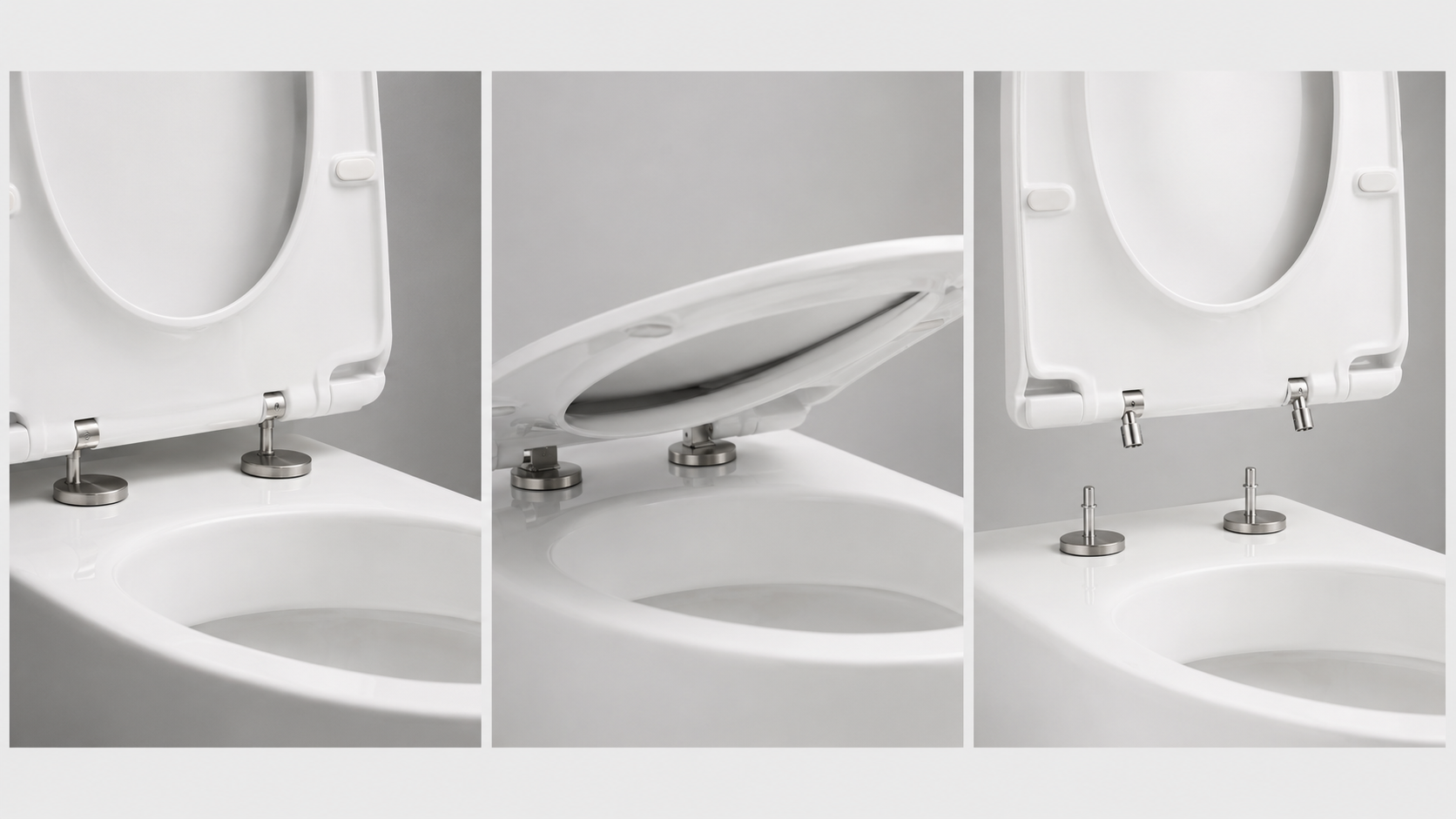
Brief: Side-by-side close-ups of a standard hinge, soft-close hinge and quick-release hinge, with short project-use labels.
What Is a Practical SKU Strategy for Multi-Unit Housing?
The goal is to reduce unnecessary variety without ignoring genuine differences between buildings or apartment tiers.
A practical structure may include:
| Project level | Suggested specification |
|---|---|
| Standard rental unit | White PP, standard or soft-close hinge, project-approved fixing |
| Family apartment | White PP soft-close, optional quick release |
| Premium condo | UF soft-close with refined surface and stable hinge |
| Renovation or show flat | MDF or UF selected for the interior design |
| Maintenance stock | Same primary model plus approved spare hinge components |
For a single building, one main seat and one alternative are usually easier to manage than five unrelated models.
The primary model should cover the majority of units. The alternative should exist only where the ceramic, design tier or operational requirement is genuinely different.
How Can Buyers Prevent Fit Problems Before Mass Installation?
Fit verification should happen before the mass order reaches the site.
Confirm dimensions
Record the bowl length, maximum width, hinge-center distance and required adjustment range. If more than one ceramic model is used, measure each one.
Review drawings and photographs
Clear top-view and side-view photographs can help the supplier understand the bowl geometry, but they should support rather than replace measurements.
Approve a physical sample
Install the sample on the actual project ceramic. Check alignment, overhang, hinge adjustment, opening angle, stability and appearance.
Run a small installation trial
For a large project, install a small batch in representative bathrooms before full rollout. This can reveal access problems, installer questions or fixing issues.
Keep an approved reference
Retain the signed specification, drawing, product code, photographs and approved sample. This reference protects consistency during repeat orders.
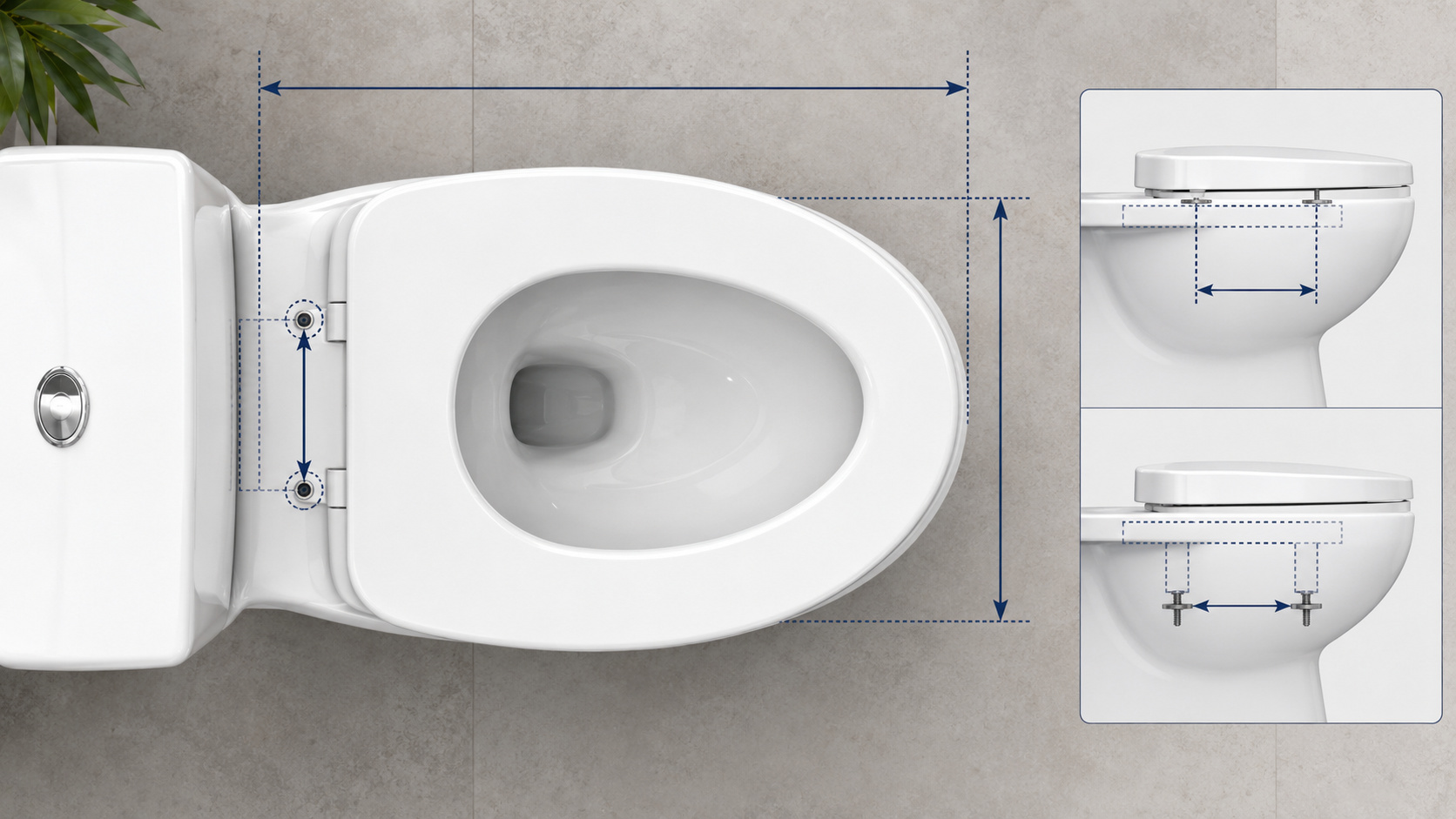
Brief: Toilet bowl top view showing length, width, hinge-center distance and fixing access.
What Should Buyers Evaluate Beyond the Unit Price?
The lowest unit price does not automatically create the lowest project cost. Buyers should also consider:
- Installation time
- Product and hinge consistency
- Replacement frequency
- Number of spare SKUs
- Cleaning and maintenance requirements
- Packaging efficiency
- Damage risk during transport and site handling
- Availability for future repeat orders
- Accuracy of drawings and technical information
A slightly more suitable standardized model may reduce labor and replacement complexity over the life of the property.
For a wider discussion of project selection, see best toilet seats for construction projects.
What Information Should Be Included in a Project RFQ?
A useful RFQ for toilet seats for multi unit housing should include:
- Target country and applicable market requirements
- Project type and number of buildings
- Total number of bathrooms and required spare quantity
- Ceramic brand, model, drawing or measurements
- Round, elongated or special bowl shape
- Preferred PP, UF or MDF material
- Standard, soft-close or quick-release function
- Top-fix or bottom-fix installation
- Color and surface requirements
- Logo and packaging requirements
- Requested sample process
- Delivery phases and project timeline
This information allows a supplier to recommend a compatible product rather than quoting an undefined “standard toilet seat.”
How Does BOFAN Support Multi-Unit Housing Projects?
BOFAN supplies PP, UF, MDF, round, elongated, soft-close and quick-release toilet seat configurations for project buyers. Its project-ready toilet seat solutions are intended for developers, contractors and sanitary ware companies working on residential and commercial buildings.
Project support can include:
- Product selection based on ceramic dimensions
- Material and hinge configuration
- OEM logo, color and packaging options
- Sample confirmation
- Standardized product records
- Inspection and export packing
- Coordination for phased or repeat supply
BOFAN operates manufacturing facilities in China and Thailand and supports OEM and project orders for international markets. Buyers should confirm the exact model, order quantity, production arrangement and required documents for each project before placing an order.
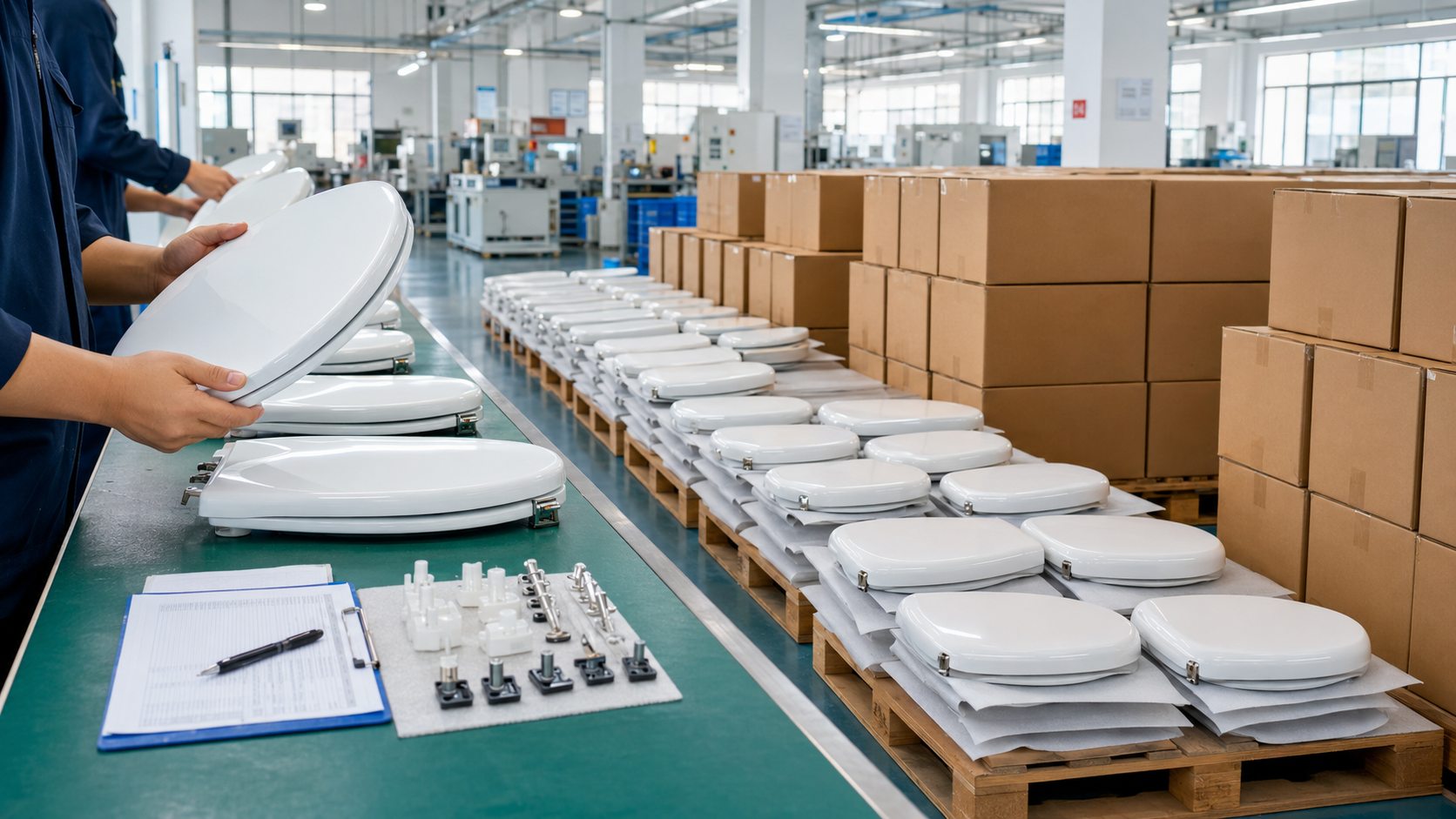
Brief: BOFAN production inspection, labeled cartons and organized batches prepared for an apartment project.
Conclusion
The strongest toilet seat solution for multi-unit housing is a documented, repeatable specification that fits the selected ceramic and supports future maintenance.
Developers should standardize the bowl compatibility, material, hinge, fixing method, color and packaging before mass installation. PP is often practical for standard and rental units, while UF or MDF can support upgraded residential tiers.
To receive a project recommendation, send BOFAN the ceramic drawing or measurements, project quantity, target market and required hinge function. The team can help shortlist a suitable standard seat for sample verification and quotation.
4. FAQ
What toilet seats are best for multi-unit housing?
The best toilet seats for multi-unit housing are models that fit the project’s ceramic bowls consistently and can be reordered for future replacements. PP is often used for standard and rental units, while UF or MDF may be selected for upgraded residential units.
Why should a developer standardize toilet seat models?
Standardization reduces installation mistakes, spare-stock complexity and the number of products a maintenance team must identify. It also makes repeat ordering easier because the approved dimensions, hinges and finishes are already documented.
Are PP toilet seats suitable for apartment buildings?
Yes. PP toilet seats are widely considered for apartment buildings because they are lightweight, moisture-resistant and available with different hinge systems. The seat structure, dimensions and fixing compatibility must still be verified for the project ceramic.
Should apartments use soft-close toilet seats?
Soft-close toilet seats are useful where reduced slamming noise and an upgraded resident experience are priorities. Standard hinges may remain suitable for entry-level or highly cost-sensitive units, so the decision should follow the apartment tier.
How many spare toilet seats should a housing project order?
There is no universal spare percentage for every project. The buyer should determine the quantity according to property size, expected occupancy, replacement policy, storage capacity and the supplier’s future repeat-order arrangement.
What measurements are needed before ordering apartment toilet seats?
Buyers should confirm bowl length, maximum width, hinge-center distance, fixing access and whether the bowl is round, elongated or another shape. A drawing, photographs and a physical sample installation provide stronger confirmation than a model name alone.
Can BOFAN customize toilet seats for residential projects?
BOFAN supports OEM options including material selection, hinge configuration, colors, logos and packaging. Final availability depends on the selected model, quantity and technical requirements.
Table of Contents
- Standard Toilet Seat Solutions for Multi-Unit Housing
- What Are Standard Toilet Seats for Multi-Unit Housing?
- Why Does Standardization Matter in a Multi-Unit Project?
- Which Specifications Should Be Standardized First?
- Which Toilet Seat Material Works Best for Multi-Family Housing?
- Should Multi-Unit Housing Use Standard or Soft-Close Hinges?
- What Is a Practical SKU Strategy for Multi-Unit Housing?
- How Can Buyers Prevent Fit Problems Before Mass Installation?
- What Should Buyers Evaluate Beyond the Unit Price?
- What Information Should Be Included in a Project RFQ?
- How Does BOFAN Support Multi-Unit Housing Projects?
- Conclusion
-
4. FAQ
- What toilet seats are best for multi-unit housing?
- Why should a developer standardize toilet seat models?
- Are PP toilet seats suitable for apartment buildings?
- Should apartments use soft-close toilet seats?
- How many spare toilet seats should a housing project order?
- What measurements are needed before ordering apartment toilet seats?
- Can BOFAN customize toilet seats for residential projects?