Molded Wood vs Solid Wood Toilet Seat: What’s the Difference and Which Is Better?
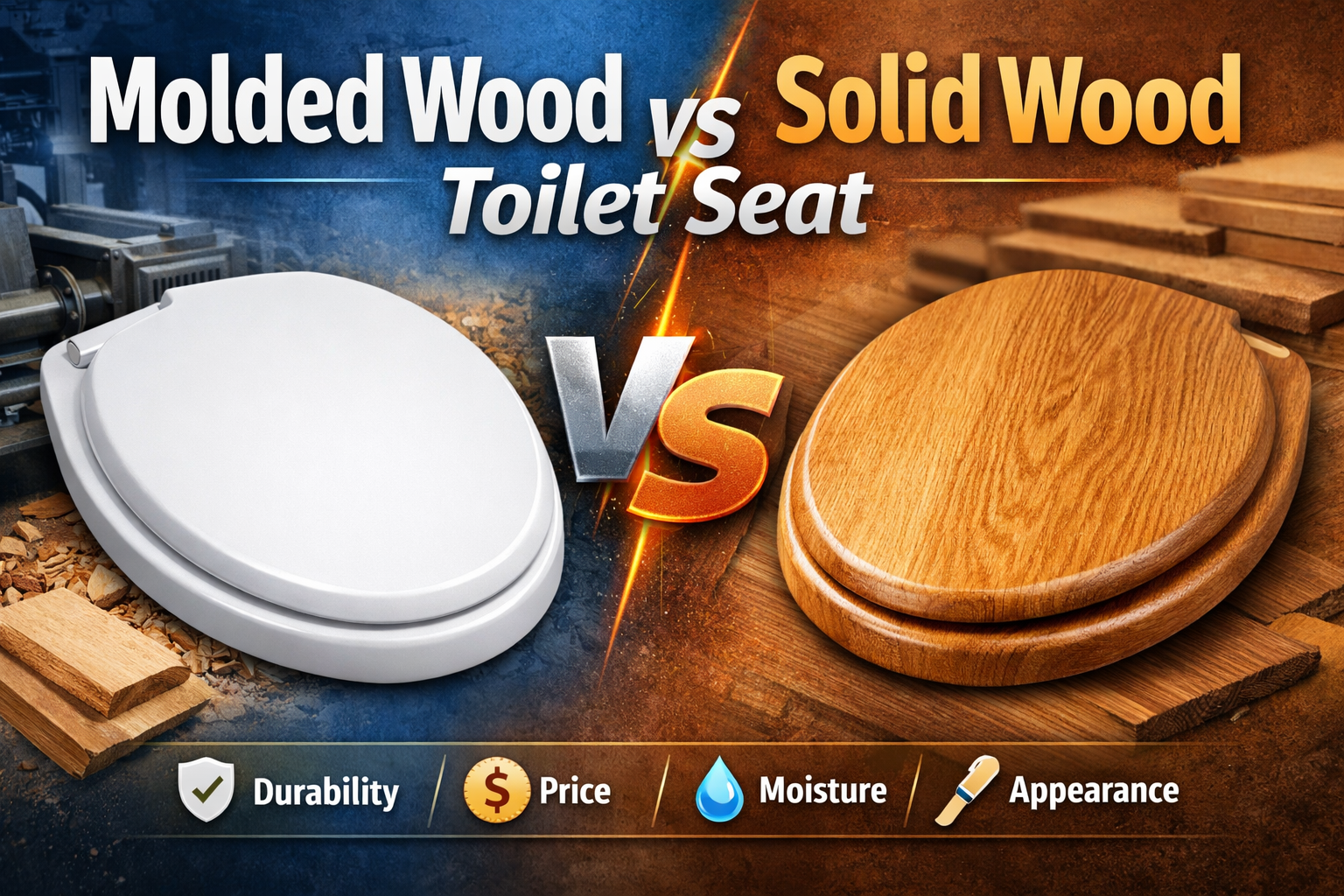
When choosing a wooden toilet seat, many buyers encounter two common options: molded wood toilet seats and solid wood toilet seats. While both appear similar at first glance, they are actually produced using very different materials and manufacturing processes.
Understanding the difference between molded wood vs solid wood toilet seat options can help homeowners, designers, and bulk buyers make better purchasing decisions. Factors such as durability, moisture resistance, price, and appearance all vary between these two types.
In this guide, we will compare molded wood and solid wood toilet seats in detail, including how they are made, their advantages and disadvantages, and which option is better for everyday bathroom use.
What Is a Molded Wood Toilet Seat?
A molded wood toilet seat is manufactured using compressed wood fibers combined with resin or adhesive. These materials are placed into molds and compressed under high pressure and temperature to create a dense and durable structure.
This process produces a uniform, smooth toilet seat that is widely used in modern bathroom products.
The surface of molded wood seats is usually coated with multiple layers of paint or protective finishes, giving them a glossy appearance and improving moisture resistance.
Because molded wood seats are produced through controlled manufacturing processes, they typically have consistent quality and stable shapes.
Advantages of Molded Wood Toilet Seats
Molded wood toilet seats are popular worldwide due to several benefits:
-
Smooth and uniform surface finish
-
Stable structure that resists cracking
-
Better resistance to humidity compared with natural wood
-
Suitable for mass production and consistent quality
-
Moderate price compared with solid wood seats
For these reasons, molded wood toilet seats are commonly used in residential homes, hotels, rental properties, and commercial bathrooms.
What Is a Solid Wood Toilet Seat?
A solid wood toilet seat is made from natural wood boards rather than compressed fibers. These seats may be produced from various types of wood, including oak, bamboo, pine, or other hardwood materials.
In many cases, solid wood toilet seats are crafted by cutting and shaping natural wood panels into the desired form. The wood is then sanded, polished, and coated with protective finishes.
Because each piece of wood has unique grain patterns, solid wood toilet seats often offer a more natural and decorative appearance compared with molded wood seats.
Advantages of Solid Wood Toilet Seats
Solid wood seats appeal to buyers who value natural materials and traditional design aesthetics.
Key benefits include:
-
Natural wood grain patterns
-
Heavier and more solid feel
-
Unique decorative appearance
-
Often considered more premium or traditional
However, natural wood also comes with certain limitations that should be considered before purchasing.
Molded Wood vs Solid Wood Toilet Seat: Key Differences
Although both products fall under the category of wooden toilet seats, their structure and performance can differ significantly.
The following comparison highlights the main differences between molded wood and solid wood toilet seats.
| Feature | Molded Wood Toilet Seat | Solid Wood Toilet Seat |
|---|---|---|
| Manufacturing Process | Compressed wood fiber and resin | Natural wood boards |
| Surface Finish | Smooth painted coating | Natural wood grain |
| Structural Stability | Highly consistent and stable | May warp or crack over time |
| Moisture Resistance | Good resistance due to coating | More sensitive to humidity |
| Weight | Medium weight | Often heavier |
| Production Efficiency | Suitable for large-scale manufacturing | More labor-intensive |
| Price | Moderate | Usually higher |
These differences explain why molded wood toilet seats are widely used in modern bathroom manufacturing.
Which Is More Durable?
Durability is one of the most important factors when selecting a toilet seat.
In general, molded wood toilet seats tend to offer better structural stability than solid wood seats. Because molded wood products are produced through compression molding, the internal structure is dense and evenly distributed.
Solid wood toilet seats, on the other hand, rely on natural wood boards. While hardwood can be strong, it may also respond to environmental conditions such as humidity and temperature.
Over time, solid wood seats may experience issues such as:
-
Warping caused by moisture
-
Cracking due to temperature changes
-
Surface expansion or contraction
Bathrooms often contain high humidity levels, which makes moisture resistance particularly important.
For this reason, many manufacturers prefer molded wood construction for long-term reliability.
Which One Looks Better?
Appearance is another factor that influences buyer preference.
Solid wood toilet seats offer natural wood grain textures that create a warm and organic look. They are often used in rustic or traditional interior designs where natural materials play an important role.
However, molded wood toilet seats provide a different advantage. Because the surface is coated with paint or lacquer, they can be produced in a wide variety of colors and finishes.
Common design options include:
-
Classic white bathroom style
-
Matte or glossy finishes
-
Decorative printed designs
-
Custom color matching
This flexibility makes molded wood toilet seats suitable for modern bathrooms and large retail markets.
Which Toilet Seat Is Better for Daily Use?
When considering everyday use, factors such as durability, ease of cleaning, and stability become very important.
Molded wood toilet seats are often considered more practical for daily bathroom use because they combine the strength of wood with improved moisture resistance.
According to Anh Ly, Founder & CEO of Mim Concept, the better choice is often less about which wood sounds more premium and more about which seat is better built for humid, high-use spaces. She notes that finish quality, hinge strength, and moisture sealing usually matter more in real bathroom environments than material alone.
Their smooth painted surface also makes cleaning easier compared with raw wood materials.
Solid wood toilet seats may require more careful maintenance to prevent moisture damage or surface wear.
For households, hotels, rental apartments, and commercial spaces, molded wood toilet seats are generally the more practical option.
Price Comparison
Price is another key difference between molded wood and solid wood toilet seats.
Because molded wood seats are manufactured using compression molding and automated production lines, they can be produced efficiently at scale. This results in more competitive pricing.
Typical price ranges may include:
-
Molded wood toilet seat: approximately $20 – $60
-
Solid wood toilet seat: approximately $40 – $120 or higher
Solid wood seats are often more expensive due to the cost of natural materials and more labor-intensive production methods.
For bulk purchasing or OEM manufacturing, molded wood toilet seats usually provide better cost efficiency.
Why Molded Wood Toilet Seats Are Widely Used by Manufacturers
Many global toilet seat manufacturers prefer molded wood construction because it offers the ideal balance between durability, design flexibility, and production efficiency.
Molded wood seats can be produced using precision molds, ensuring consistent dimensions and reliable performance across large production batches.
This makes them particularly suitable for:
-
OEM toilet seat manufacturing
-
Large retail distribution
-
Hotel and construction projects
-
E-commerce bathroom product brands
Manufacturers can also apply various finishes, colors, and decorative patterns to molded wood seats, making them adaptable to different market trends.
Which One Should You Choose?
Choosing between molded wood and solid wood toilet seats ultimately depends on your priorities.
You may prefer a molded wood toilet seat if you want:
-
A durable and stable product
-
Better resistance to humidity
-
Easy cleaning and maintenance
-
A more affordable price
A solid wood toilet seat may be a better option if you value:
-
Natural wood appearance
-
Unique grain textures
-
Decorative or rustic design styles
For most modern bathrooms and large-scale applications, molded wood toilet seats remain the most practical and widely used choice.
Final Thoughts
Both molded wood and solid wood toilet seats have their own advantages, and each serves different design and functional needs.
However, when comparing molded wood vs solid wood toilet seat options in terms of durability, cost efficiency, and long-term performance, molded wood seats are often the preferred solution for modern bathroom environments.
Whether you are a homeowner, designer, or wholesale buyer, understanding these differences can help you choose the right toilet seat for your specific requirements.
Table of Contents
- Molded Wood vs Solid Wood Toilet Seat: What’s the Difference and Which Is Better?
- What Is a Molded Wood Toilet Seat?
- What Is a Solid Wood Toilet Seat?
- Molded Wood vs Solid Wood Toilet Seat: Key Differences
- Which Is More Durable?
- Which One Looks Better?
- Which Toilet Seat Is Better for Daily Use?
- Price Comparison
- Why Molded Wood Toilet Seats Are Widely Used by Manufacturers
- Which One Should You Choose?
- Final Thoughts