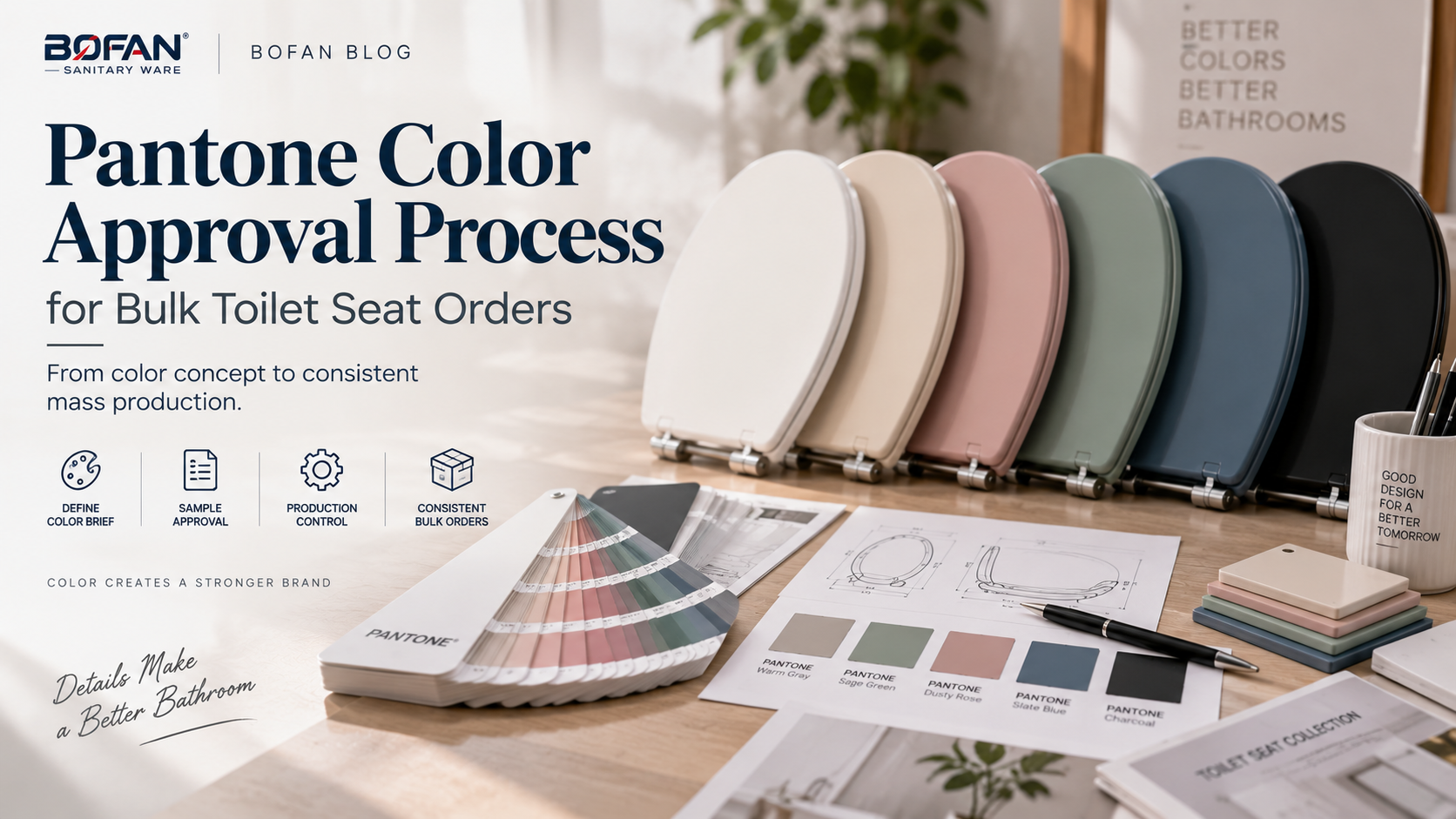
תהליך אישור צבע פנטון להזמנות גדולות של מושבי אסלה
התייחסות לפנטון יכולה להתחיל פרויקט צבעי מושב אסלה מותאם אישית, אך לא ينبغي שתהיה המסמך היחיד לאישור.
למרكات יצרניות מקוריות, קמעונאים עם תג מסחרי פרטי ומעצבי אסלה, המראה הסופי של מושב האסלה תלוי ביותר מאשר קוד צבע. החומר, גימור המשטח, תהליך הזריקה, סדרת הייצור, תאורת האזור והיחס החזותי בין המושב, המכסה, הצירים והאריזה יכולים לפגוע בתוצאה.
תהליך בקרה לאישור צבע פנטון של מושב אסלה עוזר לקונים להימנע מבעיה נפוצה: הדגם הראשון נראה מקובל, אך ההזמנה המונית נראית שונה מהציפייה שאושרה.
המטרה היא ליצור סטנדרט צבע ברור וניתן לחזרה עבור התצורה המדויקת של המוצר.
התחל עם תיאור צבע מלא
אל תשלח רק מספר פנטון ובקש הצעת מחיר.
לספק יש לדעת איפה הצבע יُשתמש ובאילו תנאים המוצר הסופי צריך להיראות. תיאור מלא צריך לכלול:
התייחסות לפנטון והמהדורה הרלוונטית, אם ישנה כזו
דגם מוצר או צורת מוצר
חומר: פוליפרופילן (PP), יריעת פורמלדהיד (UF), לוחות עץ דחוסים (MDF), עץ מודל או חומר אחר שנקבע במשותף
סיום נדרש: מבריק, מאט, סאטן, מדפוס או דקורטיבי
האם הצבע חל על המושב, הכסוי או על שניהם
הצבע הנדרש לכיסויי המנגנונים, לממגנים או לרכיבים נראים אחרים
האם קיט הדפיקה חייב להתאים חזותית
קוד פריט לקמעונאות (SKU) ודגם מפעלי
כמות הדגימות הנדרשת
כמות ההזמנה המונית הרצויה
תמונות מוצר או דוגמה פיזית קיימת
התייחסות לעיצוב אריזה, אם יש להתאים את צבע האריזה לצבע המוצר
אפור חם על מושב אסלה מ־PP מבריק לא יראה בהכרח זהה לאותו צבע המופיע על מושב אסלה מ־UF غير מבריק או על מוצר מ־MDF מדפוס. לכן, חומר המוצר והסיום שלו חייבים להיות חלק מההיקף של האישור.
הבנת מה שצבע פנטון יכול ולמה הוא לא יכול לשלוט
פנטון מהווה הפניה ויזואלית שימושית, במיוחד בשלב המוקדם של פיתוח המוצר ודיונים על המותג. הוא אינו מבטיח באופן אוטומטי שהצבע יתבטא בדיוק באותו אופן בכל חומר.
המראה הסופי עשוי להשתנות בשל:
צבע החומר הבסיסי
בחירת הפקמן או המאסטר-בק
טקטור פני השטח
רמת המראה
עובי המוצר
תנאי הזריקה
תהליך ההדפסה או השכבה
הצבע של הצלע התחתונה והאזורים הקיצוניים
האור בעת סקירת המוצר
הבדלים בין מגרעות ייצור
לכן, קוד פנטון צריך להיחשב כמטרה ההתחלתית, בעוד שמדגם המוצר הפיזי שאושר הופך למקור ההתייחסות הפרקטי לייצור.
אם הקונה דורש מדידת צבע מבוססת מכשיר או סובלנות מסוימת, יש להסכים על השיטה, אזור המדגם, תנאי האור וקריטריוני הקבלה לפני תחילת הבדיקה.
לאשר את תצורת המוצר המדויקת לפני נטילת המדגמים.
אי אפשר לאשר צבע באופן מהימן על שלט חומר בלתי קשור או על מדגם דומה חזותית.
לפני שהמפעל מכין מדגם צבע, יש לאשר:
| פריט לאישור | מה חייב להיות קבוע |
|---|---|
| מודל מוצר | הצורה המדויקת של המושב והמכסה |
| חומר | פוליפרופילן, יריעת אורנית, יריעת עץ מודבקת, עץ מודלק או חלופה מאושרת |
| סיום עיבוד | מבריק, מאט, מוטבע, מודפס או מצופה |
| טווח הצבעים | מושב, מכסה, כיסוי ציר, בופר וחלקים רואים של ציוד |
| מערכת המנגנונים | ציר מאושר ותבנית התקנה |
| למטרות דוגמה | בחינת צבע, אישור תפקודי מלא או אישור אריזה |
| התייחסות | קוד פנטון, דוגמה פיזית או מוצר מאושר |
| תנאי הבדיקה | תאורת הבדיקה, מרחק ההתבוננות ושיטת הבדיקה |
קונה לא אמור לאשר צבע מותאם בהילה על שבב שטוח קטן ולחשוב שהתוצאה תהיה מקובלת גם על מושב אסלה מעוקל עם מסגרת שונה.
להשתמש בדוגמה פיזית של המוצר לאישור סופי
איורים דיגיטליים, תמונות באתר אינטרנט ותמונות מטלפונים ניידים שימושיים לתקשורת, אך הם לא אמורים להחליף את האישור על דוגמה פיזית בתוכנית צבעים המונית.
הדגימה לאישור חייבת לייצג את הסידור המיועד ליצרנות בקירוב המרבי האפשרי:
חומר נכון
סיווג תקין
נוסחת צבע תקינה
צורת מושב ומכסה תקינה
רכיבי ציר נראים תקינים
הדפסה או עיטוב תקינים, לפי הצורך
אריזה תקינה, אם הצגה לקנייה היא חלק מההחלטה
לבחון את הדגימה בסביבה מתאימה, ולא להסתמך על מסך אחד או על תמונה אחת מהמפעל. לבדוק את הצבע בתנאי الإضاءה שנקבעו ולהשוות אותו למדגם של הקונה.
עבור קולקציית אמבטיה מאוחדת, יש לבחון את המושב יחד עם החרסית, לוח השטיפה, סגנון הארון או מוצר אחר, ככל האפשר.
לבדוק יותר מאשר רק המשטח העליון
לכסא השירותים יש מספר אזורים נראים לעין. צבע עלול להיראות אחיד על פני השטח העליון, אך להיראות שונה בקצוות, באזורים תחתונים או ברכיבים מיוצרים בנפרד.
במהלך האישור, יש לבדוק:
השטח העליון של טבעת הכסא
השטח העליון של המכסה
הקצה הקדמי
הפרופיל הצדדי
הצד התחתון הנראה במהלך ההתקנה
כיסויי הצירים
מגיני חיכוך
אזורים מודפסים
סימוני המוצר או הלוגו, אם קיימים
המונוטוניות של המשטח סביב העקומים והפרטים הצבועים
במקרה של סט מושב ומכסה בשני חלקים, לאשר האם הבדל חזותי קטן בין החלקים הוא מקובל. אם לא, יש לרשום את הציפייה הזו לפני הייצור.
להגדיר את הסטנדרט החזותי לאישור
מונחים כגון "קרוב מספיק", "לא כה כהה" או "כגון התמונה" קשים לבדיקה עקבייה.
תהליך טוב יותר כולל רישום:
הפניה לאפנון מאושרת (Pantone)
דוגמה פיזית מאושרת
תיאור המוצר וחומר הגלם
תיאור המראה הסופי
SKU של הקונה
דגם מפעל
תאריך האישור
תצלומים מאושרים של דוגמאות כראיה תומכת
תנאי תצוגה
שיטה למדידת צבע שנקבעה על ידי הצדדים
איש קשר מורשה לאישור
אצווה ייצור או תאריך תחילת תקפה
הדוגמה הפיזית המאושרת נקראת לעיתים קרובות דוגמה זהב. יש להגן עליה, לסמן אותה ולשמור עליה לזמינות להשוואה במהלך הייצור ובבדיקה הסופית.
התצלומים צריכים לתמוך ברשומה אך לא להפוך לסטנדרט הצבע היחיד, משום שהגדרות המצלמה והشاشות עשויות לשנות את הדרך שבה הצבעים מופיעים.
שליטה בצבע במהלך ייצור המוני
דוגמה ראשונית נכונה אינה מבטלת את הצורך בשליטה בייצור.
במהלך ייצור מוני, המפעל צריך לבדוק האם החומר שנבחר, הפקטור, הסגסוגת והתצורה של המוצר נשארים עקביים ביחס למקור המאושר. הקונה והספק יכולים להסכים על תוכנית בדיקה מתאימה בהתאם למוצר, לגודל ההזמנה ולרגישות הצבע.
בדיקות מועילות עשויות לכלול:
אימות תערובת החומר והצבע שאושרו
השוואה של הפריט הראשון לדוגמה שאושרה
בחינת עקביות בין המושב למגש
בחינת המשטח והצמיגות
זיהוי партиיה
בדיקה ויזואלית במהלך הייצור
השוואה של המוצר המупקק סופית לדוגמה שאושרה
תצלומים ורשומות בדיקה, לפי ההסכמה
הקונה צריך גם לאשר האם הציפייה היא לייצר את ההזמנה במגרע אחד או במספר מגרעים. הזמנות גדולות, הזמנות חוזרות וצבעים מותאמים אישית עלולות לדרוש בקרת מגרעים מתוכננת.
לשמור על הפרדה בין צבע המוצר לצבע האריזה
תוכנית קמעונאית עם מותג עלולה לכלול אישורים לכמה צבעים:
צבע מושב הכסא
הטמעת דפוס על המוצר
עיצוב האריזה
הדפסה של דף הוראות
תווית ברקוד
צבע כיסוי המנגנון
תווית שקית הרכיבים
סימונים על הקרטון החיצוני
פריטים אלו אינם אמורים להתאים זה לזה באופן אוטומטי.
לדוגמה, צבע פנטון שנבחר למושב כסא מודל שמניר עשוי לדרוש תהליך הדפסה שונה כדי להשיג מראה מקובל על קרтон גלי. לפיכך, לעיצוב אריזות יש צורך באישור נפרד או במדגם מאושר.
רשום את מספר הגרסה עבור כל קובץ עיצוב מאושר ודאג לכך שהגרסה הנכונה תשמש באריזת ההמוניות.
הימנע משגיאות נפוצות באישור צבעים
סיבות נפוצות לוויכוחים על צבע כוללות:
אישור רק מסך
שליחת קוד פנטון ללא מידע על החומר והסיום
בחינת דוגמית שטוחה אחת במקום המוצר המלא
אישור המכסה אך לא טבעת הכסא
התעלמות מכיסויי צירים, סופגים או חלקים דקורטיביים
השוואת דוגמיות באור שונה
שימוש בתמונות מוצר כסטנדרט סופי
שינוי חומר או ברק לאחר אישור הצבע
הזמנת ייצור חוזר ללא הפניה לדוגמה המקורית שאושרה
להתייחס לספק או למפעל חדשים כאל מסוגלים באופן אוטומטי לשחזר את צבע המוצר הקודם
החלטת צבע חייבת להיות קשורה למוצר האמיתי ולמסלול הייצור, ולא רק לשם הצבע.
ניהול שינויים לאחר האישור
כל שינוי המוצע לרכיב חזותי של המוצר עלול להשפיע על מראה הצבע.
לבחון שינויים ב:
דרגת חומר
צבע או תבנית צבע
מצב המשטח
טקסטורת תבנית
שיטת הדפסה
ציפוי
חומר כיסוי החריץ
צבע בופר
מקום היצור
עובי המוצר או העיצוב
רשומה של בקרת השינויים חייבת לציין את הסיבה לשינוי, את ה־SKU המושפע, את הדגם החדש הנדרש, את דרישה לאישור הקונה ואת סדרת הייצור התחילה.
אסור לערבב גרסאות ישנות ומעודכנות בתוכנית קמעונאית אחת, אלא אם הקונה אישר את ההבדל החזותי.
lập תכניות להזמנות חוזרות כבר מההתחלה
תוכניות צבע מותאמות דורשות רשומות שניתן להשתמש בהן גם לאחר ההזמנה הראשונה.
לשמור את:
דגם זהוב מאושר
הפניה לפנ톤
חומר המוצר והסיום שלו
מודל המפעל וקוד ה־SKU של הקונה
קודים של ציריות ורכיבים נראים
גרסת הדפוס על האריזה
הקלטה לאישור דוגמה
הפניה לסידרה
רשום בדיקה
כל סטייה או עירוב מאושרים
ההזמנה החוזרת חייבת להתייחס למסמך המפרט המנוהל, ולא רק לתיאור ההזמנה הקודמת, למשל "מושב אסלה כחול עם סגירה רכה".
איך BOFAN תומך בתוכניות מושבי אסלה במגוון צבעים מותאמים
BOFAN יכולה לתמוך בדיונים על מושבי אסלה במגוון צבעים מותאמים עבור תוכניות מאושרות של PP, UF ועצי עץ מודלים.
התמיכה תלויה בדגם הנבחר ובדרישות ההזמנה, ויכולה לכלול:
בחינת מודלים קיימים
דיון בחומרים ובסוגי הסיום
בחינת הפניה לצבעי Pantone
דוגמיות צבע ייצוגיות של המוצר
תיאום צבע של כיסוי הציר והרכיבים הגלויים
תיאום אריזות עם שם פרטי
רשומות אישור הדוגמיות
שליטה בשינויים בייצור ובהזמנות חוזרות
המראה הסופי של הצבע, הכמות המינימלית להזמנה (MOQ), זמני ההספקת הדוגמיות והעקביות בייצור חייבים להיות מאושרים עבור החומר המדויק, הגימור, הדגם והכמות.
פעולה: בקשת דוגמית צבע
מתכננים הזמנה של מושב אסלה במגוון צבעים מותאם אישית? שלחו ל-BOFAN את ההפניה לפנטון, צורת המוצר, העדפת החומר, הגימור הנדרש, דרישות הרכיבים הגלויים, הכמות והיעד. הצוות שלנו יכול לעזור להכין מסלול דוגמיות צבע לבדיקה.
שאלות נפוצות
האם ניתן לייצר מושב אסלה שמתאים לצבע פנטון מסוים?
ניתן להשתמש בהפניה לפנטון כמטרה לפרויקט צבע מותאם אישית. האישור הסופי צריך להתבסס על דוגמית פיזית המיוצרת בחומר והגימור שנבחרו.
למה אותו צבע פנטון עלול להיראות שונה על מושבי אסלה שונים?
חומר, קרינה, kếtextura, תנאי יציקה, עובי והארה יכולים לפגוע במראה הצבע.
האם יש לאשר את המושב והמכסה בנפרד?
כן. יש לבדוק את שני החלקים, משום שעשויים להיות הבדלים בצבע בהתאם לצורתם, משטחם ותנאי הייצור שלהם.
האם תמונה דיגיטלית היא מספיק טובה לאישור צבע מושב אסלה מותאם אישית?
לא. תמונות מועילות לתקשורת, אך אינן צריכות להחליף דוגמית פיזית מאושרת של המוצר לייצור המוני.
מה יש לשמור על מנת לבצע הזמנות חוזרות של צבעים מותאמים אישית?
יש לשמור על הדוגמית שאושרה, את הפניה לפנטון, החומר, הסגירה, מודל המפעל, ה-SKU של הקונה, קודים של רכיבים נראים, גרסת האריזה ורשומת האישור.
תוכן העניינים
- תהליך אישור צבע פנטון להזמנות גדולות של מושבי אסלה
- התחל עם תיאור צבע מלא
- הבנת מה שצבע פנטון יכול ולמה הוא לא יכול לשלוט
- לאשר את תצורת המוצר המדויקת לפני נטילת המדגמים.
- להשתמש בדוגמה פיזית של המוצר לאישור סופי
- לבדוק יותר מאשר רק המשטח העליון
- להגדיר את הסטנדרט החזותי לאישור
- שליטה בצבע במהלך ייצור המוני
- לשמור על הפרדה בין צבע המוצר לצבע האריזה
- הימנע משגיאות נפוצות באישור צבעים
- ניהול שינויים לאחר האישור
- lập תכניות להזמנות חוזרות כבר מההתחלה
- איך BOFAN תומך בתוכניות מושבי אסלה במגוון צבעים מותאמים
- שאלות נפוצות