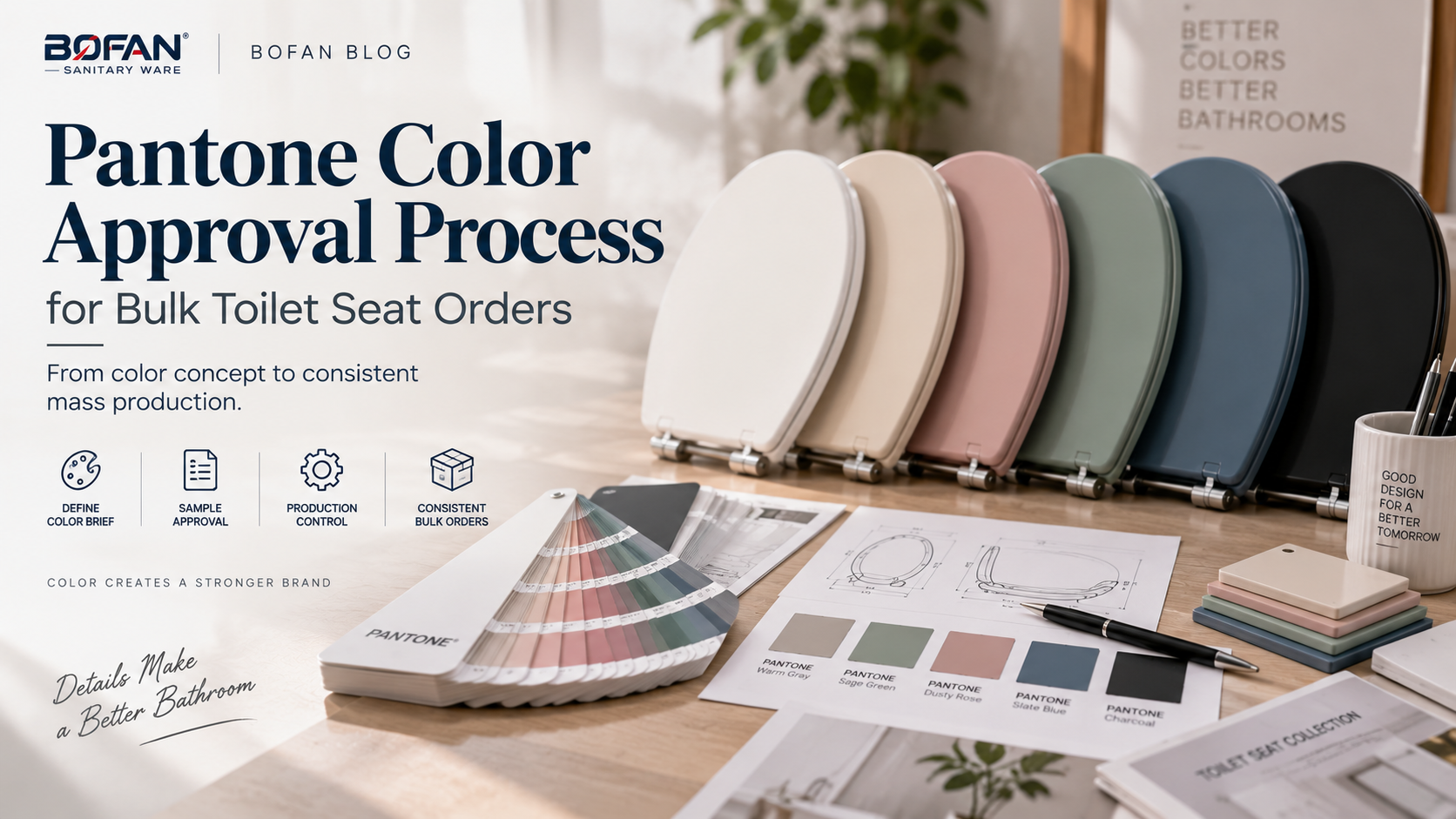
बल्क टॉयलेट सीट ऑर्डर के लिए पैंटोन रंग स्वीकृति प्रक्रिया
एक पैंटोन संदर्भ एक कस्टम शौच में उपयोग किए जाने वाले बैठने के रंग के प्रोजेक्ट की शुरुआत कर सकता है, लेकिन यह एकमात्र मंजूरी दस्तावेज़ नहीं होना चाहिए।
ओईएम ब्रांड्स, प्राइवेट-लेबल रिटेलर्स और शौचालय वितरकों के लिए, एक शौच में उपयोग किए जाने वाले बैठने का अंतिम रूप केवल एक रंग कोड पर निर्भर नहीं करता है। सामग्री, सतह का फ़िनिश, मॉल्डिंग प्रक्रिया, उत्पादन बैच, प्रकाश व्यवस्था तथा बैठने, ढक्कन, कब्ज़ों और पैकेजिंग के बीच दृश्य संबंध सभी परिणाम को प्रभावित कर सकते हैं।
एक नियंत्रित शौच में उपयोग किए जाने वाले बैठने के पैंटोन रंग मंजूरी प्रक्रिया खरीदारों को एक सामान्य समस्या से बचाती है: पहला नमूना स्वीकार्य लगता है, लेकिन बल्क ऑर्डर का रंग मंजूर किए गए अपेक्षित रंग से भिन्न दिखाई देता है।
इसका उद्देश्य ठीक उसी उत्पाद विन्यास के लिए एक स्पष्ट, दोहराए जा सकने वाला रंग मानक बनाना है।
एक पूर्ण रंग ब्रीफ के साथ शुरुआत करें
केवल एक पैंटोन संख्या भेजकर और कोटेशन का अनुरोध करके काम न करें।
आपूर्तिकर्ता को यह जानने की आवश्यकता होती है कि रंग का उपयोग कहाँ किया जाएगा और अंतिम उत्पाद कैसा दिखना चाहिए। एक पूर्ण ब्रीफ में निम्नलिखित शामिल होने चाहिए:
पैंटोन संदर्भ और, जहाँ लागू हो, संस्करण
उत्पाद मॉडल या उत्पाद का आकार
सामग्री: PP, UF, MDF, मोल्डेड वुड या कोई अन्य सहमत सामग्री
आवश्यक फ़िनिश: चमकदार, मैट, सैटिन, प्रिंटेड या सजावटी
क्या रंग सीट, ढक्कन या दोनों पर लागू होता है
हिंज कवर, बफ़र या अन्य दृश्यमान घटकों के लिए आवश्यक रंग
क्या फ़िक्सिंग किट का दृश्य समन्वय आवश्यक है
रिटेल SKU और फ़ैक्टरी मॉडल
आवश्यक नमूना मात्रा
लक्ष्य बल्क-ऑर्डर मात्रा
उत्पाद के फ़ोटोग्राफ़ या मौजूदा भौतिक संदर्भ
पैकेजिंग कलाकृति संदर्भ, यदि पैकेजिंग को उत्पाद के रंग के साथ मेल खाना आवश्यक है
चमकदार PP शौचालय सीट पर एक गर्म धूसर रंग, एक मैट UF सीट या मुद्रित MDF उत्पाद पर उसी संदर्भ के समान नहीं दिख सकता है। अतः उत्पाद की सामग्री और फ़िनिश को अनुमोदन के क्षेत्र का हिस्सा होना चाहिए।
पैंटोन संदर्भ के द्वारा नियंत्रित किए जा सकने वाले और नहीं किए जा सकने वाले पहलुओं को समझें
पैंटोन एक उपयोगी दृश्य संदर्भ है, विशेष रूप से प्रारंभिक उत्पाद विकास और ब्रांडिंग चर्चाओं के दौरान। यह स्वतः यह गारंटी नहीं देता कि प्रत्येक सामग्री रंग को ठीक-ठीक एक जैसे तरीके से पुनरुत्पादित करेगी।
अंतिम उपस्थिति को प्रभावित कर सकता है:
आधार सामग्री का रंग
रंजक या मास्टरबैच का चयन
सतह का पाठ्य
चमक स्तर
उत्पाद की मोटाई
मोल्डिंग की स्थितियाँ
मुद्रण या कोटिंग प्रक्रिया
नीचे की सतह और किनारों का रंग
समीक्षा के दौरान प्रकाश की स्थिति
उत्पादन-बैच भिन्नता
इस कारण से, पैंटोन कोड को शुरुआती लक्ष्य के रूप में माना जाना चाहिए, जबकि स्वीकृत भौतिक उत्पाद नमूना व्यावहारिक उत्पादन संदर्भ बन जाता है।
यदि खरीदार यंत्र-आधारित रंग माप या विशिष्ट सहनशीलता की आवश्यकता रखता है, तो परीक्षण शुरू होने से पहले विधि, नमूना क्षेत्र, प्रकाश स्थितियाँ और स्वीकृति मानदंडों पर सहमति व्यक्त कर लेनी चाहिए।
नमूना लेने से पहले सटीक उत्पाद विन्यास की पुष्टि करें
रंग को किसी असंबंधित सामग्री के फलक या दृश्य रूप से समान नमूने पर विश्वसनीय रूप से स्वीकार नहीं किया जा सकता है।
जब कारखाना रंग नमूना तैयार करे, तो पहले इन बातों की पुष्टि कर लें:
| स्वीकृति वस्तु | क्या स्थिर किया जाना चाहिए |
|---|---|
| उत्पाद मॉडल | सटीक सीट और ढक्कन का आकार |
| सामग्री | पीपी, यूएफ, एमडीएफ, ढलवां लकड़ी या स्वीकृत विकल्प |
| फिनिश | चमकदार, मैट, बनावट वाला, छपा हुआ या लेपित |
| रंग की सीमा | सीट, ढक्कन, कब्जे का कवर, बफर और दिखाई देने वाला हार्डवेयर |
| झुकाव प्रणाली | अनुमोदित कब्जा और स्थिरीकरण विन्यास |
| नमूना उद्देश्य | रंग समीक्षा, पूर्ण कार्यात्मक अनुमोदन या पैकेजिंग अनुमोदन |
| संदर्भ | पैंटोन कोड, भौतिक नमूना या अनुमोदित उत्पाद |
| समीक्षा की शर्तें | प्रकाश व्यवस्था, देखने की दूरी और निरीक्षण विधि |
कोई खरीदार एक छोटे सपाट चिप पर चमकदार विशिष्ट रंग को अनुमोदित नहीं करना चाहिए और यह मान लेना चाहिए कि वही परिणाम एक वक्र शौचालय सीट पर, जिसका फ़िनिश अलग है, स्वीकार्य होगा।
अंतिम स्वीकृति के लिए एक भौतिक उत्पाद नमूने का उपयोग करें
डिजिटल कलाकृति, वेबसाइट की छवियाँ और मोबाइल फ़ोन की तस्वीरें संचार के लिए उपयोगी हैं, लेकिन वे थोक रंग कार्यक्रम के लिए भौतिक नमूने की स्वीकृति को प्रतिस्थापित नहीं करनी चाहिए।
स्वीकृति नमूना अभिप्रेत उत्पादन व्यवस्था का जितना संभव हो सके निकटतम प्रतिनिधित्व करना चाहिए:
सही सामग्री
सही फ़िनिश
सही रंग सूत्रीकरण
सही सीट और ढक्कन का आकार
सही दृश्यमान हिंज घटक
जहाँ लागू हो, सही मुद्रण या सजावट
यदि खुदरा प्रस्तुति निर्णय का हिस्सा है, तो सही पैकेजिंग
नमूने की समीक्षा किसी एक स्क्रीन या एक कारखाने की तस्वीर पर निर्भर न होकर एक उपयुक्त वातावरण में करें। रंग की जाँच सहमत प्रकाश स्थितियों के तहत करें और इसकी तुलना खरीदार के संदर्भ के साथ करें।
समन्वित बाथरूम संग्रह के लिए, जहाँ संभव हो, सीट की समीक्षा अभिप्रेत सिरेमिक, फ्लश प्लेट, कैबिनेट फ़िनिश या अन्य उत्पाद के साथ करें।
ऊपरी सतह से अधिक की जाँच करें
एक शौच मेज़ के कई दृश्यमान क्षेत्र होते हैं। एक रंग ऊपरी सतह पर सुसंगत लग सकता है, लेकिन किनारों, नीचे के क्षेत्रों या अलग से निर्मित घटकों पर अलग दिख सकता है।
अनुमोदन के दौरान, निम्नलिखित की समीक्षा करें:
सीट-रिंग की ऊपरी सतह
ढक्कन की ऊपरी सतह
सामने का किनारा
पार्श्व प्रोफ़ाइल
स्थापना के दौरान दृश्यमान नीचे का क्षेत्र
हिंज कवर
बफर
मुद्रित क्षेत्र
उत्पाद अंकन या लोगो, यदि शामिल हो
वक्रों और ढलाई वाले विवरणों के चारों ओर सतह की एकरूपता
दो-टुकड़े की सीट और ढक्कन सेट के लिए, पुष्टि करें कि क्या भागों के बीच छोटा दृश्य अंतर स्वीकार्य है। यदि नहीं, तो उत्पादन से पहले उस अपेक्षा को दर्ज करें।
दृश्य स्वीकृति मानक को परिभाषित करें
“लगभग समान”, “बहुत गहरा नहीं” या “फोटो के समान” जैसे शब्दों का निरीक्षण सुसंगत रूप से करना कठिन होता है।
एक बेहतर प्रक्रिया में निम्नलिखित को दर्ज किया जाता है:
अनुमोदित पैंटोन संदर्भ
अनुमोदित भौतिक नमूना
उत्पाद और सामग्री का विवरण
फ़िनिश का विवरण
खरीदार SKU
फ़ैक्ट्री मॉडल
अनुमोदन की तारीख
अनुमोदित नमूना फ़ोटोग्राफ़ को पूरक साक्ष्य के रूप में
दृश्य दशाएँ
कोई भी सहमत रंग-मापन विधि
अधिकृत अनुमोदन संपर्क
उत्पादन बैच या प्रभावी तिथि
शारीरिक रूप से अनुमोदित नमूने को अक्सर सुनहरा नमूना कहा जाता है। इसे सुरक्षित रखा जाना चाहिए, पहचाना जाना चाहिए और उत्पादन तथा अंतिम निरीक्षण के दौरान तुलना के लिए उपलब्ध रखा जाना चाहिए।
फ़ोटोग्राफ़ रिकॉर्ड का समर्थन करने के लिए उपयोगी हो सकते हैं, लेकिन रंग मानक के रूप में केवल फ़ोटोग्राफ़ पर निर्भर नहीं रहना चाहिए, क्योंकि कैमरा सेटिंग्स और स्क्रीन रंगों के प्रदर्शन को बदल सकते हैं।
थोक उत्पादन के दौरान रंग का नियंत्रण करें
एक सही प्रथम नमूना उत्पादन नियंत्रण की आवश्यकता को समाप्त नहीं करता है।
थोक उत्पादन के दौरान, कारखाने को यह जाँच करना चाहिए कि चुने गए सामग्री, रंजक, फ़िनिश और उत्पाद विन्यास अनुमोदित संदर्भ के साथ लगातार सुसंगत बने रहे हैं। खरीददार और आपूर्तिकर्ता उत्पाद, आदेश के आकार और रंग संवेदनशीलता के आधार पर एक उपयुक्त निरीक्षण योजना पर सहमत हो सकते हैं।
उपयोगी जाँच में शामिल हो सकते हैं:
अनुमोदित सामग्री और रंग सूत्रीकरण की पुष्टि
अनुमोदित नमूने के साथ पहले टुकड़े की तुलना
सीट और ढक्कन की संगति की समीक्षा
सतह और चमक की समीक्षा
बैच पहचान
प्रक्रिया के दौरान दृश्य निरीक्षण
अंतिम रूप से पैक किए गए उत्पाद की तुलना
जहाँ सहमति हो, निरीक्षण के फ़ोटोग्राफ़ और अभिलेख
खरीदार को यह भी पुष्टि करनी चाहिए कि उत्पादन में एक सामग्री बैच या कई बैचों का उपयोग किया जाने की संभावना है। बड़े ऑर्डर, दोहराए गए ऑर्डर और विशिष्ट रंगों के लिए योजनाबद्ध बैच नियंत्रण की आवश्यकता हो सकती है।
उत्पाद के रंग और पैकेजिंग के रंग को अलग रखें
एक ब्रांडेड रिटेल कार्यक्रम में कई रंग अनुमोदन शामिल हो सकते हैं:
शौचालय के बैठने के स्थान का रंग
मुद्रित उत्पाद सजावट
कार्टन कलाकृति
निर्देश-पत्रक की मुद्रण
बारकोड लेबल
कब्ज़-कवर का रंग
हार्डवेयर बैग पर लेबल
बाहरी कार्टन पर चिह्न
इन वस्तुओं को स्वतः मेल खाते हुए मानने की आवश्यकता नहीं है।
उदाहरण के लिए, चमकदार ढलाई वाले शौचालय के बैठने के स्थान के लिए चुना गया पैंटोन रंग एक गत्ते के डिब्बे पर स्वीकार्य दिखावट प्राप्त करने के लिए अलग मुद्रण प्रक्रिया की आवश्यकता हो सकती है। इसलिए पैकेजिंग कलाकृति के लिए अपना स्वयं का स्वीकृति प्रूफ या नमूना होना चाहिए।
प्रत्येक स्वीकृत कलाकृति फ़ाइल के लिए संस्करण संख्या दर्ज करें और सुनिश्चित करें कि बल्क पैकेजिंग के लिए सही संस्करण का उपयोग किया जाए।
सामान्य रंग-स्वीकृति की गलतियों से बचें
रंग विवादों के सामान्य कारण इनमें शामिल हैं:
केवल स्क्रीन से मंजूरी देना
सामग्री और फ़िनिश की जानकारी के बिना पैंटोन कोड भेजना
पूर्ण उत्पाद के बजाय एक सपाट नमूने की समीक्षा करना
ढक्कन को मंजूरी देना, लेकिन सीट रिंग को नहीं
हिंज कवर, बफ़र या सजावटी भागों को अनदेखा करना
विभिन्न प्रकाश के तहत नमूनों की तुलना करना
अंतिम मानक के रूप में उत्पाद के फ़ोटोग्राफ़ का उपयोग करना
रंग की मंजूरी के बाद सामग्री या चमक में परिवर्तन करना
मूल मंजूर नमूने का संदर्भ न देकर दोहराव उत्पादन का आदेश देना
किसी नए आपूर्तिकर्ता या कारखाने को स्वतः ही पूर्व उत्पाद रंग को पुनः बनाने में सक्षम मानना
रंग का निर्णय वास्तविक उत्पाद और उत्पादन मार्ग से जुड़ा होना चाहिए, केवल रंग के नाम से नहीं।
अनुमोदन के बाद परिवर्तनों का प्रबंधन करना
दृश्यमान उत्पाद घटक में कोई भी प्रस्तावित परिवर्तन रंग की उपस्थिति को प्रभावित कर सकता है।
परिवर्तनों की समीक्षा करें:
सामग्री ग्रेड
रंजक या रंग सूत्रीकरण
सतह फ़िनिश
ढालन बनावट
मुद्रण विधि
कोटिंग
हिंज-कवर सामग्री
बफर रंग
उत्पादन स्थान
उत्पाद की मोटाई या डिज़ाइन
परिवर्तन-नियंत्रण रेकॉर्ड में परिवर्तन का कारण, प्रभावित SKU, आवश्यक नया नमूना, खरीददार की स्वीकृति की आवश्यकता और प्रभावी बैच दर्ज होना चाहिए।
जब तक खरीददार द्वारा दृश्य अंतर की स्वीकृति नहीं दी गई हो, एक ही खुदरा कार्यक्रम में पुराने और संशोधित संस्करणों को नहीं मिलाया जाना चाहिए।
शुरुआत से ही दोहराव ऑर्डर की योजना बनाएँ
कस्टम-रंग कार्यक्रमों के लिए ऐसे रेकॉर्ड की आवश्यकता होती है जिनका उपयोग पहले ऑर्डर के बाद भी किया जा सके।
रखें:
स्वीकृत सुनहरा नमूना
पैंटोन संदर्भ
उत्पाद का सामग्री और समाप्ति
फैक्ट्री मॉडल और खरीददार SKU
कब्जा और दृश्य घटक कोड
पैकेजिंग कलाकृति का संस्करण
नमूना-अनुमोदन अभिलेख
बैच संदर्भ
निरीक्षण रिकॉर्ड
कोई भी स्वीकृत विचलन या संशोधन
दोहराए गए ऑर्डर में नियंत्रित विशिष्टता का हवाला देना चाहिए, केवल पिछले खरीद आदेश के विवरण जैसे “नीला सॉफ्ट-क्लोज सीट” का नहीं।
बोफ़ैन कस्टम रंग शौचालय सीट कार्यक्रमों का समर्थन कैसे करता है
बोफ़ैन अनुमोदित पीपी, यूएफ और मोल्डेड-वुड कार्यक्रमों के लिए कस्टम-रंग शौचालय सीट पर चर्चा का समर्थन कर सकता है।
चुने गए मॉडल और ऑर्डर आवश्यकताओं के आधार पर, समर्थन में शामिल हो सकता है:
मौजूदा मॉडल की समीक्षा
सामग्री और फ़िनिश पर चर्चा
पैंटोन-संदर्भ समीक्षा
उत्पाद-प्रतिनिधि रंग नमूने
हिंज-कवर और दृश्य घटकों का समन्वय
निजी-लेबल पैकेजिंग समन्वय
नमूना-अनुमोदन रिकॉर्ड
उत्पादन और दोहराए गए ऑर्डर के परिवर्तन नियंत्रण
अंतिम रंग उपस्थिति, न्यूनतम ऑर्डर मात्रा (एमओक्यू), नमूना तैयारी का समय और उत्पादन स्थिरता की पुष्टि ठीक उसी सामग्री, फ़िनिश, मॉडल और मात्रा के लिए की जानी चाहिए।
कॉल टू एक्शन: रंग का नमूना अनुरोध करें
कस्टम-रंग वाले टॉयलेट सीट के ऑर्डर की योजना बना रहे हैं? BOFAN को अपना पैंटोन संदर्भ, उत्पाद का आकार, सामग्री की प्राथमिकता, आवश्यक फ़िनिश, दृश्यमान घटकों की आवश्यकताएँ, मात्रा और गंतव्य भेजें। हमारी टीम आपके लिए समीक्षा के लिए रंग नमूना तैयार करने में सहायता कर सकती है।
अक्सर पूछे जाने वाले प्रश्न
क्या कोई टॉयलेट सीट पैंटोन रंग के मेल के लिए बनाई जा सकती है?
पैंटोन संदर्भ को कस्टम-रंग परियोजना के लिए लक्ष्य के रूप में उपयोग किया जा सकता है। अंतिम मंजूरी चुनी गई सामग्री और फ़िनिश में बनाए गए भौतिक नमूने के आधार पर होनी चाहिए।
एक ही पैंटोन रंग अलग-अलग टॉयलेट सीटों पर अलग क्यों दिखाई देता है?
सामग्री, चमक, बनावट, मोल्डिंग की स्थितियाँ, मोटाई और प्रकाश आदि सभी रंग के दृश्य प्रभाव को प्रभावित कर सकते हैं।
सीट और ढक्कन को अलग-अलग मंजूरी देनी चाहिए?
हाँ। दोनों भागों की समीक्षा करनी चाहिए, क्योंकि उनका आकार, सतह और उत्पादन की स्थितियों के आधार पर रंग अलग-अलग दिख सकता है।
क्या कस्टम टॉयलेट सीट के रंग को मंजूर करने के लिए डिजिटल छवि पर्याप्त है?
नहीं। चित्र संचार के लिए उपयोगी हैं, लेकिन बल्क उत्पादन के लिए स्वीकृत भौतिक उत्पाद नमूने की जगह नहीं ले सकते।
दोहराए गए अनुकूलित-रंग ऑर्डर के लिए क्या संग्रहित रखा जाना चाहिए?
स्वीकृत नमूना, पैंटोन संदर्भ, सामग्री, फ़िनिश, कारखाना मॉडल, खरीदार SKU, दृश्य-घटक कोड, पैकेजिंग संस्करण और स्वीकृति रिकॉर्ड संग्रहित रखें।
विषय-सूची
- बल्क टॉयलेट सीट ऑर्डर के लिए पैंटोन रंग स्वीकृति प्रक्रिया
- एक पूर्ण रंग ब्रीफ के साथ शुरुआत करें
- पैंटोन संदर्भ के द्वारा नियंत्रित किए जा सकने वाले और नहीं किए जा सकने वाले पहलुओं को समझें
- नमूना लेने से पहले सटीक उत्पाद विन्यास की पुष्टि करें
- अंतिम स्वीकृति के लिए एक भौतिक उत्पाद नमूने का उपयोग करें
- ऊपरी सतह से अधिक की जाँच करें
- दृश्य स्वीकृति मानक को परिभाषित करें
- थोक उत्पादन के दौरान रंग का नियंत्रण करें
- उत्पाद के रंग और पैकेजिंग के रंग को अलग रखें
- सामान्य रंग-स्वीकृति की गलतियों से बचें
- अनुमोदन के बाद परिवर्तनों का प्रबंधन करना
- शुरुआत से ही दोहराव ऑर्डर की योजना बनाएँ
- बोफ़ैन कस्टम रंग शौचालय सीट कार्यक्रमों का समर्थन कैसे करता है
-
अक्सर पूछे जाने वाले प्रश्न
- क्या कोई टॉयलेट सीट पैंटोन रंग के मेल के लिए बनाई जा सकती है?
- एक ही पैंटोन रंग अलग-अलग टॉयलेट सीटों पर अलग क्यों दिखाई देता है?
- सीट और ढक्कन को अलग-अलग मंजूरी देनी चाहिए?
- क्या कस्टम टॉयलेट सीट के रंग को मंजूर करने के लिए डिजिटल छवि पर्याप्त है?
- दोहराए गए अनुकूलित-रंग ऑर्डर के लिए क्या संग्रहित रखा जाना चाहिए?