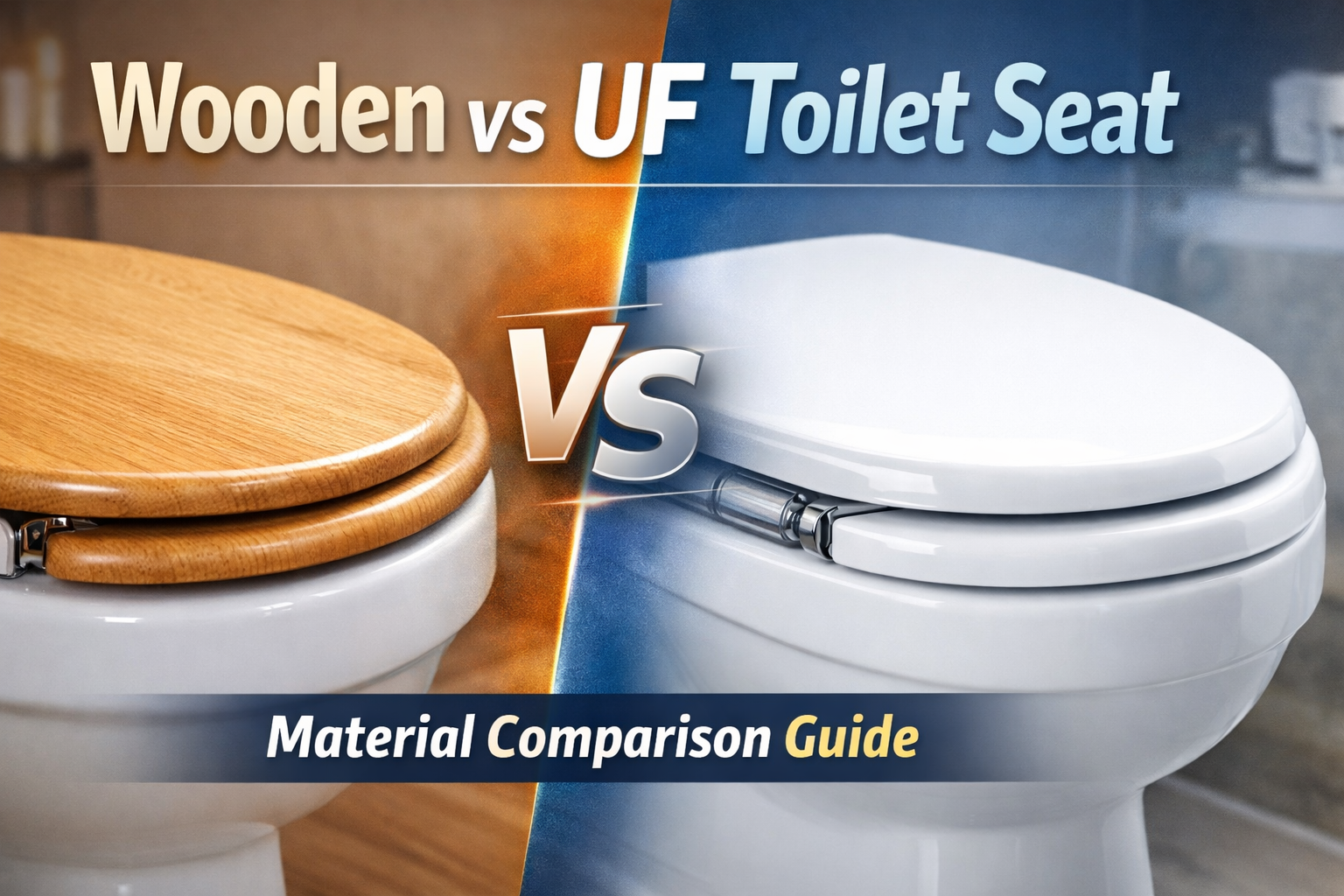
Wooden vs UF Toilet Seat: What's the Difference?
Introduction
Choosing the right toilet seat material is an important decision for homeowners, distributors, and commercial buyers. While many toilet seats look similar in appearance, the materials used in their construction can significantly affect durability, comfort, maintenance, and long-term performance.
Among the most commonly used materials are wooden toilet seats and UF toilet seats. These two types are widely available in global markets and are often compared when selecting the best toilet seat for residential or commercial bathrooms.
A wooden toilet seat typically uses molded wood or MDF materials with a painted or laminated surface, offering a heavier and warmer feel. In contrast, a UF toilet seat—made from urea-formaldehyde (Duroplast)—is a thermoset plastic known for its exceptional hardness, scratch resistance, and high-gloss appearance.
Understanding the differences between wooden vs UF toilet seat materials can help buyers choose the best option for their projects, whether for home renovation, hospitality installations, or retail distribution.
What Is a Wooden Toilet Seat?
A wooden toilet seat is typically made from engineered wood materials such as molded wood or medium-density fiberboard (MDF). The material is compressed under high pressure to create a strong and dense structure that provides durability and stability.
After molding, the surface is usually finished with multiple layers of paint or protective coating, creating a smooth and glossy appearance.
Common Types of Wooden Toilet Seats
There are several variations of wooden toilet seats used in the market:
Molded Wood Toilet Seat
This is the most common type. Wood fibers are compressed and molded into shape, providing strength and durability.
MDF Toilet Seat
Medium-density fiberboard seats are lightweight compared to solid wood but still offer a solid feel and stable structure.
Real Wood Veneer Seat
Some premium models feature a real wood veneer surface for a more natural aesthetic.
Advantages of Wooden Toilet Seats
Wooden toilet seats offer several benefits:
- Heavier and more stable feel
- Warmer touch compared with plastic materials
- Strong structural support
- Cost-effective manufacturing
- Wide range of finishes and colors
These features make wooden seats popular in residential bathrooms and rental properties.
Disadvantages of Wooden Toilet Seats
However, wooden seats also have some limitations:
- Surface coating may wear over time
- Slightly less resistant to moisture
- Potential edge swelling if damaged
With proper coating and quality manufacturing, these issues can be minimized.
What Is a UF Toilet Seat?
A UF toilet seat is manufactured from urea-formaldehyde resin, a thermosetting plastic material commonly referred to as Duroplast.
Unlike standard plastic seats made from polypropylene (PP), UF seats are created through a compression molding process that produces an extremely hard and durable structure.
Once cured, the material becomes highly resistant to scratches, chemicals, and heat.
Key Characteristics of UF Toilet Seats
UF toilet seats are known for their premium properties:
- High surface hardness
- Excellent scratch resistance
- Smooth, high-gloss appearance
- Strong resistance to cleaning chemicals
- Long service life
These characteristics make UF seats particularly popular in European markets and high-end bathroom products.
Advantages of UF Toilet Seats
UF toilet seats offer several performance benefits:
- Exceptional durability
- High resistance to scratches
- Premium glossy finish
- Strong resistance to cleaning chemicals
- Long-term structural stability
Disadvantages of UF Toilet Seats
The main drawbacks include:
- Higher production cost
- Slightly colder surface compared to wood
- Heavier than standard plastic seats
Despite these factors, UF toilet seats are widely considered a premium option in the toilet seat market.
Wooden vs UF Toilet Seat: Key Differences
The differences between wooden and UF toilet seats can be summarized across several important factors.
| Feature | Wooden Toilet Seat | UF Toilet Seat |
|---|---|---|
| Material | Molded wood / MDF | Urea formaldehyde |
| Surface | Painted or laminated | High-gloss duroplast |
| Durability | Good | Excellent |
| Scratch Resistance | Medium | Very high |
| Moisture Resistance | Medium | High |
| Weight | Heavy | Medium-heavy |
| Price | Moderate | Higher |
Both materials provide reliable performance, but UF seats generally offer higher durability and surface resistance.
Which Toilet Seat Material Is More Durable?
When comparing durability, UF toilet seats typically outperform wooden toilet seats.
The thermoset structure of UF material creates a very hard surface that is highly resistant to scratches, impacts, and chemical cleaners. This makes UF seats ideal for environments where durability is essential.
Wooden seats, while strong, rely on surface coatings for protection. Over time, repeated cleaning or heavy usage may wear down the coating layer.
However, high-quality molded wood seats can still provide long service life in typical residential environments.
Which Material Is Better for Different Applications?
Different environments may benefit from different toilet seat materials.
Residential Bathrooms
Both wooden and UF toilet seats work well in residential settings. Wooden seats are often chosen for their warmer feel and lower cost.
Hotels and Hospitality
Hotels often prefer UF toilet seats because of their durability and resistance to cleaning chemicals.
Rental Properties
Wooden seats are commonly used in rental properties due to their affordability and availability.
Commercial and Public Facilities
UF toilet seats are better suited for commercial environments because they withstand frequent usage and heavy cleaning.
Price Comparison: Wooden vs UF Toilet Seat
Price is another important factor when choosing between wooden and UF toilet seats.
In general:
- Wooden toilet seats are more affordable
- UF toilet seats are considered premium products
The difference is mainly due to manufacturing processes and material costs. UF seats require specialized compression molding and higher-grade resin materials.
However, UF seats may offer better long-term value because of their extended lifespan.
How to Choose Between Wooden and UF Toilet Seats
When selecting a toilet seat, buyers should consider the following factors:
Choose a Wooden Toilet Seat if:
- Budget is a key concern
- The installation is for residential use
- A warmer touch and heavier feel are preferred
Choose a UF Toilet Seat if:
- Maximum durability is required
- The installation is in hotels or commercial buildings
- A premium glossy appearance is desired
Understanding the differences between wooden vs UF toilet seats helps ensure the right product is selected for each application.
Conclusion
Both wooden and UF toilet seats are widely used in the global bathroom market, each offering unique advantages.
Wooden toilet seats provide a warm feel, solid structure, and cost-effective solution for residential environments. UF toilet seats, on the other hand, deliver superior durability, scratch resistance, and a premium finish that suits high-end bathrooms and commercial projects.
For distributors, project buyers, and retailers, selecting the right material depends on the specific requirements of the installation environment, budget, and expected product lifespan.
Table of Contents
- Wooden vs UF Toilet Seat: What's the Difference?
- Introduction
- What Is a Wooden Toilet Seat?
- What Is a UF Toilet Seat?
- Wooden vs UF Toilet Seat: Key Differences
- Which Toilet Seat Material Is More Durable?
- Which Material Is Better for Different Applications?
- Price Comparison: Wooden vs UF Toilet Seat
- How to Choose Between Wooden and UF Toilet Seats
- Conclusion