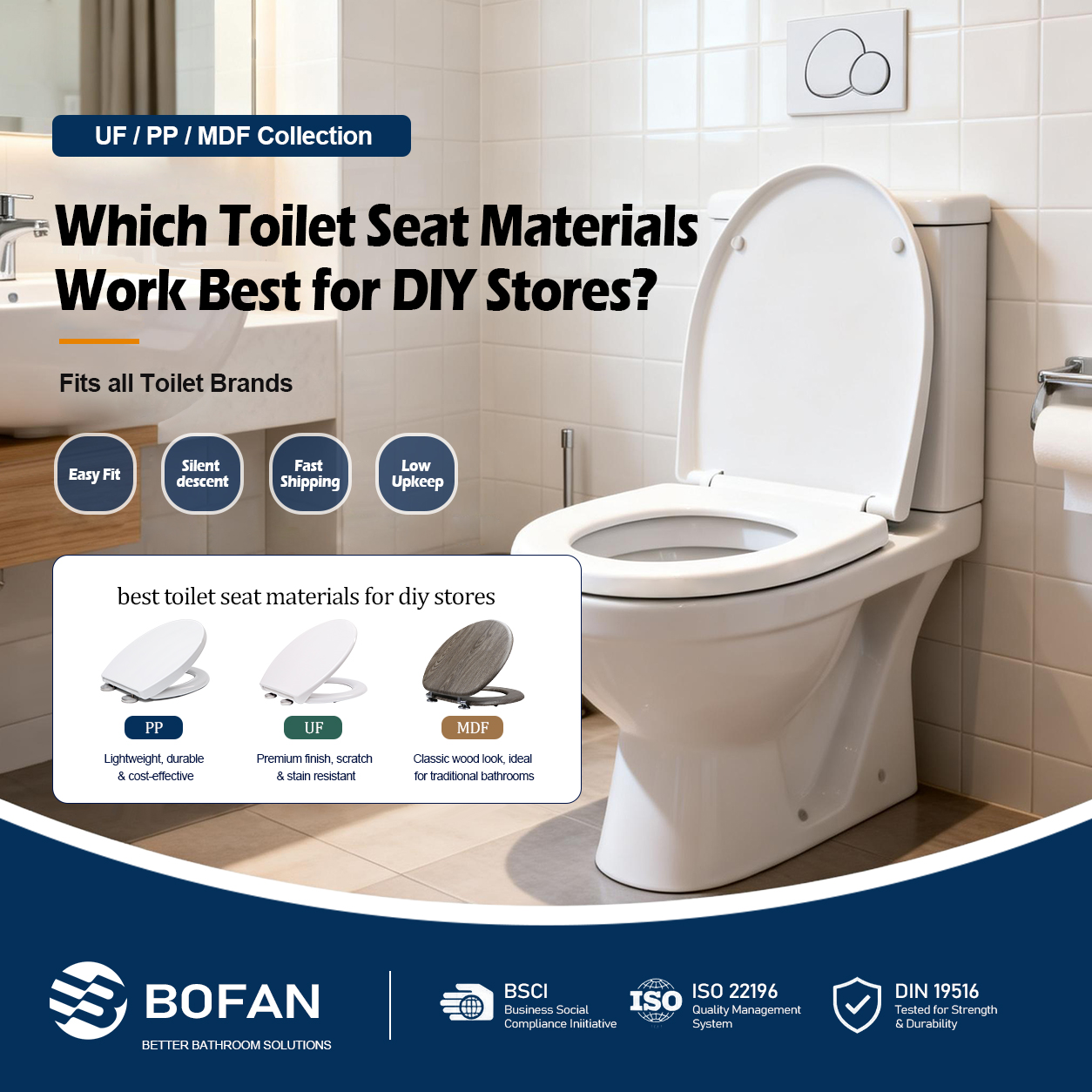
Which Toilet Seat Materials Work Best for DIY Stores?
Choosing the best toilet seat materials for DIY stores is one of the most important decisions a bathroom fixture buyer makes. The right materials keep customers happy, reduce returns, and protect profit margins. The wrong choices lead to cracked seats, stained surfaces, and frustrated shoppers who blame your store for selling cheap products.
This guide breaks down the top five toilet seat materials that belong on every DIY store shelf. You will learn which materials last longest, which ones sell fastest, and how to match each option to the right customer.
Why Material Choice Drives Store Success
Toilet seats look simple, but material quality makes or breaks the customer experience. Industry data shows plastic seats dominate the market with a 44% to 70% share worldwide. Yet not all plastics perform the same way in real bathrooms.
A customer who buys a flimsy seat that cracks in three months will not return for their next bathroom project. A customer who gets a durable, easy to clean seat that lasts eight years becomes a loyal shopper. Material selection is not just about cost. It is about building trust that turns one-time buyers into repeat customers.
The Five Best Toilet Seat Materials for DIY Stores
1. Urea Formaldehyde (Duroplast) — The Premium Standard
Duroplast is the best toilet seat material for customers who want quality without luxury prices. Manufacturers create it by compressing plastic fibers under extreme heat and pressure. The result feels dense and smooth, almost like ceramic.
This material offers outstanding durability. It resists scratches, never turns yellow, and holds its shape for 8 to 10 years of daily use. The surface is non-porous, which makes it easy to clean and prevents bacteria from settling in. For hygiene-conscious buyers, this is a major selling point.
Duroplast seats wholesale between $25 and $60. This price range hits the sweet spot for DIY stores. You can position them as the "better" option in a good-better-best display. They work especially well in main bathrooms and humid spaces where cheaper materials fail quickly.
Stock tip: Place duroplast seats next to mid-range faucets and showerheads. Customers upgrading their bathroom fixtures will see them as a natural match.
2. Polypropylene (PP) — The Volume Leader
Polypropylene is the most common toilet seat material in the world. It is lightweight, highly resistant to moisture, and cheap to produce. These traits make it the go-to choice for budget-conscious DIYers, rental property owners, and first-time homebuyers.
But not all PP seats are equal. Low-grade polypropylene bends under weight, scratches easily, and turns yellow within two to three years in humid bathrooms. These problems create returns and bad reviews that hurt your store's reputation.
Smart retailers stock brand-name PP seats with reinforced hinges and anti-bacterial coatings. These upgrades cost only $3 to $7 more per unit at wholesale but cut return rates dramatically. The typical wholesale range is $15 to $40, which keeps them accessible while protecting your margins.
Stock tip: Use PP seats as your entry-level option. Display them prominently during spring renovation season when first-time buyers flood your store.
3. ABS Plastic — The Smart Middle Ground
ABS plastic fills the gap between basic PP and premium duroplast. It offers better scratch resistance than standard polypropylene and a glossy finish that looks more expensive than it is.
Customers notice the difference when they pick up an ABS seat. It feels heavier and more solid. The high-gloss surface also photographs well for online listings, which matters more every year as DIY stores expand their e-commerce presence.
One limitation: ABS softens at lower temperatures than high-grade PP. It is not ideal for bathrooms with underfloor heating or in very hot climates. For standard homes in temperate regions, though, it is a reliable step up from basic plastic.
Wholesale prices run $15 to $40, overlapping with premium PP. This makes ABS an easy upsell. Train your staff to explain the scratch resistance advantage, and customers will often pay the small premium.
Stock tip: Position ABS seats between your PP and duroplast displays. The visual upgrade tempts customers to move up one price tier.
4. Enameled Wood — The Style Choice
Enameled wood seats bring warmth and tradition to bathroom design. They use MDF or particle board cores with a painted enamel coating that mimics the look of solid wood at a fraction of the cost.
The visual appeal is real. These seats sell well to customers renovating guest bathrooms, powder rooms, or staging homes for sale. The wholesale price of $20 to $50 fits neatly into the affordable-premium category.
But retailers must be honest about the limits. The enamel coating wears through at high-contact points within 30 to 90 days of regular use. Once moisture reaches the wood core, staining and cracking follow.
This does not mean you should avoid enameled wood. It means you should sell it to the right customer. Recommend it for low-use bathrooms where looks matter more than daily durability. Pair it with clear care instructions to set proper expectations.
Stock tip: Keep enameled wood seats near paint and tile displays. Customers focused on bathroom aesthetics will find them naturally.
5. Solid Wood — The Luxury Niche
Solid wood seats in oak, maple, or beech represent the top tier of toilet seat craftsmanship. Unlike composite wood, genuine hardwood can be refinished and restained to match custom bathroom décor.
These seats appeal to a specific customer: luxury homeowners, heritage property restorers, and design-focused renovators. They are not volume products. They are margin products.
Wholesale prices start at $50 and climb past $150 for custom designs. The customer base is small but loyal. They do not price-shop. They seek quality and authenticity.
The critical factor is moisture sealing. Unsealed wood warps in humid bathrooms. Make sure your suppliers apply factory moisture barriers, and educate customers about ongoing sealing maintenance.
Stock tip: Display solid wood seats in a dedicated "Premium Bathroom" section. Do not mix them with commodity plastics. The separation reinforces their luxury positioning.
Material Comparison for Quick Decisions

How to Build Your Store's Toilet Seat Assortment
The best toilet seat materials for DIY stores depend on your local market. Use this framework to build the right mix.
For humid or coastal regions: Lead with duroplast and premium PP. These materials resist moisture without maintenance. Wood seats will struggle unless customers understand the care requirements.
For upscale suburban markets: Use a three-tier approach. PP anchors the budget tier. ABS captures the mid-market upgrade. Duroplast serves quality-focused buyers. Keep solid wood for special order or a small premium display.
For rental-heavy areas: Focus on PP and ABS. Landlords want durability at low cost. They do not care about wood aesthetics. Emphasize the easy to clean surface and long warranty.
Seasonal timing matters. Bathroom renovation peaks in spring and early summer. Build inventory depth across all tiers in January and February. This prevents stockouts during your highest-revenue months and avoids emergency restocking at premium prices.
Key Takeaways for DIY Retailers
-
Duroplast offers the best balance of durability, looks, and profit margin for most DIY stores.
-
Premium PP drives volume when you avoid cheap, no-name products that generate returns.
-
ABS is your upsell tool. It feels better than PP without the duroplast price jump.
-
Enameled wood works for style-focused projects, but set clear durability expectations.
-
Solid wood is a niche play for luxury markets. Verify moisture sealing before you stock it.
Frequently Asked Questions
What is the most durable toilet seat material for busy family bathrooms?
Duroplast (urea formaldehyde) lasts 8 to 10 years in high-traffic, humid bathrooms. It resists scratches, stains, and yellowing better than any plastic alternative.
Which material gives DIY stores the best profit margin?
Duroplast seats deliver the strongest margin-to-satisfaction ratio. The premium feel justifies higher retail prices, while the durability eliminates costly returns.
Are wood toilet seat options worth stocking in wet climates?
Enameled wood carries higher failure risk in humid bathrooms. Limit it to guest baths and staging. For daily-use bathrooms in wet climates, steer customers toward duroplast or properly sealed solid wood.
How often should DIY stores rotate toilet seat inventory?
Most materials last five-plus years on the shelf, but rotate stock every 12 to 18 months. This keeps your selection fresh with current colors and hinge styles that customers expect.
When should stores build inventory for renovation season?
Start increasing stock depth in January or February. Peak demand runs March through June. Early preparation prevents stockouts and emergency procurement at inflated costs.