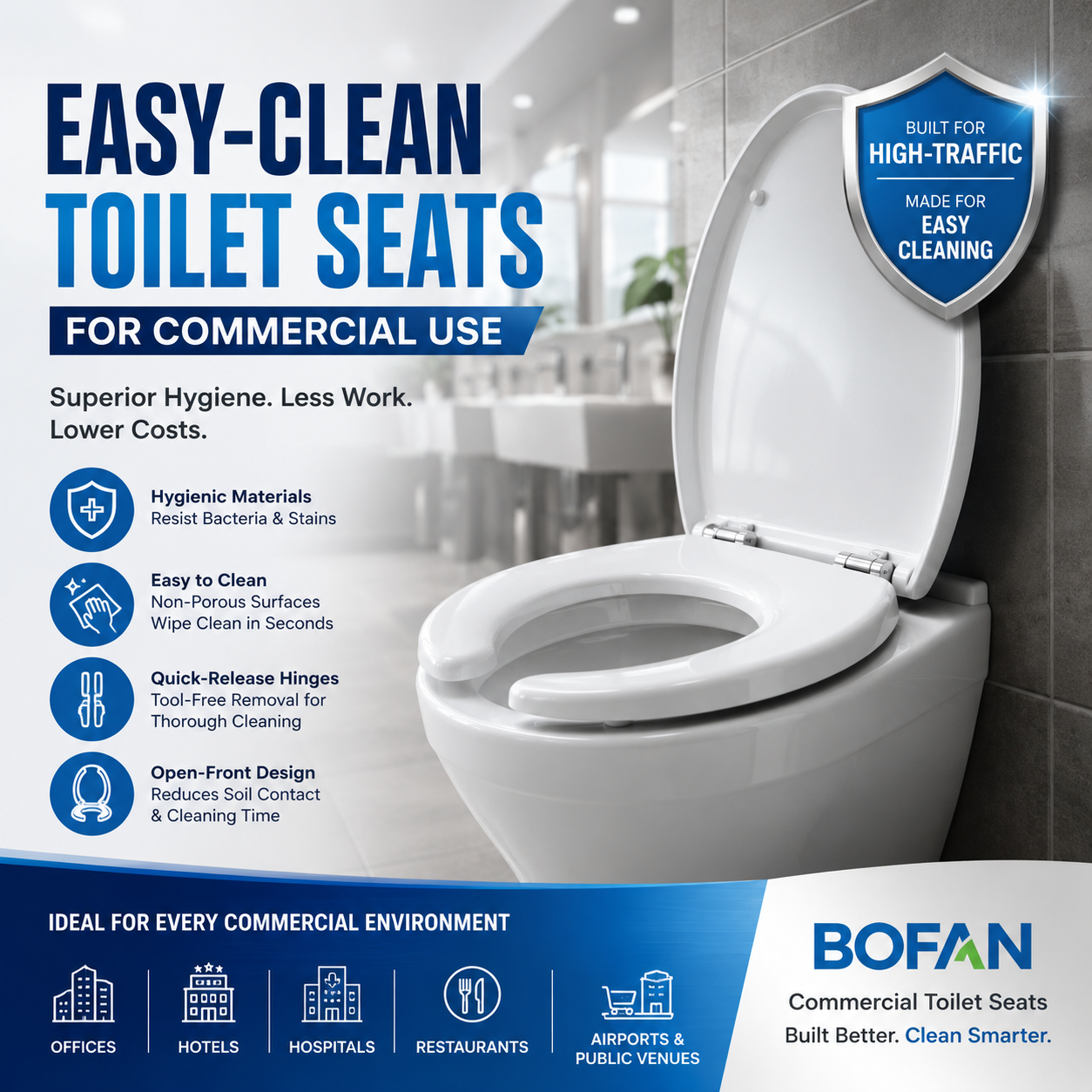
High-traffic restrooms need seats that stay clean with less work. The wrong seat traps bacteria, stains fast, and forces crews to scrub harder. The right easy clean toilet seat cuts maintenance time, meets health codes, and lasts for years.
This guide shows which materials and features deliver real hygiene results in offices, hotels, hospitals, and public buildings.
Why Easy-Clean Design Cuts Costs
Commercial bathrooms serve dozens of people daily. Every visit leaves bacteria and grime on the seat. New health rules now apply to shared spaces, and facilities that fall behind face fines and bad reviews.
A seat that resists stains needs less deep cleaning. That saves labor hours and chemical costs each month. A seat that cracks or traps dirt forces early replacement, which blows the budget. Easy-clean design is a direct cost-control tool, not a luxury.
Top Materials for Commercial Easy-Clean Seats
Duroplast — The Hygiene Leader
Duroplast tops the market for commercial easy clean toilet seats. Makers compress plastic resins under extreme heat and pressure. This creates a dense, non-porous surface that blocks bacteria.
Standard disinfectants wipe off completely. The surface resists scratches that trap dirt. It never yellows from chemical cleaners or UV light. For janitors who use strong agents daily, this chemical resistance is a major win.
Duroplast also holds its shape under heavy use. Adult weight does not flex or warp the seat. The structure lasts 8 to 10 years in daily commercial traffic. Hotels, offices, and restaurants that want clean looks without constant scrubbing should pick duroplast first.
Antimicrobial Plastic — Active Defense
Some plastic seats include additives that fight bacteria between cleanings. These agents disrupt bacterial cell walls and slow odor-causing microbe growth.
This does not replace regular cleaning. But it cuts the bacterial load that builds up during busy periods when crews cannot service stalls every hour. Airports, stadiums, and convention centers gain the most from this extra layer.
The key buying point: Embedded additives versus surface coatings. Coatings wear off within months under commercial cleaning. Embedded agents stay active for the full product life.
Wholesale prices run $15 to $45 per unit. This makes the upgrade accessible for budget facilities that still need better hygiene.
Stainless Steel — Industrial Tough
Stainless steel seats handle the harshest commercial settings. The metal surface survives strong disinfectants, abrasive scrubbing, and temperature swings that damage plastics.
These seats dominate prisons, industrial sites, and outdoor restrooms where vandalism is common. The smooth metal offers no grip for markers or adhesives. Crews can use any cleaning method without fear of damage.
The trade-off is comfort. Steel feels cold, and the industrial look clashes with upscale interiors. For functional spaces where durability trumps style, stainless steel is the top pick.
Smart Self-Cleaning Seats — The Next Wave
New smart seats automate hygiene with water jets and UV light. Some models mist the seat with electrolyzed water after each flush. This coats the surface with a mild disinfectant layer.
These systems slash manual cleaning time. But they need electrical outlets and water hookups. New construction or full renovations work best for installation.
The market is growing fast. Analysts project the automatic toilet seat segment to hit $1.64 billion by 2032. Luxury hotels and medical clinics lead adoption, but costs are dropping as production scales.
Must-Have Features for Easy Cleaning
Here are four features that directly impact cleaning speed and results:
1. Non-Porous Surfaces
Pores and texture trap bacteria that resist wiping. Duroplast, sealed stainless steel, and high-density polypropylene release contaminants with one disinfectant pass.
2. Quick-Release Hinges
Seats that detach in seconds let crews clean the full hinge zone and rim beneath. Look for button-release mechanisms that need no tools. Bofan includes quick-release hinges as standard on all commercial duroplast and antimicrobial models.
3. Open-Front Design
The elongated open front removes the front contact point where urine splash concentrates. This design alone cuts cleaning time per stall by removing the most soiled area.
4. Raised Bumpers
Bumpers that lift the seat slightly off the bowl rim improve air flow. This reduces moisture trapping and stops the sticky film that forms when seats sit flush against porcelain.
Match Your Seat to Your Facility
High-Traffic Public Venues
Airports, malls, and transit hubs need antimicrobial duroplast or stainless steel. These materials handle constant use without visible wear. Their non-porous surfaces meet public health code requirements for strong cleaning.
Corporate Offices and Hotels
Duroplast hits the sweet spot for professional spaces. It looks premium, feels solid, and stays presentable through years of daily housekeeping. The easy clean surface lets crews work faster without dropping standards.
Healthcare and Food Service
Clinics, hospitals, and restaurant kitchens need strict sanitation. Antimicrobial plastic with silver-ion technology adds protection between mandatory disinfection rounds. Stainless steel may be required in surgical prep areas or commercial kitchens where sterilization is absolute.
Budget-Conscious Facilities
Schools and community centers can upgrade hygiene with premium polypropylene seats. These feature smooth, non-porous finishes and quick-release hinges. They wholesale from $15 to $30 and deliver easy clean benefits without premium costs.
Why Bofan for Commercial Toilet Seats
Bofan supplies easy clean toilet seats to facility managers, hotel chains, and contractors across North America and Europe. We do not just ship products. We help you pick the right material, features, and quantities for your traffic patterns and cleaning protocols.
Our commercial line includes:
- Duroplast seats with quick-release hinges and open-front designs
- Antimicrobial plastic seats with embedded silver-ion protection
- Stainless steel units with vandal-resistant mounting
- Smart self-cleaning models with installation support
We offer volume pricing for orders over 100 units. We provide custom branding for hotel chains. We ship direct to job sites to keep your renovation on schedule.
Ready to upgrade your restroom hygiene? Contact the Bofan commercial team today for a free facility assessment and sample unit. We will match your traffic volume, budget, and cleaning schedule to the right easy clean toilet seat solution.
Frequently Asked Questions
What makes a toilet seat easy to clean?
Three features: a non-porous surface like duroplast, quick-release hinges for full access, and an open-front design that removes the highest-soil contact point. Together, these cut cleaning time by half.
How long do commercial easy clean seats last?
Duroplast lasts 8 to 10 years in commercial use. Antimicrobial plastic runs 5 to 7 years. Stainless steel exceeds 15 years even in tough environments.
Are antimicrobial seats worth the extra cost?
For venues where crews cannot clean stalls every hour, antimicrobial additives reduce bacterial buildup and odor complaints. The $5 to $15 per unit premium pays back fast in user satisfaction.
Can smart self-cleaning seats work in existing buildings?
Most need an electrical outlet and water connection. Retrofits depend on stall layout and plumbing access. New construction or full renovations are ideal. Bofan offers site assessments to check feasibility.
What is the best seat for a hotel renovation?
Duroplast with quick-release hinges and an open-front design. It looks premium, cleans fast, and lasts through years of daily housekeeping without yellowing or cracking.