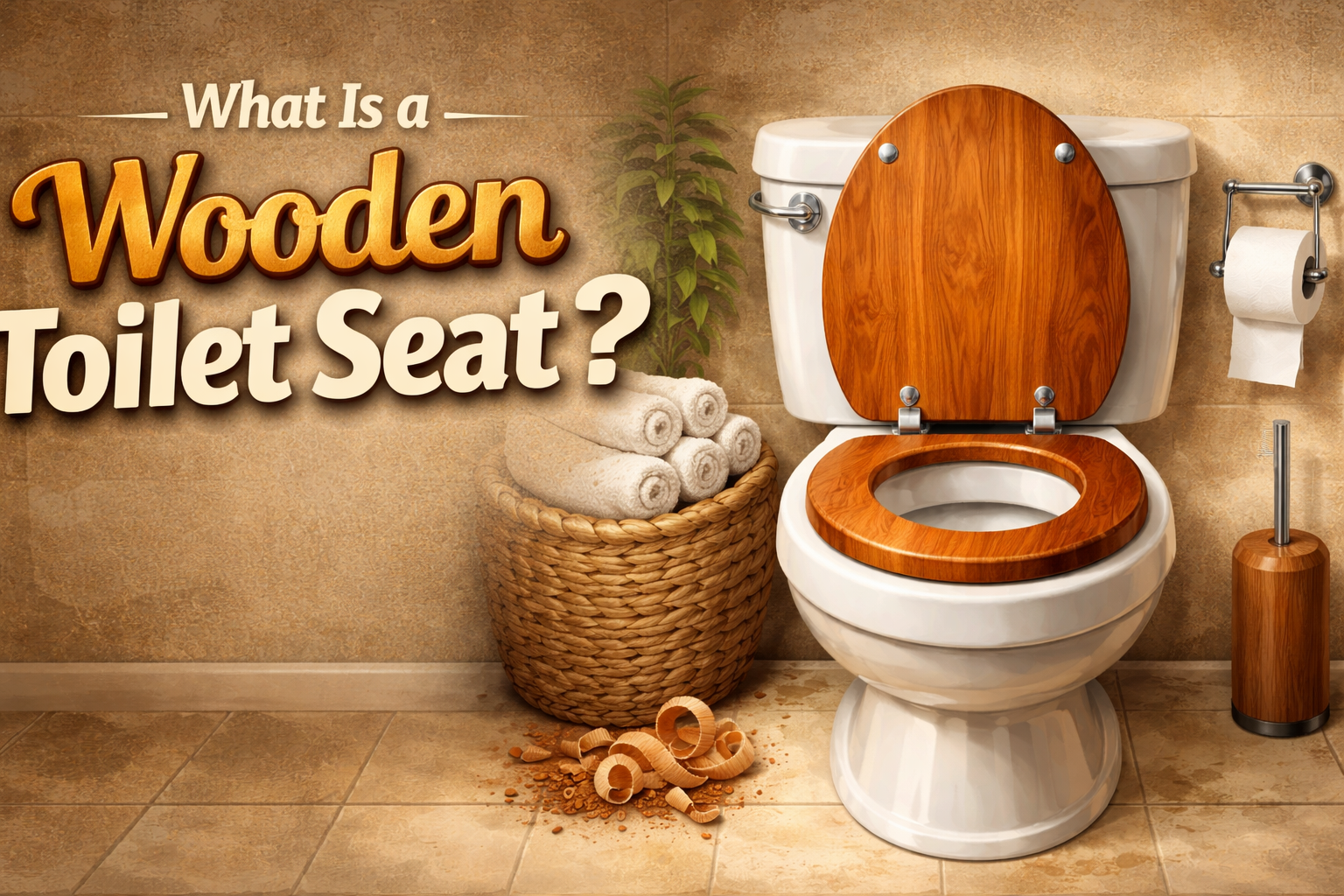
A wooden toilet seat is a toilet seat made from wood-based materials such as solid wood, molded wood, MDF, or other engineered wood constructions with decorative surface finishes. Compared with standard plastic options, it usually offers a heavier feel, a more decorative appearance, and a stronger home-style look.
In the bathroom products market, wooden toilet seats are often used in residential retail, decorative bathroom collections, private label programs, and selected hospitality projects. Depending on the material structure, surface coating, and hinge quality, they can vary in durability, appearance, and price level.
For importers, distributors, retailers, and OEM buyers, understanding the types, features, and buying points of a wooden toilet seat is important before choosing the right product line. This guide explains what a wood toilet seat is, how it is made, its pros and cons, and how it compares with plastic, MDF, and UF models.
What Is a Wooden Toilet Seat?
A wooden toilet seat refers to a toilet seat made from wood-based material or built with a wood-structured core. In commercial use, this category may include solid wood, molded wood, MDF, or decorative wood-look constructions.
The term itself is broad. In some cases, it describes real wood products. In other cases, it refers to engineered wood seats with printed, laminated, or painted finishes. That is why buyers should not judge a product only by the category name. The internal structure and surface treatment matter just as much as the appearance.
In many markets, a wood toilet seat is chosen because it looks more decorative than a basic plastic seat. It is also often associated with a more solid product feel and a warmer bathroom style.
What Types of Wooden Toilet Seats Are Available?
Buyers searching for a wooden toilet seat usually want to know what types are available. This is one of the most important parts of the buying decision because different constructions offer different looks, costs, and performance levels.
Solid Wood Toilet Seats
A solid wood toilet seat is made from real wood components. It is often chosen for its natural appearance and traditional appeal. Solid wood products may look more authentic, but they can also involve more variation in grain, weight, and cost.
Molded Wood Toilet Seats
A molded wood toilet seat is a common choice in the toilet seat industry. It is made through a compressed wood-based process that supports stable shaping and repeatable bulk production. Many buyers like molded wood because it offers a good balance between decorative appearance and manufacturing consistency.
MDF Wooden Toilet Seats
An MDF toilet seat is made from medium-density fiberboard, an engineered wood-based material produced from compressed wood fibers and resin. MDF is widely used because it supports smooth surfaces, decorative finishes, and standardized production. Many products sold as wooden toilet seats are actually MDF-based.
Veneer or Wood-Look Toilet Seats
Some wooden toilet seats use veneer, laminated surfaces, wood-grain printing, or painted finishes to create a wood-style appearance. These products are often used in decorative retail lines where style matters as much as function.
What Are the Main Features of a Wooden Toilet Seat?
A wooden toilet seat has several features that make it different from a standard plastic or thermoset toilet seat.
Heavier Product Feel
One of the most obvious features of a wooden toilet seat is its weight. Compared with many PP toilet seats, it usually feels heavier and more substantial. In some markets, this helps improve perceived product quality.
Decorative Appearance
Wood-based toilet seats are often chosen because they look more attractive than basic plastic models. They can create a classic, natural, warm, or home-style bathroom look, depending on the finish.
More Surface Design Options
A wooden toilet seat can be produced in many finishes, including:
- natural wood grain
- painted surfaces
- printed patterns
- matte finishes
- glossy decorative coatings
This gives buyers more flexibility when building a differentiated product line.
Suitable for Style-Focused Product Collections
A wood toilet seat is often used in decorative bathroom programs, home improvement product lines, and private label collections where appearance plays an important role in the purchase decision.
Advantages of Wooden Toilet Seats
A wooden toilet seat offers several commercial and product advantages for wholesale buyers, retailers, and private label brands.
Strong Decorative Value
Compared with standard plastic toilet seats, wooden models usually have stronger visual appeal. This makes them easier to position in decorative retail collections and home-style bathroom assortments.
Solid and Premium Feel
Many buyers and consumers associate heavier bathroom products with better quality. A wooden toilet seat often feels more substantial than a lightweight plastic alternative.
Better Product Differentiation
If a distributor or retailer wants to offer something beyond a basic white plastic seat, a wooden toilet seat can help create a more distinctive product range.
Suitable for Private Label Programs
Because wooden toilet seats support many finishes, patterns, and packaging styles, they are often useful in OEM and private label projects.
Good Fit for Decorative Residential Markets
In home improvement and residential retail channels, wooden toilet seats are popular because they combine everyday function with more attractive design.
Disadvantages of Wooden Toilet Seats
Although a wooden toilet seat has many advantages, it also has limitations buyers should understand.
Heavier Than Plastic Seats
The heavier structure can improve perceived value, but it also increases handling weight and may affect shipping efficiency.
Moisture Resistance Depends on Finish
A wooden toilet seat is a wood-based product, so its resistance to bathroom moisture depends greatly on its coating and sealing quality. Poor finishing can reduce long-term performance.
Surface Treatment Is Critical
The final quality of a wooden toilet seat depends heavily on finishing details. Coating smoothness, edge sealing, and decorative consistency all matter.
Not Always the Best Option for Budget Programs
Buyers focused only on the lowest possible price may prefer PP toilet seats. Wooden toilet seats usually belong to a more decorative and slightly higher-value category.
Hinge Strength Matters More
Since wooden seats are usually heavier, the hinge system needs to match the product weight. Weak hinges can reduce the product’s overall value.
Is a Wooden Toilet Seat a Good Choice?
Yes, a wooden toilet seat is a good choice for buyers who want stronger decorative appeal, a heavier product feel, and a more distinctive bathroom style than basic plastic options.
It is especially suitable for:
- decorative retail lines
- residential upgrade programs
- private label bathroom products
- home improvement stores
- buyers targeting classic or wood-look bathroom collections
However, it may not be the best choice for buyers whose main priority is low cost, light weight, or simple mass-market utility. In those cases, PP may be more suitable.
Wooden Toilet Seat vs Plastic Toilet Seat
A common question is whether a wooden toilet seat is better than a plastic toilet seat. The answer depends on the target market and product positioning.
|
Item |
Wooden Toilet Seat |
Plastic Toilet Seat |
|
Appearance |
Decorative / classic |
Simple / practical |
|
Weight |
Heavier |
Lighter |
|
Product feel |
Solid |
Lightweight |
|
Style direction |
Warm / home-style |
Basic / modern |
|
Cost position |
Mid-range |
Budget-friendly |
|
Best for |
Decorative product lines |
Mass-market programs |
A plastic toilet seat is usually better for large-volume, price-sensitive markets. A wooden toilet seat is usually better for decorative collections and more style-driven retail lines.
Wooden Toilet Seat vs MDF Toilet Seat
A wooden toilet seat is a broad market term, while an MDF toilet seat is one specific type within that category.
MDF products are made from engineered wood fiberboard and are widely used because they support stable shaping and decorative finishing. Many seats sold as wooden toilet seats are actually MDF-based products.
That means buyers should understand this difference:
- wooden toilet seat = broader product category
- MDF toilet seat = one common construction within that category
If the project requires precise product specs, buyers should always ask the supplier to confirm the internal material structure.
Wooden Toilet Seat vs UF Toilet Seat
A UF toilet seat and a wooden toilet seat serve different market positions.
A wooden toilet seat is often chosen for its warmer look, decorative value, and home-style appearance. A UF toilet seat is usually chosen for its harder surface, ceramic-like finish, and more modern premium feel.
|
Item |
Wooden Toilet Seat |
UF Toilet Seat |
|
Look |
Decorative / natural |
Smooth / ceramic-like |
|
Feel |
Solid / classic |
Hard / refined |
|
Style |
Home-style |
Modern premium |
|
Surface hardness |
Depends on finish |
Higher |
|
Best for |
Decorative markets |
Premium functional programs |
Buyers who want visual warmth and design flexibility often choose wooden seats. Buyers who want a clean, hard, and more polished surface often prefer UF.
Where Are Wooden Toilet Seats Commonly Used?
A wooden toilet seat is used in several business channels where design and presentation matter.
Home Improvement and Residential Retail
Many home improvement stores and residential bathroom retailers sell wooden toilet seats because they fit home-style and decorative product lines.
Decorative Bathroom Collections
Brands and retailers often include wood toilet seats in decorative bathroom collections because they look more distinctive than standard white plastic seats.
Private Label and OEM Programs
Private label buyers may choose wooden toilet seats when they want stronger visual identity, more finish options, and more design flexibility.
Selected Hospitality and Design-Focused Projects
In some guesthouse, boutique hotel, or design-led residential projects, a wooden toilet seat works well because it supports a more decorative bathroom environment.
Who Should Choose a Wooden Toilet Seat?
A wooden toilet seat is especially suitable for buyers who want style, category differentiation, and stronger retail presentation.
It is a good option for:
- retailers with decorative bathroom product lines
- importers targeting home décor markets
- private label brands
- distributors selling wood-look bathroom products
- buyers building mid-range decorative product collections
It is less suitable for buyers who only want the lowest-cost toilet seat for high-volume price competition.
What Should Buyers Check Before Ordering Wooden Toilet Seats?
Before ordering a wooden toilet seat in bulk, buyers should confirm the following points carefully.
Material Structure
Ask whether the seat is:
- solid wood
- molded wood
- MDF-based
- veneer or decorative wood-look construction
This affects price, appearance, and performance.
Surface Finish
Check the coating quality, pattern consistency, smoothness, edge sealing, and general appearance. A good finish is essential for moisture resistance and long-term product quality.
Hinge Type and Strength
A heavier wooden toilet seat requires a suitable hinge system. Buyers should confirm:
- soft close or standard
- quick release or fixed
- metal hinge strength
- installation compatibility
Shape and Size
The product should match the toilet shape and installation standard of the target market. Round and elongated models should be clearly confirmed before production.
Packaging
Wood-based toilet seats usually need stronger packaging than lightweight plastic models. Carton protection and internal packing structure should be reviewed carefully.
MOQ and Lead Time
If the seat includes custom finishes, logo printing, or special packaging, MOQ and lead time may increase. These details should be confirmed early.
Can Wooden Toilet Seats Be Customized?
Yes. A wooden toilet seat is often a strong option for OEM and private label business because it supports a wide range of visual and structural customization.
Common customization options include:
- wood grain finishes
- printed decorative patterns
- painted colors
- logo printing
- private label packaging
- hinge upgrades
- soft close function
- shape and style adjustments
For buyers who want a more differentiated bathroom product line, this is one of the strongest advantages of the category.
How to Choose a Reliable Wooden Toilet Seat Manufacturer
Choosing the right supplier is essential if you want stable quality and good export performance.
Look for Wooden Toilet Seat Experience
A specialized wooden toilet seat manufacturer usually understands wood-based material structures, decorative coatings, and hinge matching better than a general factory.
Review Surface Finishing Capability
Since appearance is such an important selling point, buyers should inspect coating quality, edge treatment, color consistency, and pattern execution through real samples.
Check Hinge Quality
A wooden toilet seat may look attractive, but weak hinges can damage the customer experience. The hinge system must match the product weight and usage requirements.
Confirm OEM and Private Label Support
If you need custom packaging, logo printing, decorative finishes, or special retail requirements, make sure the supplier has strong OEM capability.
Evaluate Packaging and Export Experience
Heavy decorative seats need reliable export packaging. An experienced supplier should understand both product protection and shipment requirements.
FAQ About Wooden Toilet Seats
What is a wooden toilet seat made of?
A wooden toilet seat can be made from solid wood, molded wood, MDF, or other wood-based constructions with decorative finishes.
Are wooden toilet seats durable?
Yes, they can be durable when they have proper coating, strong hinges, and stable production quality.
Is a wooden toilet seat better than plastic?
It is often better for decorative appeal and product feel, while plastic is often better for low cost and lightweight utility.
Are wooden toilet seats heavy?
Yes, wooden toilet seats are generally heavier than standard PP toilet seats.
Are wooden toilet seats waterproof?
Their moisture resistance depends heavily on coating and sealing quality. Buyers should always confirm finishing details with the supplier.
Can wooden toilet seats be customized?
Yes, many manufacturers offer custom finishes, patterns, hinges, packaging, and logo support.
Are wooden toilet seats suitable for hotels?
Yes, they can be suitable for selected hospitality projects, especially when decorative bathroom design matters.
How do you choose a wooden toilet seat supplier?
Buyers should review material structure, surface finish, hinge quality, customization support, packaging, and export experience.
Conclusion
A wooden toilet seat is a decorative and style-focused toilet seat option designed for buyers who want stronger visual appeal, a heavier product feel, and more differentiation than standard plastic models. Depending on the structure, it may use solid wood, molded wood, MDF, or other wood-based materials.
Compared with plastic, a wooden toilet seat offers more decorative value and a more substantial feel. Compared with UF, it usually provides a warmer and more classic appearance instead of a hard ceramic-like surface. For importers, distributors, retailers, and OEM buyers, the right choice depends on target market expectations, finish quality, customization needs, and supplier capability.
If you are looking for a reliable wooden toilet seat manufacturer for wholesale or private label business, choosing the right supplier is the key to achieving consistent quality, strong decorative finishing, and long-term product success.