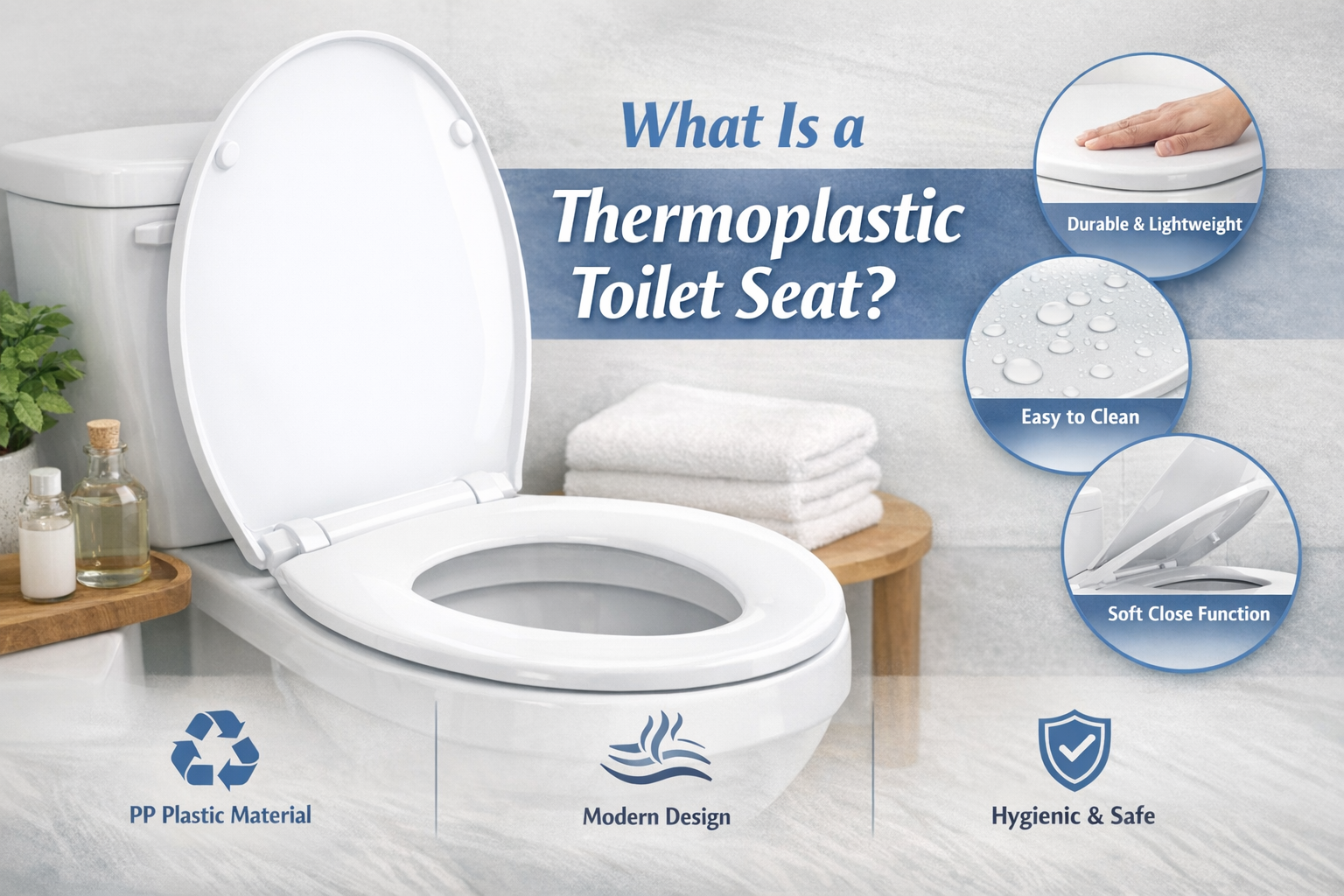
A thermoplastic toilet seat is a toilet seat made from a plastic material that softens when heated and can be molded into shape. It is widely used in the toilet seat industry because it is lightweight, affordable, and practical for large-volume production.
In simple terms, this type of seat is often chosen for standard retail lines, wholesale supply, replacement products, and budget-friendly bathroom programs. Many buyers prefer it because it offers a good balance of cost, function, and broad market demand.
For importers, distributors, retailers, and OEM buyers, understanding thermoplastic material is important because it affects price, product feel, appearance, and positioning. This guide explains what a thermoplastic toilet seat is, how it compares with thermoset and UF, and what buyers should check before ordering in bulk.
What Does Thermoplastic Mean in a Toilet Seat?
Thermoplastic refers to a material that becomes soft when heated and can be shaped during manufacturing. This is different from thermoset materials, which become permanently hard after molding.
In toilet seat production, this material behavior matters because it affects:
- product weight
- cost level
- manufacturing efficiency
- surface hardness
- market positioning
A thermoplastic toilet seat is commonly used in standard product lines because it is efficient to produce and works well for large orders.
What Materials Are Used in Thermoplastic Toilet Seats?
The most common material used in a thermoplastic toilet seat is polypropylene, also known as PP.
That is why many buyers connect thermoplastic seats with PP seats. In many cases, a PP model is one of the most common types within this category.
These materials are often selected because they offer:
- lighter weight
- lower production cost
- practical daily use
- standard mass-production efficiency
- good fit for budget product lines
For buyers, it is useful to understand one simple point:
- thermoplastic toilet seat = broader material category
- PP toilet seat = one of the most common specific material types
What Are the Main Features of a Thermoplastic Toilet Seat?
This material category has several features that make it popular in mass-market bathroom products.
Lightweight Structure
One of the main features is low weight. Compared with thermoset or wood-based models, thermoplastic seats are usually easier to handle, install, and transport.
Lower Cost
A thermoplastic toilet seat is often chosen because it supports more affordable pricing. This makes it a strong option for budget retail lines and wholesale supply.
Good for Large-Volume Production
This material works well in standardized production. Factories can usually produce thermoplastic models efficiently for high-volume orders.
Easy to Clean
The smooth plastic surface is practical for daily cleaning. This makes the product suitable for residential, retail, and basic commercial use.
Broad Market Demand
Many end users simply want a toilet seat that is functional, affordable, and easy to replace. Thermoplastic products fit that demand well.
Advantages of Thermoplastic Toilet Seats
There are several reasons why buyers choose this material.
Competitive Pricing
A thermoplastic toilet seat is usually more affordable than premium alternatives such as thermoset or UF. This helps buyers serve price-sensitive markets more easily.
Lightweight and Easy to Handle
The lighter structure makes these seats practical for shipping, installation, and standard retail programs.
Suitable for Wholesale Orders
Because the material is efficient to process, it is often used for volume orders, distributor supply, and supermarket product lines.
Good for Entry-Level Collections
This type of seat is a practical choice for basic and entry-level bathroom product ranges.
Easy to Position in Standard Retail Lines
Retailers often include thermoplastic models because they are simple, functional, and easy for customers to understand.
Disadvantages of Thermoplastic Toilet Seats
Although thermoplastic toilet seats are practical, they are not always the best fit for every market.
More Basic Appearance
Compared with thermoset or UF models, thermoplastic products usually look simpler and less premium.
Lower Surface Hardness
The surface is generally softer than thermoset material. This means it may show scratches more easily over time.
Lighter Product Feel
Some buyers and end users prefer heavier products because they associate weight with quality. In those cases, thermoplastic may feel less premium.
Not Ideal for Higher-End Bathroom Programs
If the goal is to create a more refined or premium product line, a thermoplastic toilet seat may not be the first choice.
Is a Thermoplastic Toilet Seat a Good Choice?
Yes, a thermoplastic toilet seat is a good choice for buyers who want a lightweight, affordable, and practical product for broad market demand.
It is especially suitable for:
- retail and supermarket programs
- wholesale supply
- entry-level bathroom collections
- budget residential projects
- distributors serving mass-market customers
It is usually less suitable for buyers who want a harder surface or a more premium appearance.
Thermoplastic Toilet Seat vs Thermoset Toilet Seat
This is one of the most important comparisons for buyers.
|
Item |
Thermoplastic Toilet Seat |
Thermoset Toilet Seat |
|
Material behavior |
Softens when heated |
Hardens permanently after molding |
|
Appearance |
More basic |
More refined |
|
Weight |
Lighter |
Heavier |
|
Surface hardness |
Lower |
Higher |
|
Cost |
Lower |
Higher |
|
Best for |
Budget and mass-market programs |
Mid-range and premium lines |
A thermoplastic toilet seat is usually better when cost and light weight matter most. A thermoset toilet seat is usually better when buyers want a stronger finish and more premium positioning.
Thermoplastic Toilet Seat vs PP Toilet Seat
Many buyers ask whether a thermoplastic toilet seat is the same as a PP toilet seat.
In many cases, they are closely related. PP is one of the most common thermoplastic materials used for toilet seats. That means many PP models belong to this broader material category.
So in practical terms:
- thermoplastic toilet seat = general category
- PP toilet seat = one common example within that category
This is why buyers often compare the two terms during product research.
Thermoplastic Toilet Seat vs UF Toilet Seat
Another useful comparison is between thermoplastic and UF.
|
Item |
Thermoplastic Toilet Seat |
UF Toilet Seat |
|
Material type |
Thermoplastic plastic |
Thermosetting urea-formaldehyde |
|
Appearance |
More basic |
More premium |
|
Surface hardness |
Lower |
Higher |
|
Weight |
Lighter |
Heavier |
|
Cost |
Lower |
Higher |
|
Best for |
Budget product lines |
Mid-range and premium collections |
A thermoplastic toilet seat is usually more suitable for cost-sensitive product lines. A UF toilet seat is more suitable for buyers who want stronger surface quality and a better premium look.
Where Are Thermoplastic Toilet Seats Commonly Used?
This material is widely used in several important sales channels.
Retail and Supermarket Programs
Many retailers use thermoplastic seats in standard bathroom ranges because they support budget-friendly pricing.
Budget Residential Projects
These models are often used in projects where the focus is on function, availability, and cost control.
Wholesale and Distribution Programs
Distributors often include thermoplastic products in their assortment because they are easy to sell and practical for repeat orders.
Entry-Level OEM Product Lines
For OEM buyers building affordable collections, this material is often a practical starting point.
Replacement Toilet Seat Programs
Because these products are widely available in standard sizes, they are often used in replacement and maintenance product lines.
Who Should Choose a Thermoplastic Toilet Seat?
This type of seat is a good fit for buyers who focus on practicality, competitive pricing, and broad customer demand.
It is especially suitable for:
- distributors and importers
- supermarket buyers
- e-commerce sellers
- entry-level OEM brands
- buyers serving budget-focused markets
It is less suitable for product lines that need a more premium appearance or stronger surface hardness.
What Should Buyers Check Before Ordering Thermoplastic Toilet Seats?
Before placing a bulk order, buyers should confirm several important points.
Shape and Size
Make sure the seat shape matches the toilet standard in the target market.
Weight and Positioning
A lighter product is useful in many cases, but buyers should confirm whether this matches customer expectations.
Hinge Type
The product may come with standard, soft close, or quick release hinges. The right option depends on the target market.
Packaging and Labeling
Retail and private label projects may need:
- logo printing
- color box packaging
- barcode labels
- user instructions
- export carton marks
MOQ and Lead Time
Minimum order quantity and delivery time should be confirmed early, especially for customized orders.
Quality Consistency
Because these products are often sold in volume, consistent molding, fit, and packaging quality matter a lot.
Can Thermoplastic Products Be Customized?
Yes. Many suppliers support OEM and private label development for this type of toilet seat.
Common options may include:
- custom packaging
- logo printing
- color adjustments
- hinge upgrades
- barcode labels
- soft close function
This makes thermoplastic products useful for buyers who want to build a branded but cost-effective bathroom collection.
How to Choose a Reliable Thermoplastic Toilet Seat Manufacturer
Selecting the right supplier is just as important as choosing the right material.
Check Production Experience
A factory with real experience in thermoplastic production is usually better at molding control and volume supply.
Review Material Stability
Stable raw material quality helps improve product consistency in large orders.
Evaluate Molding Capability
Good molding affects shape accuracy, seat fit, and overall appearance.
Confirm OEM Support
If the project includes logo printing, custom packaging, or product upgrades, the supplier should be able to support OEM or ODM requirements.
Ask About Export Experience
Experienced exporters usually understand packaging, documentation, and international buyer expectations more clearly.
Review Samples Carefully
Before mass production, buyers should check samples for fit, hinge quality, finish, and packaging suitability.
FAQ About Thermoplastic Toilet Seats
What is a thermoplastic toilet seat made of?
A thermoplastic toilet seat is made from a plastic material that softens when heated and can be molded into shape. PP is one of the most common examples.
Is this type of seat durable?
Yes. It is generally durable enough for normal daily use, especially in standard residential and retail markets.
Is thermoplastic better than thermoset?
Thermoplastic is often better for lower-cost, lighter, and mass-market products. Thermoset is usually better for a harder surface and more premium appearance.
Is a thermoplastic seat the same as PP?
In many cases, PP is one of the most common specific types within the thermoplastic category.
Are these products lightweight?
Yes. One of the main advantages of this material is its lower weight compared with thermoset and wood-based alternatives.
Are thermoplastic seats suitable for wholesale orders?
Yes. They are widely used in wholesale and distribution programs because they are practical and cost-effective.
Can these seats be customized for OEM projects?
Yes. Many manufacturers support logo printing, packaging customization, hinge options, and other private label requirements.
How does thermoplastic compare with UF?
Thermoplastic is usually lighter, lower in cost, and more basic in appearance. UF is usually harder, heavier, and more premium.
Conclusion
A thermoplastic toilet seat is a practical and widely used option for buyers who want light weight, affordable pricing, and strong suitability for large-volume production. It is commonly used in retail, wholesale, replacement, and entry-level OEM product lines because it offers good value for broad market demand.
Compared with thermoset or UF, thermoplastic usually provides lower cost and lighter weight, but with a more basic appearance and lower surface hardness. In many cases, PP is one of the most common specific materials within this category.
For importers, distributors, retailers, and OEM buyers, the right choice depends on target market expectations, budget, and supplier capability. If you are looking for a reliable thermoplastic toilet seat manufacturer for wholesale or private label supply, choosing the right factory is the key to building a stable and competitive product range.