What Sanitary Ware Brands Need from an OEM Toilet Seat Supplier
For sanitary ware brands and global procurement managers, a toilet seat is more than a functional accessory. It is a key touchpoint that influences how end users perceive the quality, comfort, and reliability of the entire bathroom suite.
While the ceramic bowl forms the foundation of a sanitary ware product line, the toilet seat is the part users interact with most frequently. A poorly fitted, unstable, noisy, or inconsistent toilet seat can weaken the perceived value of the whole product, even when the ceramic itself is well designed.
For this reason, selecting the right toilet seat supplier for sanitary ware companies is not only a purchasing decision. It is a long-term brand, quality, and supply chain decision.
Sanitary ware brands need an OEM partner who understands product fit, material selection, quality control, customization, packaging, and long-term supply stability. This article explains what brands should look for when choosing an OEM toilet seat supplier.
Why Toilet Seats Matter to Sanitary Ware Brands
For sanitary ware brands, the toilet seat represents the final part of the user experience. It affects how the customer feels about the product every day.
A toilet seat that feels unstable, closes loudly, mismatches the ceramic color, or fails too quickly may create after-sales complaints. Even if the ceramic toilet is well manufactured, the end user often judges the complete product by the parts they touch and use most often.
That is why sanitary ware companies should not treat toilet seats as a simple add-on. They should evaluate toilet seat suppliers based on fit, consistency, material quality, customization support, and long-term production reliability.
A strong OEM toilet seat supplier should help the brand maintain:
- Consistent product appearance
- Stable user experience
- Reliable quality across repeat orders
- Clear packaging and labeling standards
- Smooth communication during OEM projects
Product Fit: Matching Toilet Seats with Ceramic Designs
One of the most important requirements for sanitary ware brands is product compatibility.
Different ceramic toilet designs may have different shapes, hole distances, rim curves, and installation requirements. If the toilet seat does not match the ceramic body properly, it may cause installation issues, shaking, poor alignment, or customer dissatisfaction.
A professional OEM toilet seat supplier should be able to evaluate:
- Hole distance
- Seat dimensions
- Oval, D-shape, round, or square design compatibility
- Hinge structure
- Top-fix or bottom-fix installation requirements
- Quick-release function compatibility
- Ceramic contour matching
For sanitary ware brands, this technical matching process is especially important when developing a new product series or replacing an existing seat supplier.
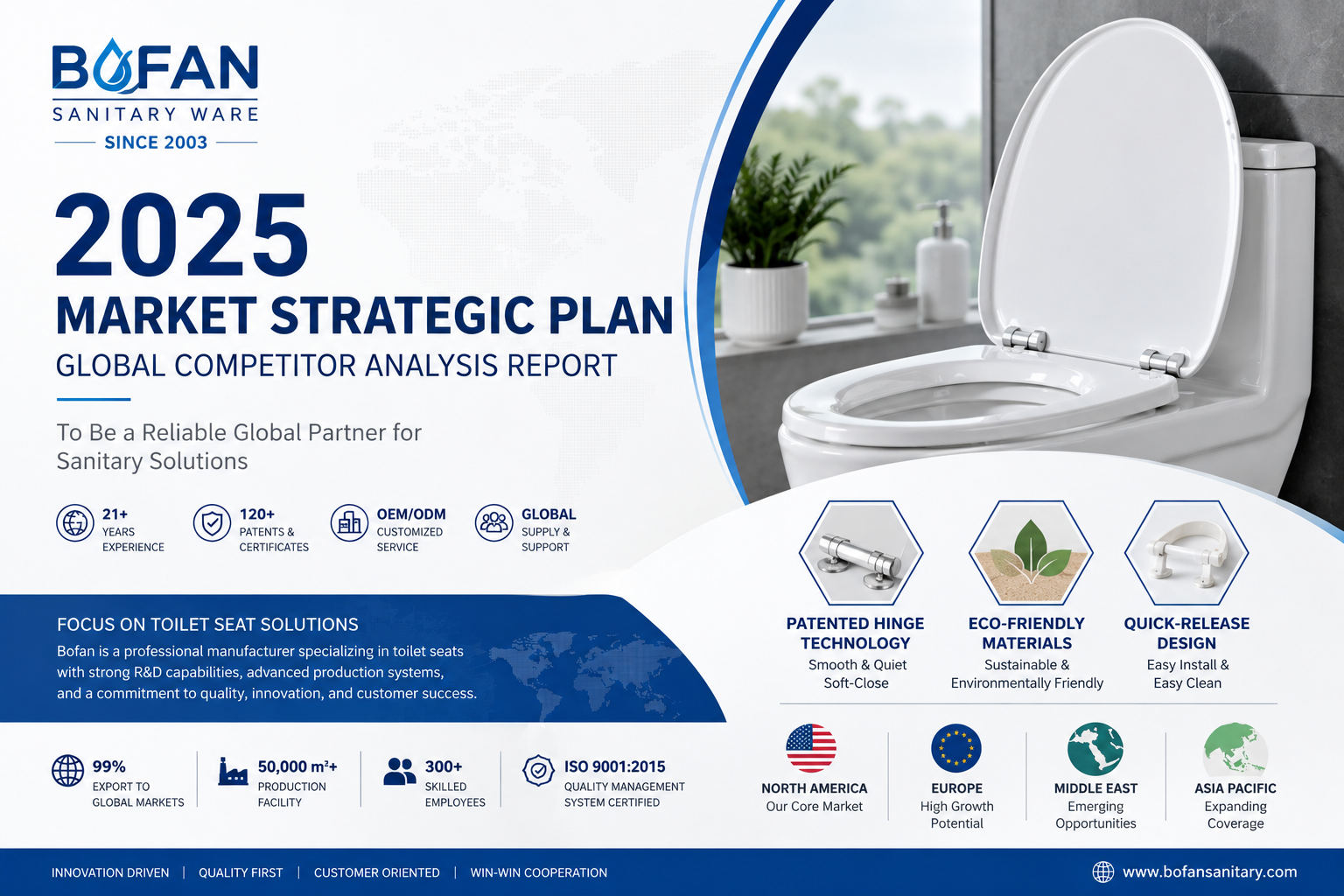
BOFAN can support OEM buyers by evaluating toilet seat structure, hinge options, material selection, and customization requirements based on the buyer’s project needs.
Material Options and Consistency for Different Markets
Sanitary ware brands often serve different markets, price levels, and distribution channels. Therefore, they need a toilet seat supplier that can offer multiple material options instead of only one product type.
Common toilet seat material options include:
UF Toilet Seats
UF toilet seats are often selected for premium and mid-to-high-end product lines. They offer a hard surface, a ceramic-like appearance, and good scratch resistance, making them suitable for brands that focus on quality perception.
PP Toilet Seats
PP toilet seats are lightweight, durable, and cost-effective. They are suitable for large-volume projects, distributors, and markets that require practical and price-sensitive solutions.
MDF and Wooden Toilet Seats
MDF and wooden toilet seats are often used for specific regional markets or design-focused collections. They can provide a warmer appearance and are suitable for certain retail or decorative product lines.
For sanitary ware companies, the key is not only choosing the right material, but also ensuring material consistency across repeat orders. Color, surface finish, weight, hinge compatibility, and packaging must remain stable from one production batch to another.
BOFAN supports multiple toilet seat material options, including MDF, PP, UF, wooden, and molded wood toilet seats, helping brands match different product lines and market needs.
Quality Control and Compliance Documentation
For sanitary ware brands, quality control is not only about checking finished products. It is about building a repeatable system that reduces after-sales problems and supports long-term cooperation.
A reliable OEM toilet seat supplier should provide clear quality control processes covering:
- Incoming material inspection
- Production process inspection
- Hinge and accessory checking
- Surface and color consistency checking
- Packaging inspection
- Pre-shipment inspection
- Product testing records when required
For international buyers, documentation is also important. Depending on the market, brands may need product specifications, material information, packaging details, inspection records, or relevant test reports.
Instead of relying only on verbal promises, sanitary ware brands should work with suppliers that can provide structured quality control documentation and clear communication during production.
BOFAN focuses on stable production management, product inspection, and documentation support for OEM and bulk toilet seat orders.
OEM Support: Logo, Color, Packaging, and Private Label
Sanitary ware brands usually need more than a standard product. They often require a supplier who can support brand customization across both the product and packaging.
OEM toilet seat customization may include:
- Custom logo printing
- Color matching
- Private label packaging
- Retail box design
- Barcode and label placement
- Instruction sheet support
- Hinge and accessory options
- Material and shape selection
For retail buyers and sanitary ware brands, packaging consistency is also part of brand presentation. A good OEM toilet seat supplier should understand how the product will be displayed, shipped, stored, and sold.
BOFAN supports OEM and ODM toilet seat projects with custom logo, color, packaging, and product configuration options for B2B buyers.
Supply Stability for Long-Term Brand Programs
For sanitary ware companies, choosing a supplier is not only about one order. It is about whether the supplier can support repeated purchasing, product consistency, and long-term brand programs.
A suitable OEM toilet seat supplier should be able to support:
- Stable repeat orders
- Consistent product specifications
- Clear communication during production
- Flexible material options
- Packaging and labeling consistency
- Long-term product line support
Supply chain flexibility is also becoming more important for global buyers. Brands working across different markets may need more options for production planning and delivery coordination.
BOFAN has production resources in China and Thailand, which can support different sourcing and supply chain needs for international buyers. Specific production arrangements can be discussed based on the buyer’s target market, order requirements, and project schedule.
How to Choose the Right OEM Toilet Seat Supplier
When evaluating a toilet seat supplier for sanitary ware companies, buyers should look beyond unit price.
A more complete evaluation should include:
- Does the supplier understand ceramic compatibility?
- Can they support multiple materials?
- Can they provide OEM logo, color, and packaging options?
- Do they have a clear quality control process?
- Can they support repeat orders with consistent specifications?
- Can they communicate clearly during sampling and production?
- Do they understand the needs of sanitary ware brands, importers, and distributors?
A strong supplier should not only deliver products. It should help the brand reduce risk, improve consistency, and support long-term growth.
Conclusion
For sanitary ware brands, the toilet seat is a small component with a large impact on product perception. The right OEM toilet seat supplier can help ensure better product fit, material consistency, quality control, packaging presentation, and supply stability.
BOFAN works with B2B buyers who need reliable OEM toilet seat solutions, including material selection, custom logo, packaging support, and project-based manufacturing cooperation.
If you are looking for a toilet seat supplier for sanitary ware companies, BOFAN can help evaluate your project requirements and provide suitable OEM toilet seat solutions for your brand.
Contact BOFAN to discuss your OEM toilet seat project, material requirements, packaging needs, and long-term supply plan.
FAQ
1. What should sanitary ware brands look for in a toilet seat supplier?
Sanitary ware brands should look for product fit, material consistency, OEM customization ability, quality control process, packaging support, and long-term supply stability.
2. Why is product fit important for OEM toilet seat projects?
Product fit affects installation, stability, appearance, and user experience. A toilet seat should match the ceramic design, hole distance, hinge structure, and overall product style.
3. Can BOFAN support custom toilet seat OEM projects?
Yes. BOFAN can support OEM toilet seat projects, including material selection, logo customization, color options, packaging design, and project evaluation based on buyer requirements.
4. Which toilet seat materials are suitable for sanitary ware brands?
Common options include UF, PP, MDF, wooden, and molded wood toilet seats. The best choice depends on the target market, price level, product positioning, and project requirements.
5. How can sanitary ware companies reduce supplier risk?
Brands can reduce supplier risk by choosing a supplier with stable production management, clear quality control processes, documentation support, and experience working with B2B buyers.
Table of Contents
- What Sanitary Ware Brands Need from an OEM Toilet Seat Supplier
- Why Toilet Seats Matter to Sanitary Ware Brands
- Product Fit: Matching Toilet Seats with Ceramic Designs
- Material Options and Consistency for Different Markets
- Quality Control and Compliance Documentation
- OEM Support: Logo, Color, Packaging, and Private Label
- Supply Stability for Long-Term Brand Programs
- How to Choose the Right OEM Toilet Seat Supplier
- Conclusion
-
FAQ
- 1. What should sanitary ware brands look for in a toilet seat supplier?
- 2. Why is product fit important for OEM toilet seat projects?
- 3. Can BOFAN support custom toilet seat OEM projects?
- 4. Which toilet seat materials are suitable for sanitary ware brands?
- 5. How can sanitary ware companies reduce supplier risk?