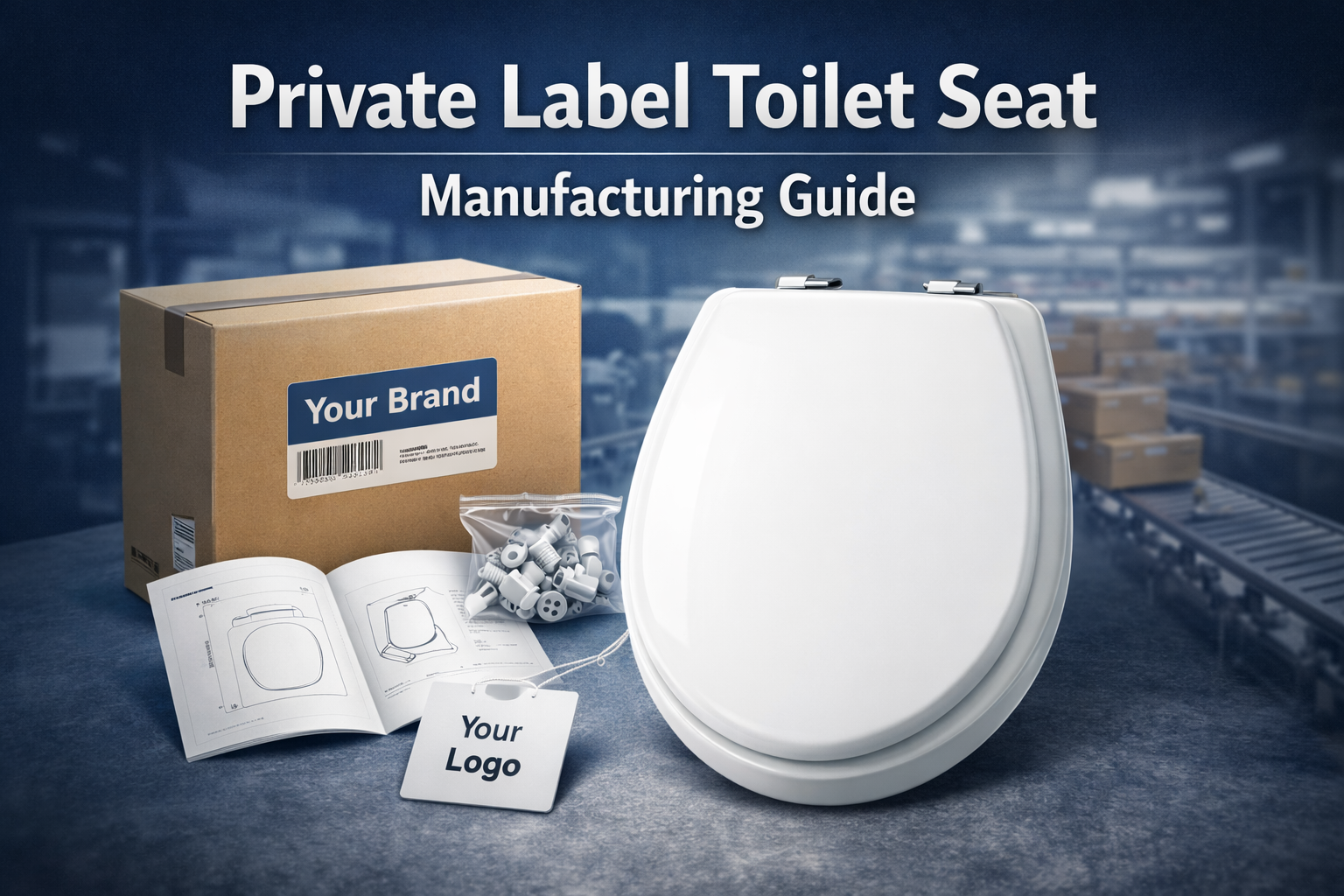
Many buyers choose private label toilet seat manufacturing when they want to build a branded product line instead of selling generic products.
In today’s market, branding, packaging, and product consistency matter more than ever. A private label project is not only about adding a logo to a product. It also involves product selection, packaging execution, sample approval, and repeat-order stability.
As a professional toilet seat manufacturer, BOFAN works with private label buyers on branded toilet seat projects for different markets and product levels. For buyers who want long-term growth, the right manufacturing partner can make a big difference in product quality, market positioning, and brand execution.
This guide explains how private label toilet seat manufacturing works and what buyers should confirm before starting a project.
What Is a Private Label Toilet Seat?
A private label toilet seat is produced by a manufacturer but sold under the buyer’s own brand.
In this model, the buyer owns the brand identity and market positioning, while the manufacturer handles product production and supply. The final product is not sold under the factory’s name. Instead, it is presented as part of the buyer’s own product line.
Private label branding may include:
- logo application
- packaging design
- barcode labels
- manuals
- retail presentation
- carton marking
In other words, private label is not only about putting a name on the product. It is about creating a branded product that fits the buyer’s market strategy.
Why Buyers Choose Private Label Toilet Seat Manufacturing
There are several reasons why buyers choose private label toilet seat manufacturing instead of selling standard unbranded products.
One major reason is brand building. Private label allows buyers to create their own product identity instead of competing only on price.
Another reason is better market positioning. A branded product usually has more value than a generic product because it creates stronger customer recognition and can support better presentation in retail and e-commerce channels.
Private label also helps reduce direct price comparison. When the product is presented under the buyer’s own brand with its own packaging and positioning, it is easier to create differentiation.
For many importers, distributors, retailers, and e-commerce sellers, private label manufacturing is a practical way to build a more repeatable long-term business.
Buyers often work with manufacturers like BOFAN when they want to combine product supply with practical branding execution.
What Can Be Customized in a Private Label Toilet Seat Project?
A private label toilet seat project can involve different levels of customization depending on the buyer’s goals and the manufacturer’s capability.
Product Material
A buyer may choose different materials based on product positioning, market preference, and budget. Common options include:
- PP toilet seat
- UF toilet seat
- MDF toilet seat
- wooden toilet seat
Each material has a different role in the market. PP is practical and cost-effective. UF is often used for cleaner and more premium-looking products. MDF and wooden styles are usually chosen for decorative or design-led product lines.
Shape and Size
The product can also be matched to different toilet standards and target markets. Common options include:
- round
- elongated
- D-shape
- market-specific fit options
Correct shape and fit are important because branding means very little if the product does not fit the end market correctly.
Hinge Functions
A private label project may also include different hinge functions, such as:
- standard hinges
- soft close toilet seat function
- quick release toilet seat function
These functional upgrades often affect product value perception and final pricing.
Color and Finish
Appearance is another important part of private label development. Depending on the product line, buyers may choose:
- white
- black
- custom colors
- matte finish
- gloss finish
- wood effect
- decorative surface styles
Logo Application
Branding can be added in different ways, including:
- logo printing
- sticker labels
- laser marking
The most suitable method depends on the product type, packaging style, and brand positioning.
Packaging and Accessories
Packaging is one of the most important parts of a private label project. A buyer may need:
- retail boxes
- private label cartons
- barcode labels
- instruction manuals
- fitting kits
- shipping marks
At BOFAN, private label toilet seat projects often combine product selection, hinge function, branding, and packaging development based on the target market.
How Private Label Toilet Seat Manufacturing Usually Works
A private label toilet seat project usually follows a clear process.
First, the buyer shares the target market, product requirements, and branding expectations.
Second, the manufacturer suggests suitable product options based on those needs.
Third, quotation and sample arrangement are prepared.
Fourth, logo details and packaging requirements are confirmed.
Fifth, the sample is reviewed and approved.
Sixth, the order moves into bulk production.
Seventh, the finished goods are inspected, packed, and shipped.
Finally, repeat-order support continues if the product line performs well.
This process helps buyers move from product idea to branded bulk supply in a more controlled way.
What Services Should a Private Label Toilet Seat Manufacturer Provide?
A strong private label manufacturer should offer more than production alone. It should also support the buyer through the full project process.
Product Recommendation Based on Market Positioning
Not every material or function fits every market. A good manufacturer should help the buyer choose products that match the intended price level, customer type, and sales channel.
Sample Development Support
Most private label buyers need to review a sample before bulk production. A manufacturer should be able to prepare samples clearly and efficiently so the buyer can confirm structure, finish, packaging, and product feel.
Packaging and Artwork Coordination
A private label manufacturer should be able to coordinate:
- retail box layout
- outer carton design
- barcode placement
- manual content
- label details
Packaging execution is a key part of branding, not just an extra step.
Bulk Production Management
Once the order moves into production, the manufacturer should be able to keep output consistent across larger quantities and future repeat orders.
Export Packing and Shipment Support
For international buyers, export support is also important. Carton marks, loading plans, shipment coordination, and packaging accuracy all matter.
At BOFAN, private label projects often include sample confirmation, artwork review, packaging coordination, and repeat-order management.
How Buyers Evaluate a Private Label Toilet Seat Manufacturer
Before starting cooperation, buyers usually evaluate a factory in several practical ways.
Check Product Quality Consistency
Private label projects depend on repeatable quality. A strong sample is important, but the factory must also be able to maintain that standard in bulk production.
Check Packaging Execution Ability
A manufacturer should be able to turn artwork into production-ready packaging correctly. Mistakes in cartons, labels, or retail boxes can damage the final branded presentation.
Check OEM and Branding Experience
It is helpful to work with a factory that has handled branded projects before. Experience in logo application, packaging, and customer-specific requirements usually makes the process smoother.
Check Communication Efficiency
Private label work involves many details. Artwork, samples, specifications, and timing all need clear communication. A slow or unclear manufacturer can create delays and mistakes.
Check Lead Time and Repeat-Order Support
Long-term supply matters more than one shipment. Buyers should confirm whether the manufacturer can support repeat orders reliably and keep the same product standard over time.
Buyers often prefer manufacturers like BOFAN that can combine manufacturing, branding support, and delivery coordination in one workflow.
Private Label vs Standard Toilet Seat Supply: What Is the Difference?
There is a clear difference between private label supply and standard product supply.
Standard supply is usually faster and simpler. The buyer chooses an existing product and purchases it with little or no branding change.
Private label supply is more brand-oriented. It allows the buyer to build stronger recognition through product selection, packaging, logo application, and market positioning.
Standard products usually compete more directly on price. Private label products have more potential to support long-term brand value and customer loyalty.
The better choice depends on the buyer’s strategy. If the goal is quick stock sourcing, standard supply may be enough. If the goal is to build a brand, private label is usually the stronger route.
Which Toilet Seat Types Are Common in Private Label Projects?
Different private label brands choose different product types depending on their market.
PP Toilet Seats for Practical Retail Lines
PP toilet seats are often used in practical and price-sensitive retail lines because they are lightweight and cost-effective.
UF Toilet Seats for Upgraded Brand Collections
UF toilet seats are commonly chosen for cleaner, harder-surface products with a more premium appearance.
MDF Toilet Seats for Decorative Product Lines
MDF toilet seats are more suitable for decorative collections where visual style and a heavier feel matter more.
Soft Close Toilet Seats for Higher Value Positioning
Soft close toilet seats are often selected when the brand wants stronger value perception and better end-user experience.
Quick Release Toilet Seats for Added Convenience
Quick release toilet seats are useful in product lines where cleaning convenience and maintenance ease are part of the value message.
What Buyers Should Confirm Before Starting a Private Label Project
Before starting production, buyers should confirm the key points clearly.
Brand Positioning
Is the line meant to be economy, mid-range, or premium? This affects material choice, function, finish, and packaging.
Material Choice
The buyer should confirm whether the product line is better suited to PP, UF, MDF, or another material.
Shape and Fit Standard
Round, elongated, D-shape, and hole spacing should all be confirmed early to avoid fit issues later.
Hinge Function
The buyer should define whether the product needs standard hinges, soft close, or quick release function.
Packaging and Branding Details
Logo, retail box, barcode, manual, label placement, and carton marks should all be confirmed before bulk production begins.
MOQ, Sample Time, Lead Time, and QC Standard
These are often the points where private label projects either run smoothly or face problems. They should be clearly agreed at the beginning.
How BOFAN Supports Private Label Toilet Seat Projects
As a professional toilet seat manufacturer, BOFAN supports private label toilet seat projects for different product levels and market needs.
BOFAN can support:
- material selection
- hinge options
- logo application
- packaging coordination
- sample approval before bulk production
- wholesale supply
- repeat-order management
This makes BOFAN suitable for importers, distributors, retailers, and e-commerce brands that want a more organized and reliable private label cooperation process.
Conclusion
Private label toilet seat manufacturing helps buyers build branded, repeatable, and more competitive product lines.
A strong manufacturer should offer more than product supply. It should also support packaging, samples, branding execution, and long-term order consistency.
As a professional toilet seat manufacturer, BOFAN focuses on helping buyers develop reliable private label toilet seat solutions for different markets and business models. For buyers who want long-term brand growth, the right manufacturing partner can make the process much more stable and effective.