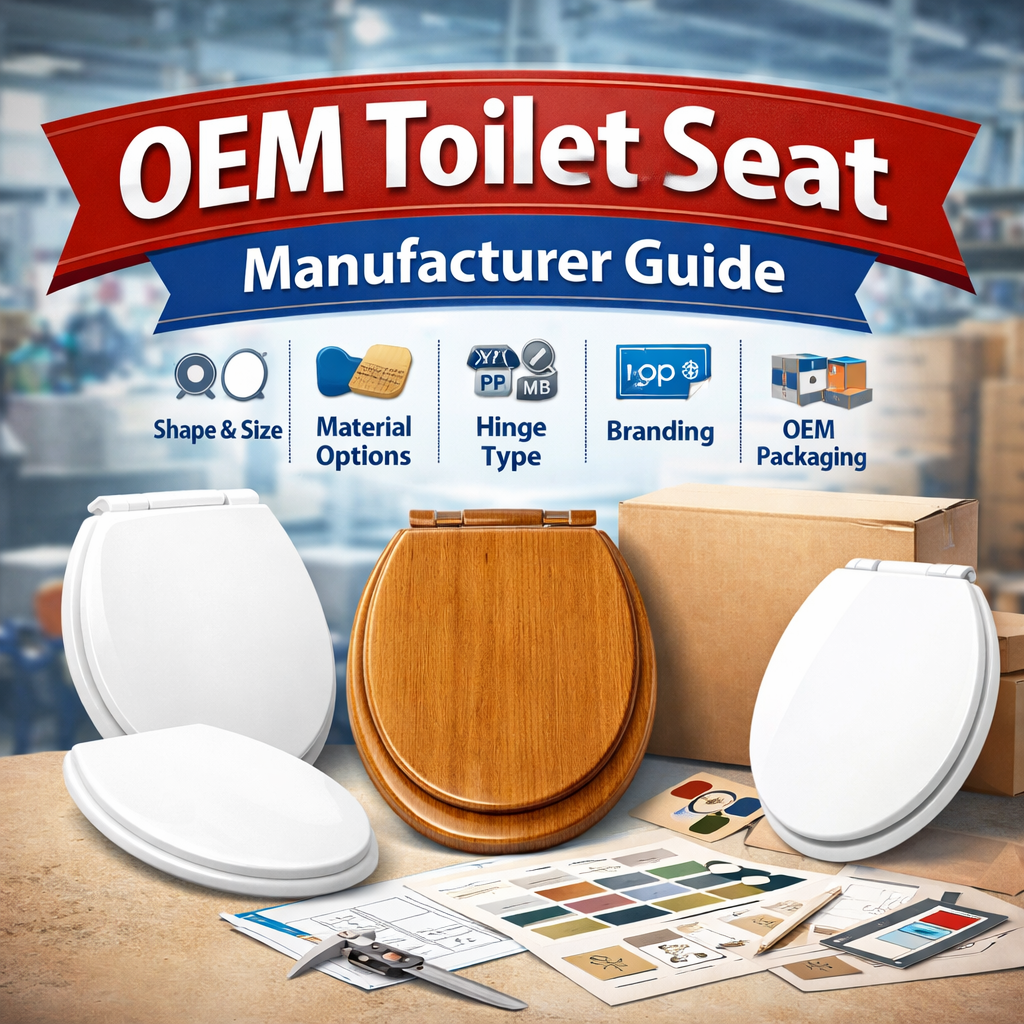
Finding the right OEM toilet seat manufacturer is an important step for buyers who want to build their own toilet seat product line. Whether you are an importer, wholesaler, retailer, e-commerce brand, or sanitary ware company, the manufacturer you choose affects product quality, customization flexibility, packaging consistency, and long-term supply stability.
OEM manufacturing is not only about producing a toilet seat. It is about turning a buyer’s product idea into a market-ready item that can be sold under the buyer’s own brand. That may involve material selection, hinge options, custom sizing, logo application, packaging design, and repeat production support.
In this guide, we explain what an OEM toilet seat manufacturer does, what services buyers should expect, how an OEM project usually works, and how to choose the right manufacturing partner.
What Is an OEM Toilet Seat Manufacturer?
An OEM toilet seat manufacturer is a factory that produces toilet seats according to the buyer’s requirements. Instead of selling only standard factory products, the manufacturer works with the customer to create a product that fits the customer’s brand, market, and sales plan.
In the toilet seat industry, OEM usually includes customization in areas such as:
- shape and size
- material selection
- hinge system
- color and finish
- logo application
- packaging and accessories
The buyer sells the product under its own brand or product line, while the manufacturer handles production and technical execution. This is different from simply buying ready-made stock products with no changes.
A professional OEM manufacturer should be able to support not only production, but also product evaluation, sampling, packaging development, and repeat-order consistency.
Why Buyers Work with an OEM Toilet Seat Manufacturer
There are several reasons why buyers choose to work with an OEM toilet seat manufacturer instead of sourcing only standard models.
One important reason is private label development. Many buyers want to sell under their own brand rather than offer the same generic products as other sellers. OEM manufacturing allows them to create a more branded and differentiated product.
Another reason is market fit. Different countries and customer groups have different needs in terms of material, seat shape, hinge function, and packaging. OEM support helps buyers build products that match those specific requirements more closely.
Buyers also use OEM manufacturing to improve product positioning. A customized toilet seat line can give a stronger value impression and support better pricing than a standard unbranded product.
Finally, many wholesale and brand buyers choose OEM because they want a long-term manufacturing partner that can support repeat orders and future product development.
What Can an OEM Toilet Seat Manufacturer Customize?
One of the biggest advantages of working with an OEM manufacturer is product flexibility. Depending on the project, a manufacturer may support customization in several key areas.
Shape and Size
A professional OEM toilet seat manufacturer can often customize seat shape and size based on target market standards or special product requirements. Common shapes include round, elongated, D-shape, and other market-specific options.
For export projects, dimensions such as length, width, and hole spacing are very important. Different countries may use different toilet fitting standards, so size confirmation is one of the first steps in OEM development.
Material Options
Material choice affects price, durability, appearance, and target market positioning. Common OEM material options include:
- PP toilet seat
- UF toilet seat
- MDF toilet seat
- wooden toilet seat
Some buyers want a cost-effective PP product line, while others prefer UF for a harder surface and more premium feel. Decorative collections may use MDF or wood-style products to match a different market style.
Hinge Functions
Hinges are one of the most important technical parts of a toilet seat. A manufacturer may support:
- standard hinges
- soft close toilet seat hinges
- quick release toilet seat systems
- different installation methods such as top-fix or bottom-fix
Hinge performance has a direct effect on product value, user experience, and customer satisfaction, so this part should always be clearly defined.
Color, Finish, and Surface Style
OEM projects may also include customization in color and finish. Buyers may request white, black, custom colors, wood-effect finishes, matte surfaces, gloss surfaces, or decorative printing.
This allows buyers to create product lines that match their brand style or retail channel needs more effectively.
Logo and Branding
Branding is one of the main reasons buyers use OEM production. Manufacturers may support logo printing, sticker labels, laser marking, instruction manuals, and carton branding so the final product is ready for the buyer’s own sales channel.
Packaging and Accessories
Packaging is also a key part of OEM development. A manufacturer may support:
- private label retail boxes
- standard export cartons
- barcode labels
- instruction sheets
- installation hardware kits
For e-commerce sellers, retailers, and distributors, packaging quality and brand presentation are often just as important as the product itself.
What Services Should a Professional OEM Toilet Seat Manufacturer Provide?
A good OEM manufacturer should offer more than production alone. It should also provide project support that helps the buyer move from idea to shipment with less risk and better control.
Product Evaluation Before Quotation
Before quoting, a professional factory should understand what the buyer actually needs. That includes checking material choice, shape, hinge function, packaging requirements, and production feasibility. Good evaluation at the beginning helps avoid problems later.
Sampling and Development Support
Sampling is an important part of most OEM projects. A manufacturer should be able to prepare samples, make adjustments when needed, and help the buyer confirm product details before mass production.
OEM Packaging Support
A professional OEM toilet seat manufacturer should also support packaging confirmation. This may include retail box layout, carton marks, barcode placement, and instruction sheet preparation.
Bulk Production Control
Once the order moves into production, the manufacturer should be able to maintain quality consistency across bulk quantities. This is especially important for buyers who plan repeat orders or sell under their own brand.
Export and Shipping Coordination
For overseas customers, the manufacturer should also understand export packing, shipment preparation, and communication around delivery schedules. This makes the entire OEM process more reliable and professional.
How to Choose the Right OEM Toilet Seat Manufacturer
Choosing the right manufacturer is one of the most important decisions in an OEM project. Price matters, but it should not be the only factor.
Check Real Manufacturing Experience
The first question is whether the company has real toilet seat manufacturing experience. A specialized manufacturer usually understands seat materials, hinge structures, mold requirements, packaging, and quality control better than a general supplier.
Review Material and Product Range
A stronger OEM partner should usually offer more than one material type and more than one product style. This gives the buyer more flexibility when building a product line or expanding into new market segments.
Evaluate OEM Flexibility
Not every factory can handle the same level of customization. Buyers should check whether the manufacturer can support logo application, packaging changes, hinge upgrades, finish changes, and product modifications that match the project.
Check Sample Quality
Sample evaluation is one of the best ways to judge a manufacturer. Buyers should look closely at finish quality, hinge performance, seat structure, hardware, packaging, and overall workmanship.
Confirm Lead Time and MOQ
MOQ and lead time should fit the buyer’s business model. A large distributor, a private label e-commerce brand, and a project buyer may all need different order structures. The right manufacturer should be able to explain realistic production timing and order quantity requirements.
Assess Communication Efficiency
Clear communication is essential in OEM work. The manufacturer should be able to understand requirements, confirm specifications, and respond with practical solutions. Slow or unclear communication can create costly mistakes.
OEM Toilet Seat Manufacturer vs Standard Supplier
There is a clear difference between working with an OEM manufacturer and buying from a standard supplier.
A standard supplier mainly offers ready-made products. This can be useful when the buyer only needs fast purchasing with limited changes.
An OEM toilet seat manufacturer, however, is better suited for buyers who need branding, material selection, packaging customization, or a more differentiated product line. OEM manufacturing is usually the better choice when the project involves long-term business planning and repeat-order development.
In simple terms, standard supply is more about fast product sourcing, while OEM manufacturing is more about building a product line that matches the buyer’s own market strategy.
Who Usually Needs an OEM Toilet Seat Manufacturer?
Different types of buyers work with OEM manufacturers for different reasons.
Importers often need market-specific products and private label options.
Wholesalers may want repeatable bulk supply under their own product range.
Retailers often need custom packaging and standardized product presentation.
E-commerce brands may use OEM to build differentiated listings and private label products.
Sanitary ware brands often need toilet seats that match their own product portfolio and positioning.
Project buyers may need custom specifications, durable materials, and controlled bulk delivery for large orders.
What Should Buyers Confirm Before Starting an OEM Toilet Seat Project?
Before starting an OEM project, buyers should define the key product and order details clearly.
Target Market and Product Positioning
The buyer should know where the product will be sold and what type of customer it is designed for. Market positioning affects material choice, packaging level, hinge function, and final product style.
Material Selection
The buyer should decide whether the project is better suited for PP, UF, MDF, or another material. The right material depends on the price level, style, durability expectation, and end-use scenario.
Shape, Size, and Fit Standard
The seat shape, dimensions, and hole spacing should be confirmed early. These measurements are critical for market compatibility.
Hinge Requirements
The buyer should define whether the product needs a standard hinge, soft close system, quick release function, or another installation requirement. This should never be left unclear.
Branding and Packaging Details
Logo files, artwork, carton marks, barcode labels, and instruction sheets should all be confirmed before bulk production begins. Late packaging changes often create delays.
MOQ, Sample Time, and Lead Time
The buyer should also confirm minimum order quantity, sample development timing, and production lead time in advance. This helps align the OEM project with purchasing plans and market launch timing.
How a Typical OEM Toilet Seat Project Works
A typical OEM toilet seat project usually follows a clear process.
First, the buyer sends the product requirements.
Second, the manufacturer reviews the specifications and confirms what can be produced.
Third, the manufacturer prepares a quotation and arranges sample development if needed.
Fourth, the buyer reviews and approves the sample.
Fifth, packaging details are confirmed.
Sixth, the order moves into bulk production.
Finally, the products are inspected, packed, and shipped according to the agreed terms.
A professional OEM manufacturer should be able to guide the buyer through each step clearly and efficiently.
What Makes Long-Term Cooperation with an OEM Toilet Seat Manufacturer Successful?
A successful long-term OEM partnership depends on more than the first order.
One key factor is stable product consistency. Buyers need future orders to match earlier approved samples and previous shipments.
Another factor is realistic communication. Both sides should understand market requirements, production limits, and timelines clearly.
Repeat-order support is also important. A good OEM partner should be able to handle reorders efficiently without restarting the process from the beginning every time.
In addition, packaging consistency, quality control, and future product development support all matter in long-term cooperation. The best OEM relationship is one where the manufacturer grows with the buyer’s business and helps reduce sourcing risk over time.
Conclusion
An OEM toilet seat manufacturer is more than a product supplier. The right manufacturing partner helps buyers create branded, market-fit, and repeatable toilet seat products that support long-term business growth.
For importers, wholesalers, retailers, e-commerce brands, and sanitary ware companies, OEM manufacturing offers more control over product design, packaging, and market positioning. But to get the best results, buyers need to choose a manufacturer that combines real production experience, customization ability, clear communication, and stable quality control.
In the end, choosing the right OEM toilet seat manufacturer can help reduce sourcing risk, improve product consistency, and build a stronger long-term business.