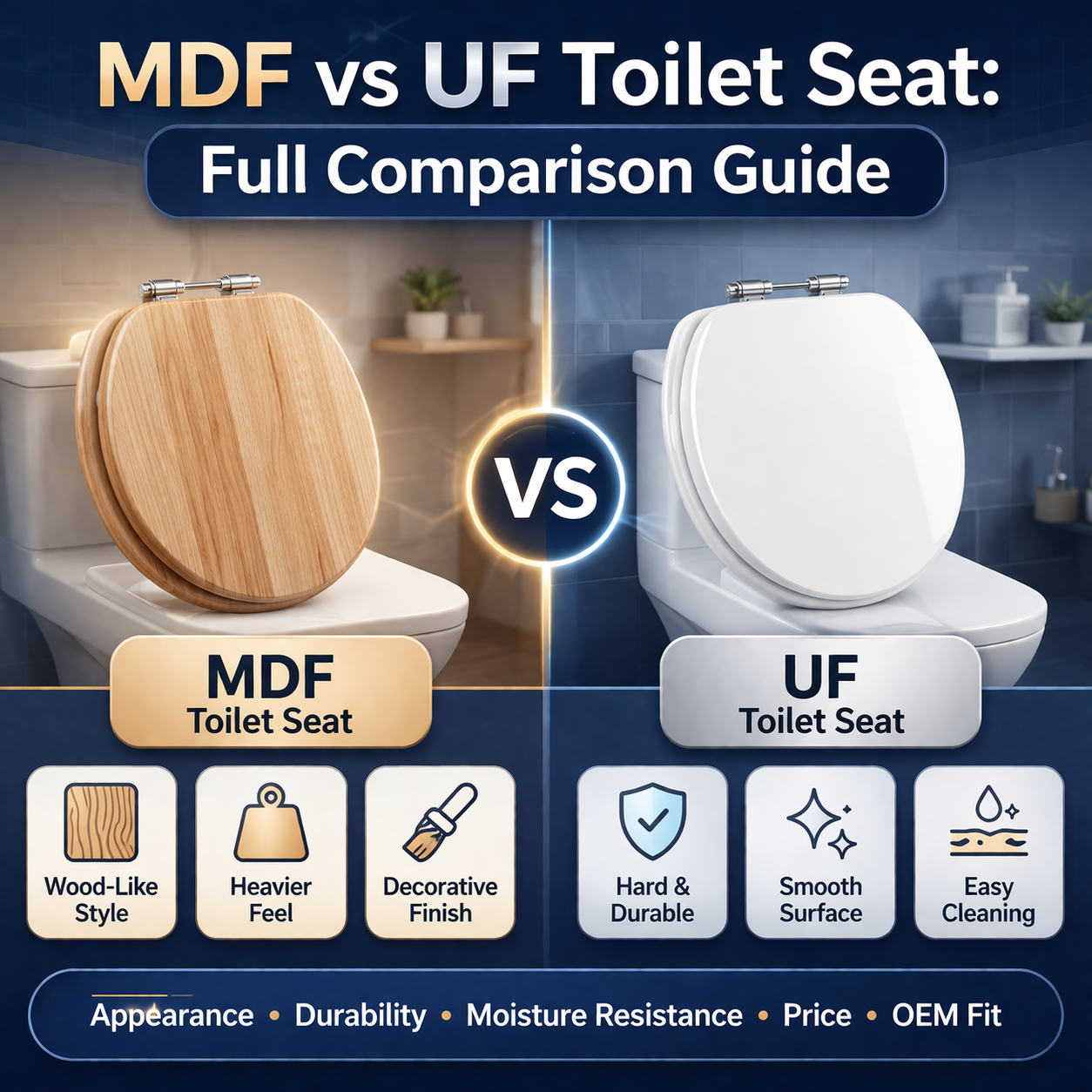
When buyers compare toilet seat materials, MDF and UF are two of the most common options. Both are widely used in the market, but they are designed for different product styles, price levels, and customer expectations.
An MDF toilet seat is often chosen for its heavier feel and decorative wood-like appearance, while a UF toilet seat is usually preferred for its harder surface, modern look, and stronger scratch resistance. For importers, wholesalers, retailers, and OEM buyers, understanding the difference between these two materials is important because material choice affects not only appearance, but also durability, maintenance, packaging, positioning, and customer satisfaction.
In this guide, we explain the key differences between MDF and UF toilet seats, compare them across important buying factors, and show which option may be better for different business needs.
What Is an MDF Toilet Seat?
An MDF toilet seat is a toilet seat made from medium-density fiberboard. MDF is an engineered wood-based material made by compressing wood fibers with resin under heat and pressure. In the toilet seat industry, MDF seats are usually finished with paint, printed design, decorative coating, or wood-effect surface treatment.
One of the main reasons buyers choose MDF toilet seats is their appearance. They often have a warmer, more traditional style and can be designed to look like painted wood or decorative wood products. MDF toilet seats also tend to have a heavier and more solid feel, which some consumers associate with a classic bathroom style.
Because of their design flexibility, MDF toilet seats are commonly used in decorative collections, home-style bathroom ranges, and product lines that focus on visual appeal.
What Is a UF Toilet Seat?
A UF toilet seat is a toilet seat made from urea-formaldehyde, a thermosetting material often associated with duroplast toilet seats. In the market, UF seats are usually positioned as a more durable and more premium material option compared with many entry-level plastic products.
UF toilet seats are known for their hard, dense surface and clean appearance. They usually have a smooth finish, a more refined look, and better surface hardness than wood-based alternatives. Because of these properties, UF toilet seats are often used in modern bathroom designs, premium retail ranges, and higher-specification OEM projects.
Another reason UF toilet seats are popular is that the material performs well in terms of surface stability, scratch resistance, and easy cleaning. For many buyers, this makes UF an attractive option when durability and appearance both matter.
MDF vs UF Toilet Seat: What Is the Main Difference?
The main difference between an MDF vs UF toilet seat is the material structure and the product positioning that comes with it.
MDF is a wood-based engineered material that is often selected for a heavier feel and a more decorative, traditional look. UF is a molded thermoset material that is usually chosen for a harder surface, a more modern finish, and better long-term surface performance.
In simple terms:
- MDF toilet seat = more decorative, wood-like style, heavier feel
- UF toilet seat = harder surface, cleaner modern look, stronger durability impression
Neither material is automatically better in every situation. The right choice depends on the market, the end customer, the product design, and the business goal behind the purchase.
MDF vs UF Toilet Seat Compared by Key Factors
Appearance and Style
Appearance is one of the first things buyers notice when comparing MDF and UF toilet seats.
An MDF toilet seat often gives a more traditional and decorative impression. It can be produced in painted finishes, printed patterns, or wood-look surfaces that suit classic bathroom designs. This makes MDF attractive for customers who want a warmer, more home-oriented style.
A UF toilet seat, by contrast, usually looks cleaner and more modern. The surface is often smoother and more refined, which fits contemporary bathroom collections and premium product ranges. For brands that want a sleek and upgraded appearance, UF is often the more suitable option.
Surface Hardness and Durability
When it comes to surface hardness, UF usually has the advantage.
A UF toilet seat generally offers a harder and denser surface, which helps improve scratch resistance and daily wear performance. This is one reason why UF is often considered a more premium material in many markets.
An MDF toilet seat can still perform well, but its durability depends heavily on the quality of its coating, finishing process, and edge sealing. If the surface treatment is strong and consistent, MDF can be a good product. However, in terms of raw material structure, UF is usually seen as the more durable option for repeated use.
Moisture Resistance
Moisture resistance is a very important comparison point.
A UF toilet seat normally performs better in humid bathroom conditions because the material surface is dense and less vulnerable to swelling. This makes it a more reliable choice where moisture exposure is frequent.
An MDF toilet seat can be more sensitive to water if the surface layer or edge protection is damaged. In normal bathroom use, a well-made MDF seat can still perform properly, but it requires good finishing quality. In environments with long-term moisture exposure, UF is often the safer material choice.
Weight and Feel
MDF and UF also feel different in actual use.
An MDF toilet seat often feels heavier and more substantial. Some buyers and end users like this because it gives a traditional, solid impression.
A UF toilet seat also feels strong, but in a different way. Instead of a wood-like weight impression, UF usually gives a sense of compactness, hardness, and surface quality. Buyers who prefer a modern premium feel often lean toward UF.
Cleaning and Maintenance
A UF toilet seat is usually easier to clean because its surface is dense, smooth, and less likely to show wear quickly. This is especially useful in households or commercial settings where hygiene and low maintenance are important.
An MDF toilet seat can also be cleaned effectively, but its long-term maintenance depends more on whether the surface coating remains intact. Once the finish is damaged, the seat may become more vulnerable to wear.
For buyers who prioritize easy maintenance and long-term daily performance, UF often has the stronger position.
Price and Market Positioning
Price can vary based on hinge quality, packaging, product design, and order volume, so material alone does not decide the final cost. However, in market positioning, MDF and UF are often used differently.
An MDF toilet seat is commonly used in decorative or style-focused product lines. It can work well in mid-range collections where visual appeal is a major selling point.
A UF toilet seat is often positioned in the mid-to-high-end market. Its harder surface, modern appearance, and durability allow it to fit premium retail products, branded lines, and upgraded OEM projects.
Which Is Better: MDF or UF Toilet Seat?
The answer depends on what the buyer values most.
If the priority is wood-like style, decorative finish, and a heavier classic feel, then an MDF toilet seat may be the better option.
If the priority is surface hardness, scratch resistance, moisture resistance, modern appearance, and easier cleaning, then a UF toilet seat is often the better choice.
So the better material is not universal. It depends on:
- target market
- bathroom style
- end-user expectations
- retail price point
- product usage conditions
- overall brand positioning
For many professional buyers, the real question is not “Which material is better?” but “Which material is better for this customer and this sales channel?”
MDF vs UF Toilet Seat for Different Buyers
For Retail and Supermarket Buyers
Retail and supermarket buyers usually need products that match consumer preferences clearly. If the product line is built around classic, decorative, or home-style bathroom design, MDF may fit well. If the retailer wants a cleaner, more modern, and more premium-looking product, UF is often the better choice.
Packaging presentation also matters. MDF may work well in decorative collections, while UF often supports a stronger upgraded product message.
For E-commerce Sellers
E-commerce sellers usually care about product differentiation, customer reviews, and return risk.
An MDF toilet seat may attract buyers visually if the design is decorative or wood-effect based. However, the seller should pay attention to finish quality and packaging protection.
A UF toilet seat may perform better in terms of customer satisfaction when buyers are looking for durability, easy cleaning, and a more premium surface feel. For many online sellers, that can help reduce complaints related to quality perception.
For OEM and Private Label Brands
For OEM toilet seat projects, both MDF and UF can work well. The best choice depends on the product concept.
Brands that want a classic or decorative range may prefer MDF. Brands that want a more modern and durable premium line may prefer UF. In private label projects, the material should match the packaging style, product message, and intended target market.
For Project and Commercial Use
For project supply, durability and maintenance are especially important. In many cases, UF toilet seats are more suitable for project or commercial-oriented requirements because of their harder surface and lower maintenance concerns.
That said, MDF may still be used in certain decorative or residential-style projects where appearance is a higher priority than long-term heavy-use resistance.
What Should Buyers Check Before Choosing MDF or UF Toilet Seats?
Before making a final decision, buyers should look beyond the material name alone.
Target Market Preferences
Different countries and customer groups may have different preferences. Some markets accept decorative wood-style seats more easily, while others prefer modern white UF products. Understanding the target market helps avoid product mismatch.
Bathroom Style and Product Positioning
The material should match the visual identity of the product line. MDF works well for traditional or decorative positioning. UF works well for modern, minimal, and premium positioning.
Hinge Quality and Overall Construction
Material is only one part of the product. Hinge quality, seat structure, fitting system, and overall workmanship also have a major influence on performance. A good material with poor hinges will still create customer complaints.
Moisture Exposure and End Use
If the product will be used in conditions where moisture exposure is frequent, UF is usually the safer option. If the product is more design-focused and the finish quality is strong, MDF can still be a good choice.
Packaging and Shipping Protection
Both MDF and UF toilet seats need proper packaging, but decorative MDF products may require extra attention to finish protection. Buyers should make sure the packaging matches the product material, channel, and shipping method.
Can MDF and UF Toilet Seats Both Be Used for OEM Projects?
Yes, both MDF toilet seats and UF toilet seats can be used for OEM projects.
For OEM buyers, both materials offer customization opportunities such as:
- shape and size
- hinge type
- seat and lid structure
- color or surface finish
- logo application
- packaging design
- installation accessories
The best OEM material depends on what the buyer wants to achieve in the market. If the brand needs a classic decorative line, MDF may be more suitable. If the brand wants a more modern, durable, and premium product range, UF may be a better fit.
That is why OEM development should start with market positioning rather than material preference alone.
How to Choose the Right MDF or UF Toilet Seat Manufacturer
Choosing the right manufacturer is just as important as choosing the material.
A reliable supplier should understand both MDF and UF production characteristics and be able to explain the advantages and limitations of each one clearly. The manufacturer should also be able to offer stable quality control, hinge solutions, packaging support, and OEM or ODM service when needed.
It is especially helpful to work with a factory that can support:
- different material options
- consistent finish quality
- hinge customization
- sampling and product development
- private label packaging
- stable delivery and inspection control
A professional toilet seat manufacturer should not only quote prices, but also help buyers select the right material for their specific business model.
Conclusion
When comparing MDF vs UF toilet seat options, both materials have their own advantages.
An MDF toilet seat is often valued for its decorative look, heavier feel, and traditional style appeal. A UF toilet seat is often preferred for its harder surface, modern appearance, easier cleaning, and stronger durability performance.
The better choice depends on your target customer, product positioning, bathroom style, channel needs, and usage conditions. For wholesalers, retailers, e-commerce sellers, and OEM buyers, the most effective approach is to compare not only the material itself, but also the hinge quality, finish standard, packaging, and manufacturing capability behind the product.
In the end, the right toilet seat material is the one that best matches your market and helps your product line perform more successfully.