How OEM Brands Choose a Toilet Seat Manufacturer
OEM brands do not choose a toilet seat manufacturer in the same way as ordinary buyers.
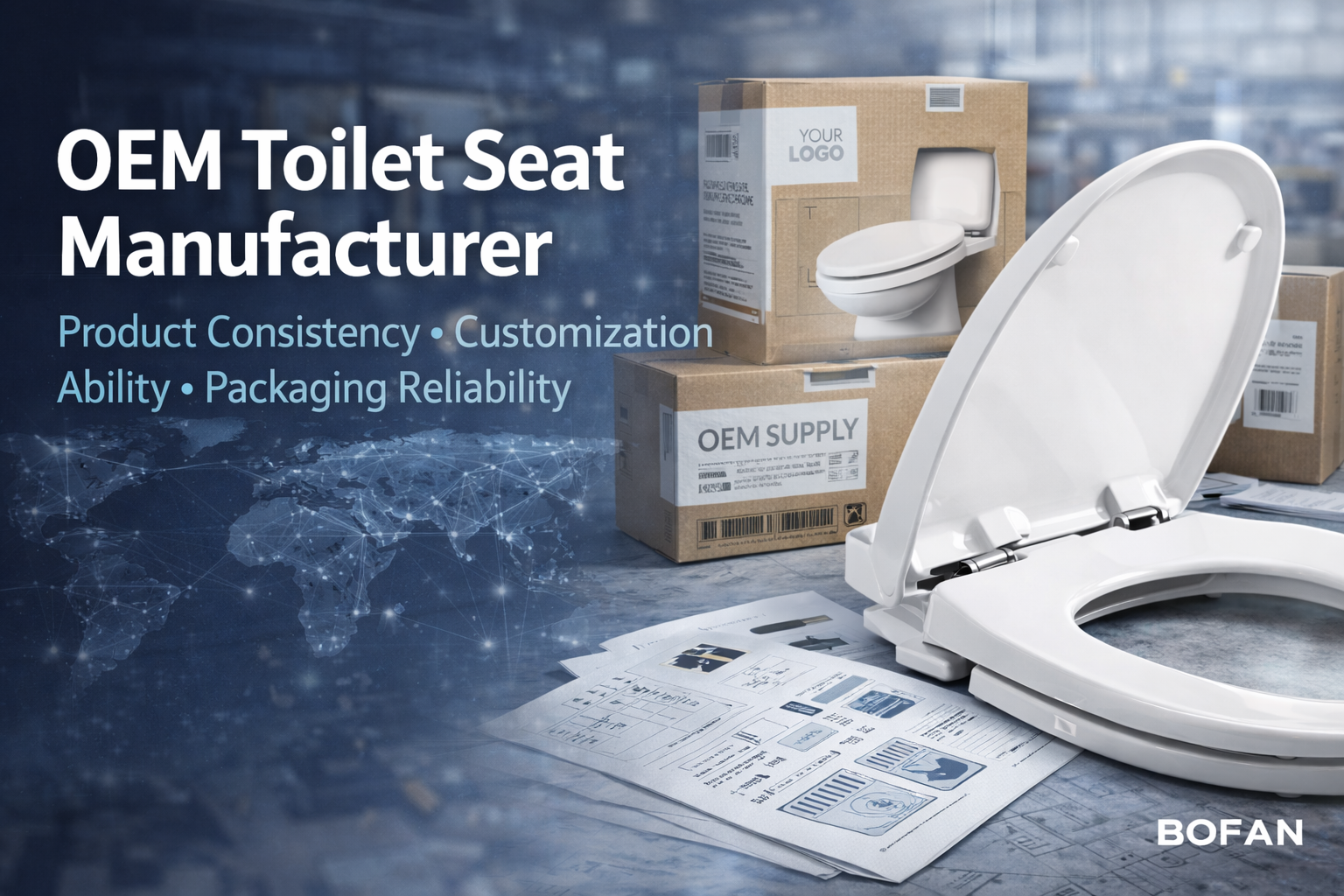
For OEM projects, the focus is usually not only on price. It is on product consistency, customization ability, packaging execution, and long-term supply reliability. A manufacturer is not simply making a product. It is also helping the brand turn a market idea into a repeatable product line.
As a professional toilet seat manufacturer, BOFAN works with OEM buyers on product development, packaging coordination, and bulk production for different markets. For brand buyers, that kind of support matters because one weak supplier can quickly create quality problems, packaging mistakes, or delivery delays that damage brand reputation.
This guide explains how OEM brands choose an OEM toilet seat manufacturer, what they usually evaluate before cooperation, and what makes a factory suitable for long-term OEM business.
Why OEM Brands Need the Right Toilet Seat Manufacturer
OEM brands need more than ready-made stock products. In most cases, they want products that match their own positioning, packaging style, and market requirements.
That is why choosing the right manufacturer matters so much. A strong manufacturer helps the buyer build a product line that is consistent, scalable, and easier to manage over time. A weak manufacturer may offer a lower price at the beginning, but later cause problems in quality, packaging, or repeat-order stability.
For OEM brands, the factory is not only a production source. It is also part of the brand’s operational system. It affects how the final product looks, how it performs, and how reliably it can be reordered.
Suppliers like BOFAN are often valued by OEM buyers because they can combine product manufacturing, sample support, and packaging execution in one workflow.
What OEM Brands Usually Look for in a Toilet Seat Manufacturer
When OEM brands evaluate a toilet seat manufacturer, they usually focus on a few key areas.
Stable Product Quality
For OEM buyers, bulk consistency is far more important than one attractive sample. The factory must be able to keep the same structure, finish, hinge performance, and packaging quality across repeated orders.
OEM Customization Ability
A strong OEM manufacturer should be able to support product adjustments based on the buyer’s market needs. That may include material, hinge type, shape, finish, logo, and packaging.
Sample Development Support
Most OEM projects require sampling before bulk production. The manufacturer should be able to prepare samples clearly, adjust details when needed, and guide the buyer through the approval process.
Packaging and Branding Experience
Packaging is a major part of OEM work. A suitable manufacturer should understand logo placement, barcode execution, carton marking, instruction sheets, and retail-ready packaging standards.
Lead Time and Supply Reliability
OEM brands usually plan product launches, stock cycles, and repeat orders in advance. If the manufacturer cannot deliver reliably, the brand may lose sales opportunities and damage customer trust.
Communication and Project Coordination
Clear communication is essential. Artwork, specifications, samples, packaging, and bulk orders all require careful coordination. Slow or unclear communication can create costly mistakes.
What Can an OEM Toilet Seat Manufacturer Customize?
A good OEM factory should be able to support customization across multiple parts of the product.
Material Options
Common material choices include:
- PP toilet seat
- UF toilet seat
- MDF toilet seat
- wooden toilet seat
Each material fits a different market level and product style. PP is practical and cost-effective. UF usually offers a harder surface and a more premium look. MDF and wooden styles are often used for decorative or design-led products.
Shape and Fit Options
Different markets require different fit standards. A manufacturer may support:
- round
- elongated
- D-shape
- market-specific sizing and hole spacing
Correct fit is one of the most important points in OEM supply because a well-designed package means nothing if the product does not match the toilet correctly.
Hinge Functions
Hinge systems are a major part of toilet seat performance. A manufacturer may support:
- standard hinge
- soft close toilet seat function
- quick release toilet seat function
Hinge quality has a direct effect on user experience, return risk, and overall product value.
Color and Finish
OEM buyers may also need customization in appearance, including:
- white
- black
- custom colors
- matte or gloss finish
- wood effect
- decorative or printed surfaces
Logo and Packaging
Branding is one of the most common OEM requirements. A factory may support:
- logo printing
- stickers or labels
- retail box design
- outer cartons
- barcodes
- manuals and inserts
At BOFAN, OEM toilet seat projects can include customization in material, shape, hinge function, finish, logo, and packaging based on the target market and brand requirements.
How OEM Brands Evaluate a Manufacturer Before Cooperation
Before starting a long-term OEM relationship, brands usually evaluate the manufacturer in a more detailed way.
Review Sample Quality Carefully
A sample should be checked not only for appearance, but also for structure, hinge feel, fit, and finish quality. Sample review is often the first real test of factory capability.
Check Product Range
A broader product range usually means the manufacturer can support more than one product line. This is useful for brands that may expand later into different price levels or product styles.
Confirm OEM Experience
It is important to know whether the manufacturer has real OEM project experience. Factories that only sell standard products may not handle branding and packaging work smoothly.
Check Packaging Execution Ability
A manufacturer should be able to turn artwork into correct packaging output. This includes print layout, carton marks, labels, and consistency in final production packaging.
Evaluate Production and Export Coordination
For international OEM projects, the factory should also understand export packing, shipment planning, and repeat-order coordination.
OEM buyers often prefer manufacturers like BOFAN that can handle samples, artwork confirmation, packaging coordination, and bulk production with clearer project communication.
Why Price Alone Is Not Enough in OEM Toilet Seat Sourcing
Many buyers make the mistake of focusing too much on unit price.
In OEM business, the cheapest factory is not always the most cost-effective option. If the product quality is unstable, the packaging is inconsistent, or the delivery is delayed, the buyer may lose much more later through complaints, returns, or brand damage.
Poor packaging execution can also create problems. A product may be technically acceptable, but if the retail box looks inconsistent or barcode placement is wrong, the final result still damages the brand.
That is why OEM sourcing is about long-term risk control, not just finding the lowest quotation.
Which Toilet Seat Types Are Common in OEM Brand Projects?
Different OEM brands use different toilet seat types depending on positioning.
PP Toilet Seats for Practical Mass-Market Lines
PP toilet seats are commonly used in standard and practical product ranges because they are lightweight and cost-effective.
UF Toilet Seats for Upgraded Brand Collections
UF toilet seats are often chosen for cleaner appearance, harder surface feel, and a more premium product image.
MDF Toilet Seats for Decorative or Style-Led Products
MDF toilet seats are more suitable for collections where decorative design and a heavier feel matter.
Soft Close Toilet Seats for Higher Value Positioning
Soft close toilet seats are widely used when brands want stronger value perception and better user experience.
Quick Release Toilet Seats for Added Convenience
Quick release toilet seats are often included in product lines where cleaning convenience and maintenance ease are part of the value proposition.
What OEM Brands Should Confirm Before Placing an Order
Before moving to bulk production, OEM brands should confirm the key project details clearly.
Product Positioning
The buyer should know whether the line is economy, mid-range, or premium. This affects material choice, hinge level, finish style, and packaging.
Material Choice
The product should match the intended customer group and selling price. The wrong material can create a mismatch between brand promise and actual product.
Shape and Fit Standard
Round, elongated, D-shape, and hole spacing should all be confirmed early to avoid compatibility issues.
Hinge Function
The buyer should define whether the line needs standard hinges, soft close, or quick release. This affects user experience and product positioning directly.
Packaging and Branding Details
Logo files, barcode positions, manuals, retail box layouts, and carton marks should all be checked before production starts.
MOQ, Sample Time, Lead Time, and QC Standard
These points often decide whether an OEM project runs smoothly. If they are unclear at the beginning, problems usually appear later.
How a Typical OEM Toilet Seat Project Works
A typical OEM toilet seat project usually follows a clear process.
First, the buyer sends product and branding requirements.
Second, the manufacturer confirms feasible options.
Third, quotation and sample arrangement are completed.
Fourth, the sample is reviewed and approved.
Fifth, artwork and packaging details are confirmed.
Sixth, the project moves into bulk production.
Seventh, the finished goods are inspected, packed, and shipped.
Finally, repeat-order support continues if the product line is successful.
A good OEM manufacturer should be able to manage this process in a clear and predictable way.
What Makes a Good Long-Term OEM Toilet Seat Manufacturer
A strong long-term OEM partner is not just a factory with machines. It is a factory that can support the brand as it grows.
That usually means:
- stable repeat-order quality
- strong communication
- packaging consistency
- realistic lead times
- sample and product development support
- the ability to grow with the brand
As a professional toilet seat manufacturer, BOFAN focuses on helping OEM brands develop reliable toilet seat solutions with stable quality, packaging consistency, and long-term supply support.
Conclusion
OEM brands choose a toilet seat manufacturer based on much more than price.
They usually look for quality consistency, customization support, packaging capability, communication efficiency, and long-term supply reliability. The right OEM toilet seat manufacturer helps brands build a product line that is repeatable, market-ready, and easier to scale.
For buyers planning long-term OEM business, the best manufacturing partner is the one that can combine product quality, project coordination, and dependable repeat-order support. That is exactly why working with a factory like BOFAN can make a real difference in OEM toilet seat sourcing.