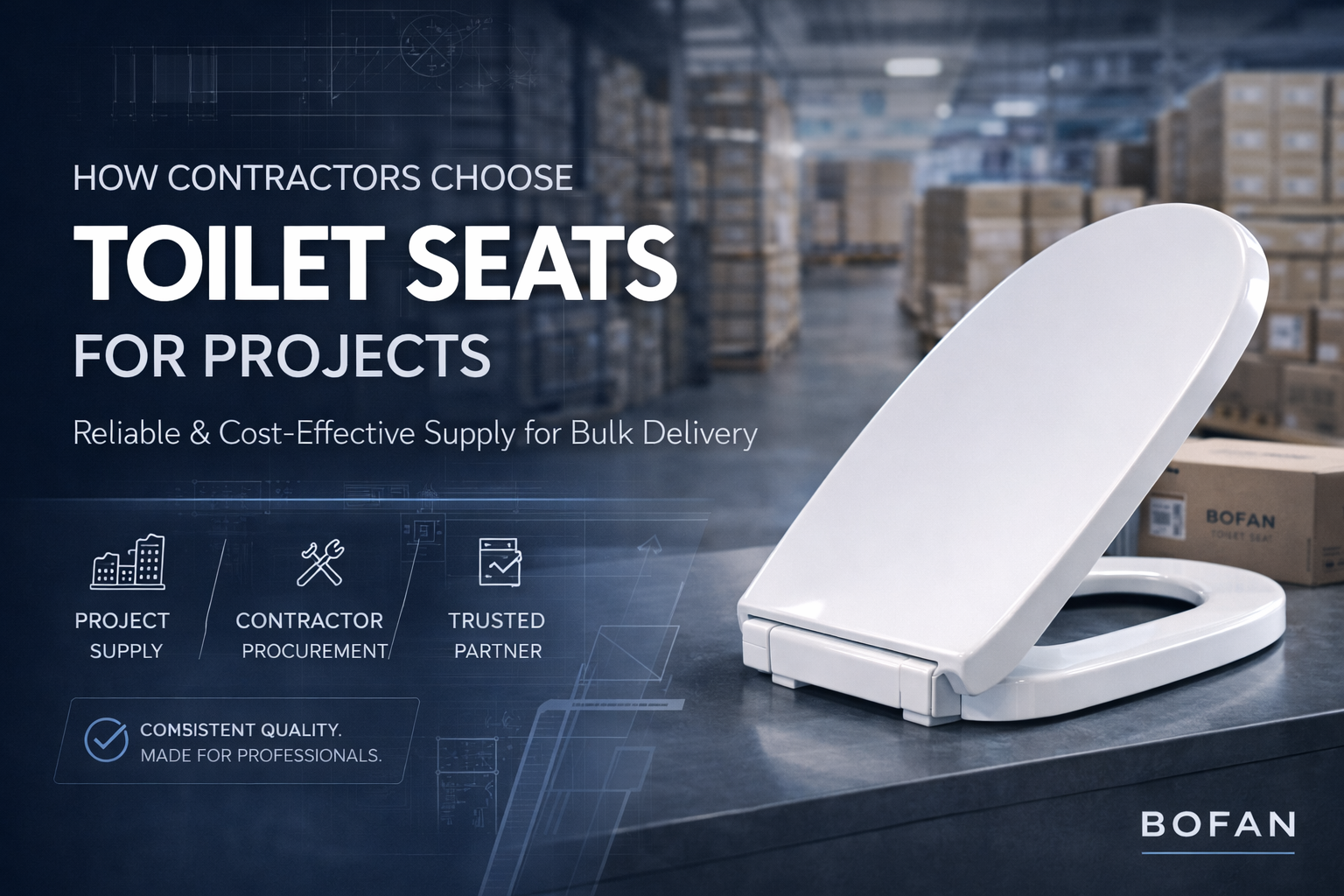
Contractors do not choose toilet seats the same way retail buyers do.
In project supply, the priority is usually not just appearance or price. It is about fit, durability, installation efficiency, delivery reliability, and consistent quality across bulk orders.
A wrong toilet seat can create more than a product issue. It can slow down installation, increase maintenance risk, and lead to replacement problems after handover. That is why contractors usually look for practical and proven solutions instead of choosing only by style.
As a professional toilet seat manufacturer and supplier, BOFAN works with contractors, distributors, and project buyers on toilet seat supply for residential, commercial, and branded project needs.
In this guide, we explain how contractors choose toilet seats for projects, what product features matter most, and what suppliers should be able to provide.
Why Toilet Seat Selection Matters in Project Supply
In project supply, toilet seats are part of the final delivery standard. They may look like a small component, but they affect installation, daily use, maintenance, and customer satisfaction.
If the wrong model is selected, problems can appear quickly. The seat may not fit correctly. Installation may take longer than expected. Maintenance teams may face more complaints later. In larger projects, even a small product mistake can affect many units at the same time.
This is why contractors usually pay close attention to product consistency. They need every batch to match the approved sample in size, structure, appearance, and function. A project cannot run smoothly if one shipment is different from the next.
Delivery timing matters too. If toilet seat supply is delayed, installation schedules may also be delayed. For contractors, reliability is often more important than trend-driven product variation.
What Contractors Usually Look for in Toilet Seats
When contractors choose toilet seats for projects, they usually focus on a few practical points.
Fit and Compatibility
The first question is simple: does the toilet seat fit the toilet correctly?
Contractors need to confirm shape, size, and hole spacing before placing an order. Common options include round, elongated, and D-shape models, but the right choice always depends on the toilet specification used in the project.
If fit is not checked carefully, installation problems can happen across multiple units. That creates time loss, extra labor, and avoidable rework.
Durability and Stability
Project buyers want products that can perform reliably over time. Toilet seats used in apartments, hotels, and commercial buildings need stable structure, dependable hinges, and materials that can handle regular use.
For contractors, durability is not just about product quality. It is also about reducing risk after handover. Weak hinges or unstable seats can quickly turn into maintenance complaints.
Easy Installation
A product may look good in photos, but if it is difficult to install, it becomes a site problem.
Contractors usually prefer toilet seats with simple fitting systems, standard hardware, and stable installation structures. The easier the seat is to install, the easier it is for site teams to complete work efficiently across multiple bathrooms.
Maintenance and Cleaning
Maintenance matters a lot in project environments. Hotels, apartments, and public-use spaces all need products that are easy to clean and easy to maintain.
In some cases, quick release toilet seats are especially useful because they make removal and cleaning easier. This can save time for maintenance teams later.
Consistent Quality Across Bulk Orders
For project supply, batch consistency is critical. Contractors cannot accept major variation in color, hinge feel, finish, or seat structure from one shipment to the next.
That is why project buyers usually prefer suppliers that can offer stable production standards and dependable repeat-order performance.
Which Toilet Seat Types Are Commonly Used for Contractors?
Different projects use different types of toilet seats. The right choice depends on project level, budget, usage environment, and customer expectations.
PP Toilet Seats for Standard Projects
PP toilet seats are widely used in standard residential and large-volume projects. They are practical, lightweight, and cost-effective. For many contractors, PP is a reliable choice when the focus is stable supply and good price-performance balance.
UF Toilet Seats for Upgraded Projects
UF toilet seats are often selected for projects that need a harder surface and a cleaner, more premium appearance. They are common in upgraded apartment projects, hotels, and branded bathroom lines.
MDF Toilet Seats for Decorative Projects
MDF toilet seats are usually chosen for projects that need a heavier feel or a more decorative style. They are more common in residential or design-led environments where appearance matters more.
Soft Close Toilet Seats for Better User Experience
Soft close toilet seats are increasingly used in projects because they offer quieter closing and a better overall user experience. They are especially suitable for apartments, hotels, and higher-positioned developments.
Quick Release Toilet Seats for Easier Maintenance
Quick release toilet seats are useful where cleaning and maintenance are important. They make removal easier and can help reduce maintenance effort after installation.
At BOFAN, project supply can cover PP, UF, MDF, soft close, and quick release toilet seat options depending on project requirements.
How Contractors Evaluate a Toilet Seat Supplier
Choosing the right product matters, but choosing the right supplier matters just as much.
Production Capacity
A project supplier must be able to handle project quantities. If the order covers multiple buildings, hotel rooms, or apartment units, the supplier needs enough production capacity to deliver on time.
Product Consistency
Contractors need the bulk order to match the approved sample. This includes size, finish, structure, and hinge performance. If product consistency is weak, project delivery becomes harder to control.
Lead Time Reliability
Project timelines are usually strict. Contractors prefer suppliers who can provide realistic lead times and follow them closely. Delays in supply can affect installation progress and final handover.
Communication and Technical Support
A good supplier should communicate clearly about dimensions, installation details, hinge functions, packaging, and order arrangements. Sample confirmation should be smooth and efficient.
Export and Project Coordination Experience
For international projects, export experience matters. The supplier should understand carton marking, shipment planning, and documentation for project delivery.
Contractors often prefer suppliers like BOFAN that can combine manufacturing, sample support, and export coordination in one workflow.
Why Contractors Often Prefer Standardized Yet Practical Solutions
Many contractors do not want unnecessary product complexity.
In project purchasing, low risk is often more valuable than excessive customization. Standardized but practical toilet seat solutions are easier to install, easier to replace, and easier to manage across larger quantities.
Proven shapes, stable fitting systems, and reliable hinge functions are usually easier to work with on site. Consistent packaging and labeling are also helpful because they reduce confusion during receiving and installation.
For many projects, the best product is not the most complex one. It is the one that fits correctly, performs reliably, and supports efficient delivery.
What Services Should a Project-Oriented Toilet Seat Supplier Provide?
A project-oriented supplier should offer more than product supply. Contractors often need service support that makes project execution easier.
Sample Confirmation Before Bulk Orders
Before bulk production starts, project buyers usually need samples to check fit, structure, hinge performance, and overall appearance. This step helps reduce risk early.
OEM or Project Customization Support
Not every project needs full OEM development, but some projects do require custom packaging, special labels, adjusted specifications, or certain hinge options. A capable supplier should be able to support these needs when necessary.
Bulk Production Management
Project orders require stable production planning. The supplier should be able to coordinate quantities, timelines, and quality consistency clearly.
Export Packing and Shipment Support
For overseas contractors and importers, export support is important. Carton marking, loading plans, and shipment coordination should all be handled carefully.
After-Sales and Replacement Coordination
A good supplier should also be able to support replacement coordination or follow-up supply when needed. This matters in real project work.
At BOFAN, project-based orders often involve specification confirmation, sample approval, production planning, and shipment coordination before bulk delivery.
How Contractors Choose Toilet Seats for Different Project Types
Not every project needs the same solution.
Apartments and Residential Projects
For apartment and residential projects, contractors often focus on practical performance, durability, and good price-performance ratio. PP and soft close models are commonly considered depending on project level.
Hotels and Hospitality Projects
Hotels usually need a balance of appearance, user experience, and durability. Soft close toilet seats and upgraded UF models are often more suitable in hospitality environments.
Public and Commercial Buildings
In public or commercial buildings, maintenance and stable installation often matter more than decorative styling. Contractors usually prefer practical, durable, and easy-to-manage solutions.
Private Label or Branded Projects
In branded or developer-led projects, packaging consistency, OEM support, finish quality, and product identity may all become more important. These projects usually need closer coordination between buyer and supplier.
What Contractors Should Confirm Before Ordering
Before placing a bulk order, contractors should confirm all major details clearly.
Product Type and Material
The buyer should decide whether the project is best suited to PP, UF, MDF, or another material. The choice should match the project level, budget, and usage environment.
Shape and Fit Standard
Shape, size, and hole spacing should be confirmed early. This is one of the most important points in avoiding installation problems later.
Hinge Function
The buyer should define whether the project needs standard hinges, soft close toilet seat function, or quick release toilet seat design. Functional requirements should not remain unclear.
Installation Requirements
Fitting kits, mounting systems, and hardware details should all be checked in advance. Installation efficiency matters a lot in project supply.
MOQ, Lead Time, and QC Standard
Quantity, production schedule, and inspection requirements should all be confirmed before bulk production begins. These details affect project planning directly.
Packaging and Project Marking Needs
Carton labels, project identification marks, and organized packaging can be very useful for site allocation and installation management.
Can BOFAN Support Toilet Seat Supply for Contractors?
Yes. BOFAN supports project-oriented toilet seat supply for contractors, distributors, importers, and project buyers looking for stable long-term cooperation.
Depending on project needs, BOFAN can support different materials, shapes, and functions, including PP, UF, MDF, soft close, and quick release options. Project cooperation may also include sampling, specification confirmation, packaging coordination, wholesale production, and shipment arrangement.
For contractors who need a reliable project supply partner, BOFAN is positioned to support both standard project products and more customized supply requirements.
How a Typical Contractor Toilet Seat Order Works
A typical contractor toilet seat order usually follows a clear process.
First, the contractor or buyer sends the project requirements.
Second, the supplier confirms product type, fit, quantity, and other specifications.
Third, quotation and sample arrangement are completed.
Fourth, the buyer reviews and approves the sample.
Fifth, the order moves into bulk production.
Sixth, the finished goods are inspected, packed, and shipped.
Finally, repeat-order or replacement support can be arranged if needed.
A professional project supplier should be able to guide the buyer through this process clearly and efficiently.
Conclusion
Contractors choose toilet seats differently from retail buyers because project supply requires consistency, fit, durability, installation efficiency, and delivery reliability.
The right supplier should provide more than products. It should also offer project understanding, clear communication, dependable bulk supply, and stable repeat-order performance.
As a professional toilet seat manufacturer and supplier, BOFAN focuses on helping contractors and project buyers develop reliable toilet seat solutions for different project types and business models. Buyers should evaluate not only price, but also compatibility, installation efficiency, product consistency, and long-term supply support when choosing a project partner.