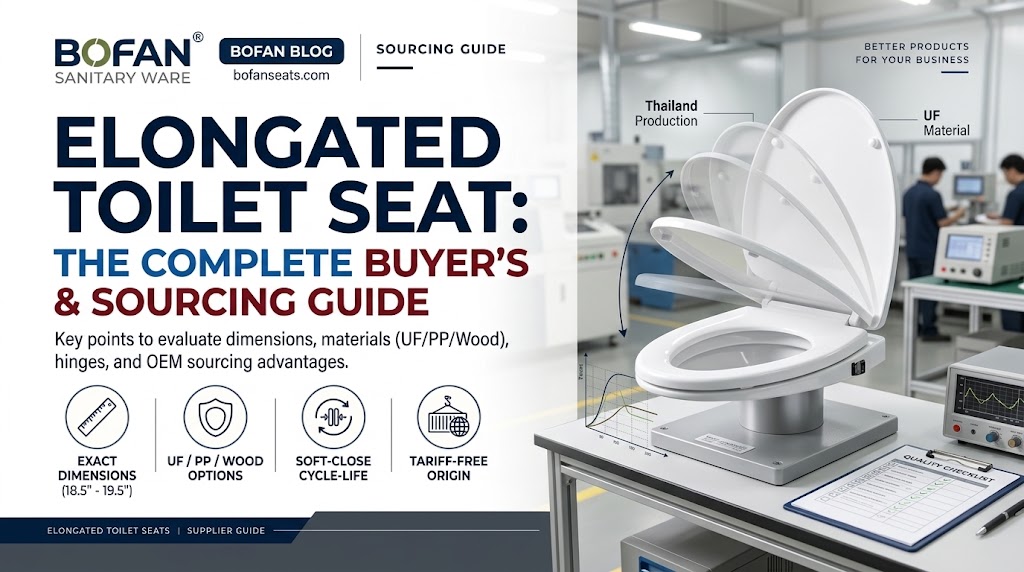
Elongated Toilet Seat: The Complete Buyer's & Sourcing Guide
Elongated toilet seats typically measure between 18.5 and 19.5 inches in length and are widely considered the standard for modern bathrooms due to their ergonomic comfort. However, for distributors, e-commerce sellers, and OEM brands, choosing the right seat goes far beyond measuring the bowl. Selecting the wrong material, overlooking hinge cycle life, or facing unexpected import tariffs can severely impact your profit margins and brand reputation.
This comprehensive guide covers everything from standard dimensions and material performance (UF vs. PP vs. Wood) to essential B2B sourcing considerations, helping you make informed procurement decisions.
What Is an Elongated Toilet Seat?
An elongated toilet seat features an oval shape designed to match elongated toilet bowls. Compared to traditional round seats, the elongated design provides an extra 2 inches of space in the front. This extra room enhances seating comfort, making it the preferred choice for most modern residential and commercial bathroom installations, particularly in the North American market.
Whether you are looking for a standard replacement or sourcing a premium toilet seat elongated for a hotel project, understanding the precise dimensions is the crucial first step.
Elongated vs. Round Toilet Seats: Standard Dimensions
The only significant difference between elongated and round toilet seats is the length of the bowl. Fitting an elongated seat on a round bowl (or vice versa) will result in overhang, instability, and a poor user experience.
Here is the standard size comparison:
| Feature | Elongated Toilet Seat | Round Toilet Seat |
| Shape | Oval / Egg-shaped | Circular |
| Standard Length | ~18.5" to 19.5" (470mm) | ~16.5" (420mm) |
| Ideal For | Standard & spacious bathrooms, commercial use | Small bathrooms, compact spaces |
How to Measure Your Toilet for an Elongated Seat
To ensure a perfect fit, you only need to check two measurements:
Hole Distance (Bolt Spread): Measure the distance between the center of the two mounting holes at the back of the bowl. In the US, the standard is 5.5 inches (140mm), while European standards typically range from 150mm to 160mm.
Bowl Length: Measure from the center of the mounting holes directly down the middle to the very front outer edge of the porcelain bowl. If it reads around 18.5 inches, you need an elongated seat.
Material Options: Which Is Best for Your Market?
Once the size is confirmed, the next critical decision is the material. The right material dictates the product's lifespan, cost, and target market positioning.
PP (Polypropylene): PP is a thermoplastic material known for being lightweight, flexible, and highly cost-effective. It is shatter-resistant and features a slightly glossy finish. PP seats are ideal for high-volume e-commerce sales, budget-friendly retail, and markets where cost control is the primary focus.
UF (Duroplast / Urea-Formaldehyde): UF is a premium thermoset material that feels heavy and cold to the touch, closely resembling ceramic. It is highly resistant to scratches, burns, and UV discoloration. Duroplast also offers natural antibacterial properties, making it the top choice for luxury hotels, commercial projects, and high-end OEM brands.
Wood / MDF: An elongated wood toilet seat offers a classic, warm aesthetic. Modern wood seats are typically made from molded MDF or solid wood core with a durable enameled or veneer finish to resist moisture. These are particularly popular in traditional North American and European markets.
The Importance of a Quality Soft Close Hinge
A common pain point for buyers and consumers alike is a soft-close mechanism that fails after only a few months, resulting in loud slamming. When sourcing an elongated soft close toilet seat, it is essential to understand what drives durability.
Cheap seats often use simple spring-loaded friction hinges that wear out quickly. High-quality seats utilize sealed hydraulic dampers filled with viscous silicone fluid, ensuring a consistent, silent descent over years of use.
Buyer's Tip: Do not just accept a "soft-close" label. Buyers should ask suppliers how cycle-life is tested, what specific test conditions are used (e.g., DIN 19516 standard), and whether the result applies to the specific hinge configuration being purchased. Reputable manufacturers typically test their dampers for 50,000 to 100,000 open-and-close cycles.
B2B Sourcing: OEM & Wholesale Considerations
For wholesale buyers and brand owners, successful procurement requires looking beyond the product specs and evaluating the manufacturer's supply chain capabilities.
Flexible Manufacturing & MOQ: High Minimum Order Quantities (MOQs) tie up cash flow and increase inventory risk. Look for suppliers offering flexible production. For instance, BOFAN supports MOQs as low as 200 pcs with a 20-day lead time
OEM / ODM Customization: Differentiation is key. A strong manufacturing partner should offer comprehensive OEM services, including custom mold development, specific color matching, logo printing on the seat or hinge, and custom retail packaging designs.
Supply Chain & Tariff Advantages: Geopolitics and trade policies heavily impact landed costs. Utilizing suppliers with diverse manufacturing bases provides significant leverage. With dual-production bases in China and Thailand, importers can avoid heavy US tariffs (0% tariff from Thailand
Quality Control: Ensure the factory operates under strict quality management systems. Look for certifications such as ISO9001, CE, and UPC to guarantee consistent product quality across bulk orders
Practical Recommendation
For E-commerce Sellers: Focus on PP elongated seats with reliable soft-close hinges. The lightweight nature reduces shipping costs, while the durability minimizes return rates.
For Hotel & Commercial Projects: Always specify UF (Duroplast) material for its unmatched scratch resistance and premium ceramic-like feel.
For Brand Owners: Leverage OEM packaging and custom finishes to build brand identity, and utilize Thailand-based production to maximize profit margins in the US market.
FAQ
Q: Can I put an elongated toilet seat on a round bowl?
A: It is highly discouraged. While the mounting holes might align, an elongated seat will overhang the front of a round bowl by about two inches. This is visually unappealing, uncomfortable, and can put stress on the hinges, leading to premature failure.
Q: Are all elongated toilet seats the exact same size?
A: While they generally fit the 18.5" standard, there can be slight variations (fractions of an inch) in width and exact length between different toilet brands (like Kohler, Toto, or American Standard). Always check the specific width and contour of the seat against your bowl for a perfect aesthetic match.
Q: What is the best way to clean a UF or PP toilet seat?
A: For both materials, use mild soap and water with a soft cloth. Avoid abrasive cleaners, scouring pads, or harsh chemicals (like bleach or pine oils), as these can strip the glossy finish of PP seats or damage the surface integrity of UF seats over time.
Q: How do I fix a slow close elongated toilet seat that has become loose?
A: A loose toilet seat elongated slow close mechanism is usually due to the mounting bolts loosening over time. Most modern seats feature a quick-release mechanism. Simply remove the seat, tighten the bolts at the base using a screwdriver or the provided tool, and snap the seat back into place.
Table of Contents
- Elongated Toilet Seat: The Complete Buyer's & Sourcing Guide
- What Is an Elongated Toilet Seat?
- Elongated vs. Round Toilet Seats: Standard Dimensions
- Material Options: Which Is Best for Your Market?
- The Importance of a Quality Soft Close Hinge
- B2B Sourcing: OEM & Wholesale Considerations
- Practical Recommendation
- FAQ