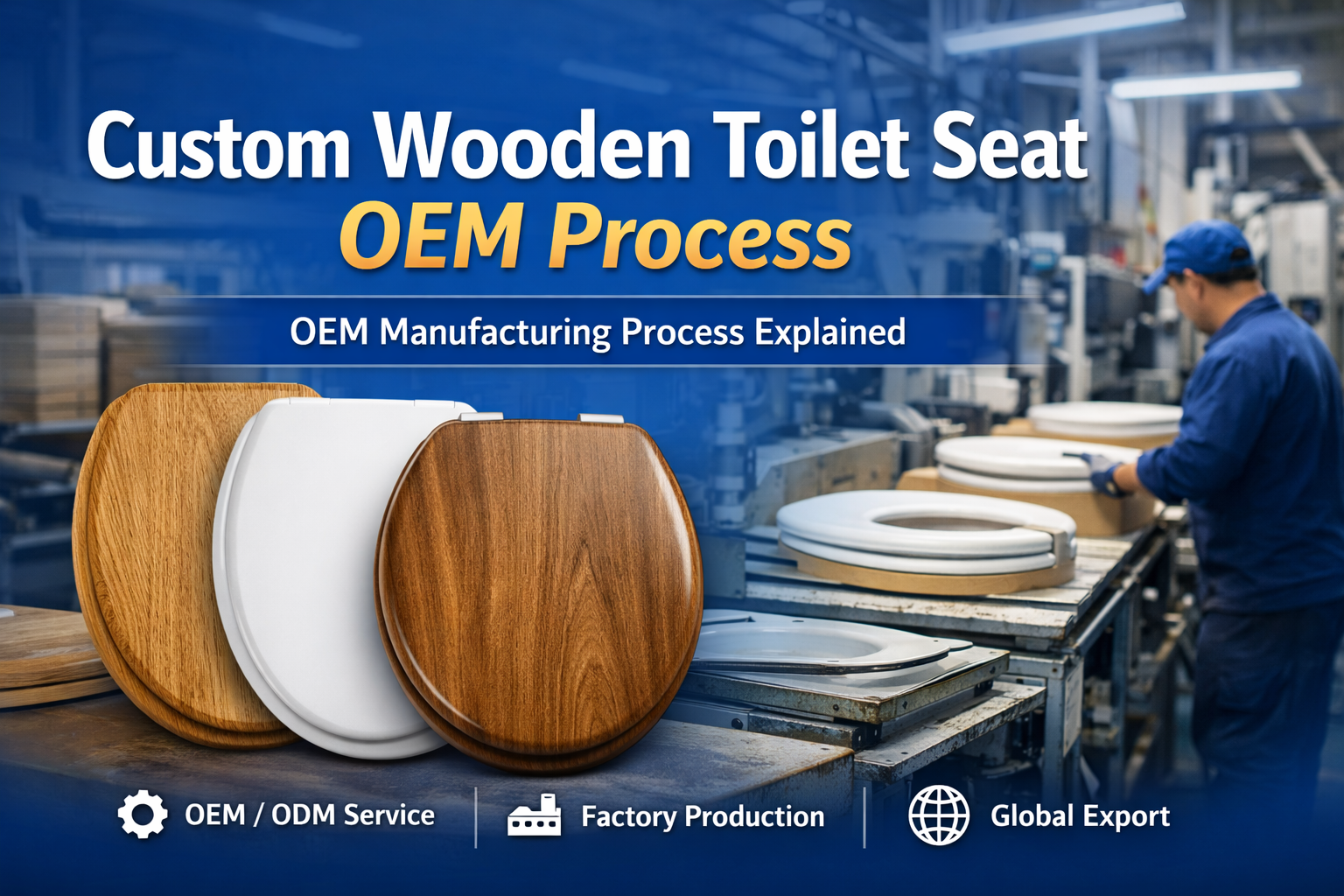
Custom Wooden Toilet Seat OEM Process: A Complete Guide for Private Label Bathroom Brands
The global bathroom products market continues to grow as homeowners, contractors, and retailers demand durable and stylish fixtures. Among these products, wooden toilet seats remain a popular choice due to their classic appearance, strong structure, and premium feel.
For distributors, bathroom brands, and e-commerce sellers, custom wooden toilet seats provide an excellent opportunity to differentiate products through design, branding, and packaging. Instead of selling generic products, many businesses now choose OEM wooden toilet seat manufacturing to create unique product lines tailored to their market.
Understanding the custom wooden toilet seat OEM process helps buyers work more efficiently with manufacturers, control product quality, and shorten development time.
This guide explains the complete OEM manufacturing process — from design and mold development to mass production and quality inspection.
Why Custom Wooden Toilet Seats Are Popular in the Bathroom Market
Wooden toilet seats have been widely used in residential and commercial bathrooms for decades. Compared with plastic seats, they offer a heavier feel and a more traditional appearance that many consumers prefer.
Today, many bathroom brands and wholesalers choose custom wooden toilet seats because customization allows them to stand out in competitive markets.
Some of the main advantages of wooden toilet seats include:
-
Strong and durable structure
-
Smooth painted surface
-
Premium appearance compared with plastic seats
-
Compatibility with soft close hinges
-
Custom colors and patterns
These advantages make wooden toilet seats suitable for many markets, including:
-
Home improvement retailers
-
Amazon and online sellers
-
bathroom brands and distributors
-
hotel and property projects
With private label customization becoming more common, many buyers now cooperate with experienced manufacturers to develop their own custom wooden toilet seat product lines.
What Is a Custom Wooden Toilet Seat?
A custom wooden toilet seat is a toilet seat manufactured according to a customer's specific design, branding, or packaging requirements.
Unlike standard products, OEM toilet seats allow buyers to customize key elements such as:
-
seat shape
-
hinge type
-
surface finish
-
logo branding
-
packaging design
Most wooden toilet seats are produced using molded wood or MDF (Medium Density Fiberboard). These materials provide a stable structure and allow manufacturers to apply various surface treatments such as painting, printing, or wood veneer.
Modern wooden toilet seats often include additional functional features such as:
-
Soft close hinges to prevent slamming
-
Quick release mechanisms for easy cleaning
-
Adjustable hinges to fit different toilet bowls
These features improve both user experience and product value in the retail market.
The Complete Custom Wooden Toilet Seat OEM Process
Developing a custom toilet seat involves several production stages. Understanding each step helps buyers communicate clearly with manufacturers and ensures a smooth production process.
Below is the standard custom wooden toilet seat OEM process followed by professional manufacturers.
Step 1 Product Design and Requirement Confirmation
The first step in the OEM process is confirming the product design and technical requirements.
Buyers typically provide information such as:
-
toilet seat shape (round or elongated)
-
hinge type (soft close or standard hinge)
-
seat thickness
-
color or surface finish
-
logo requirements
-
packaging design
In some cases, buyers may send reference samples or technical drawings. Manufacturers can then evaluate the feasibility of the design and suggest improvements based on production experience.
Clear communication during this stage helps avoid misunderstandings later in the manufacturing process.
Step 2 Mold Development
Once the product design is confirmed, the manufacturer begins mold development.
The mold determines the final shape and dimensions of the toilet seat. A well-designed mold ensures consistent quality and accurate fitting for standard toilet bowls.
During this stage, manufacturers will:
-
develop the mold based on the confirmed design
-
perform trial molding tests
-
adjust dimensions if necessary
Mold development is a critical step in OEM production because it directly affects product accuracy and long-term manufacturing stability.
For customers planning large production volumes, mold development ensures consistent quality across all units.
Step 3 Wooden Toilet Seat Manufacturing
After mold development is completed, the manufacturing process begins.
Most wooden toilet seats are produced using molded wood or MDF compression technology. This process allows manufacturers to create strong and stable seat structures.
The typical manufacturing process includes:
-
Raw material preparation
-
Compression molding
-
Cutting and shaping
-
Surface sanding
-
Edge smoothing
Each step ensures that the toilet seat has a uniform shape and smooth surface before finishing treatments are applied.
Because molded wood provides excellent density and strength, it is widely used in mid-range and premium toilet seat products.
Step 4 Surface Finishing
Surface finishing is one of the most important steps in the wooden toilet seat manufacturing process.
Different finishing techniques can create unique product styles and meet various market preferences.
Common finishing methods include:
Painting
Painting provides a smooth, glossy surface and allows manufacturers to produce classic white toilet seats or colored designs.
Printing
Printing technology allows decorative patterns to be applied to the seat surface, including marble patterns, wood grain designs, or customized artwork.
Wood Veneer
Wood veneer finishing uses real wood layers to create a natural appearance, making the product look similar to solid wood furniture.
These finishing options allow brands to create unique product lines tailored to their target market.
Step 5 Hinge Installation and Assembly
After the wooden seat body is completed, the next stage is hinge installation and final assembly.
Toilet seat hinges play an important role in both durability and user experience. Many modern toilet seats now include soft close hinges, which prevent the seat from slamming shut.
Common hinge options include:
-
soft close metal hinges
-
plastic quick release hinges
-
adjustable hinges for universal fit
During assembly, manufacturers ensure that the hinge alignment and installation position meet technical standards. Proper hinge installation ensures smooth opening and closing during daily use.
Step 6 Quality Inspection
Before packaging and shipment, each batch of toilet seats undergoes strict quality inspection.
Professional manufacturers typically perform several tests to ensure durability and reliability.
Common quality control procedures include:
-
hinge durability testing
-
seat load testing
-
opening and closing cycle testing
-
surface inspection
-
packaging inspection
These inspections ensure that the finished products meet international quality standards and customer expectations.
Consistent quality control is especially important for OEM products sold through retail channels and e-commerce platforms.
Customization Options for Wooden Toilet Seats
One of the biggest advantages of OEM production is the wide range of customization options available.
Buyers can customize many aspects of the product to match their branding and market positioning.
Common customization options include:
Seat Shape
Manufacturers typically offer:
-
round toilet seats
-
elongated toilet seats
These shapes match the standard toilet bowl sizes used in different regions.
Color Options
Custom colors help brands create distinctive product lines. Popular color options include:
-
classic white
-
matte black
-
wood grain finishes
-
marble patterns
Logo Branding
Manufacturers can apply logos through several methods:
-
laser engraving
-
pad printing
-
metal logo plates
Private label branding helps retailers strengthen brand recognition.
Packaging Design
Packaging is also an important part of customization.
Options include:
-
retail color boxes
-
eco-friendly packaging
-
Amazon-ready packaging
-
bulk packaging for distributors
Customized packaging improves shelf presentation and enhances brand identity.
How to Choose the Right Wooden Toilet Seat Manufacturer
Selecting the right manufacturer is crucial for successful OEM cooperation.
When evaluating potential suppliers, buyers should consider several key factors.
Manufacturing Experience
Experienced manufacturers understand production processes, international standards, and market requirements.
Production Capacity
Stable production capacity ensures reliable delivery schedules for bulk orders.
Customization Capability
Suppliers with strong OEM capabilities can support mold development, logo printing, and packaging design.
Quality Control Systems
Professional factories implement strict quality inspection procedures to ensure consistent product performance.
Communication and Support
Clear communication and responsive service help buyers resolve issues quickly during development and production.
Working with a reliable manufacturer helps reduce risks and improves long-term business cooperation.
Why Work With a Professional Wooden Toilet Seat OEM Factory
Professional manufacturers offer several advantages for brands and distributors developing custom toilet seat products.
These advantages include:
-
flexible customization options
-
stable product quality
-
efficient production processes
-
competitive manufacturing costs
-
reliable global supply chains
Experienced factories can also provide valuable recommendations based on market trends and production expertise.
For companies building private label bathroom product brands, OEM cooperation provides a practical and cost-effective path to market.
Conclusion
The custom wooden toilet seat OEM process involves multiple stages, including design confirmation, mold development, manufacturing, finishing, assembly, and quality inspection.
Understanding these steps helps buyers work more effectively with manufacturers and ensures smooth project execution.
For distributors, retailers, and bathroom brands, custom wooden toilet seats provide an excellent opportunity to create unique products that stand out in competitive markets.
By cooperating with a reliable manufacturer and carefully planning the OEM process, businesses can develop high-quality toilet seat products that meet customer expectations and support long-term brand growth.
Table of Contents
- Custom Wooden Toilet Seat OEM Process: A Complete Guide for Private Label Bathroom Brands
- Why Custom Wooden Toilet Seats Are Popular in the Bathroom Market
- What Is a Custom Wooden Toilet Seat?
- The Complete Custom Wooden Toilet Seat OEM Process
- Step 1 Product Design and Requirement Confirmation
- Step 2 Mold Development
- Step 3 Wooden Toilet Seat Manufacturing
- Step 4 Surface Finishing
- Step 5 Hinge Installation and Assembly
- Step 6 Quality Inspection
- Customization Options for Wooden Toilet Seats
- How to Choose the Right Wooden Toilet Seat Manufacturer
- Why Work With a Professional Wooden Toilet Seat OEM Factory
- Conclusion