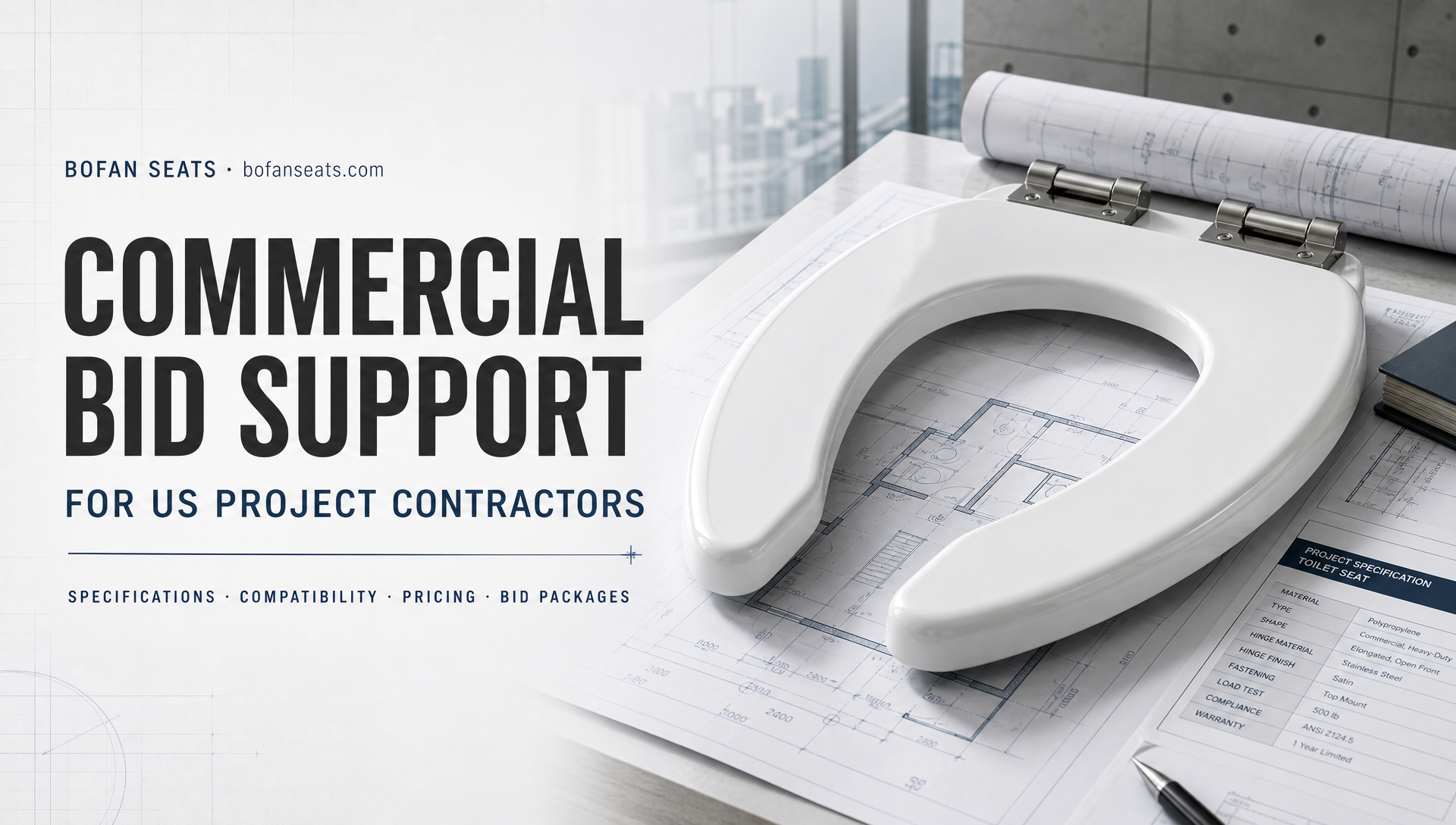
Commercial Toilet Seat Bid Support for US Project Contractors
Commercial bathroom projects often require more than a simple toilet seat price.
Contractors, distributors and project buyers may need product specifications, quantities, installation requirements, packaging information, lead times and documentation before submitting a complete bid.
A supplier that understands the bidding process can help organize these details before the purchasing stage.
The objective is not simply to provide the lowest unit quotation. It is to make sure the quoted product, quantity, specifications and delivery conditions can support the actual project.
1. Start With the Project Product Schedule
Before preparing a quotation, collect the project information available from the contractor or distributor.
Useful information includes:
Project type
Project location
Number of toilets
Number of toilet seat units
Toilet bowl manufacturer
Bowl model
Seat shape
Material preference
Hinge requirements
Color requirements
Installation requirements
Delivery schedule
If the project has a product schedule or specification document, use it as the starting point.
A supplier should avoid quoting against assumptions when the project documentation contains more specific requirements.
2. Confirm the Toilet Bowl and Seat Compatibility
Commercial projects can involve large quantities of the same toilet configuration.
A compatibility problem can therefore affect an entire project rather than a small number of units.
Before finalizing the bid, review:
Bowl length
Bowl width
Mounting-hole spacing
Mounting-hole diameter
Rear-platform shape
Fixing access
Seat dimensions
Hinge adjustment range
If available, request:
Ceramic drawings
Product drawings
Installation photos
Physical samples
Existing seat references
The supplier should identify whether the proposed seat is a general-fit model or has been reviewed against the specified ceramic.
Where necessary, an installed sample should be approved before the project moves to full production.
3. Define the Commercial Toilet Seat Specification
The bid should identify the actual product being quoted.
Avoid descriptions such as:
White commercial toilet seat
A better quotation should identify relevant details such as:
Factory model
Buyer or project SKU
Material
Color
Shape
Dimensions
Hinge type
Fixing method
Soft-close function
Quick-release function
Hardware configuration
Packaging format
This makes it easier for the contractor, distributor and supplier to confirm that everyone is pricing the same product.
4. Separate Product Price From Project Conditions
A commercial quotation may contain several cost components.
Depending on the project, clarify:
Product unit price
Customization cost
Packaging cost
Mold or tooling cost, if applicable
Sample cost
Inspection cost
Spare-part cost
Freight terms
Other project-specific charges
Do not combine unrelated costs into one unclear figure.
The buyer should be able to understand what is included in the quoted price and which costs depend on project conditions.
5. Confirm the Quantity and MOQ
Project quantity is one of the most important variables in commercial pricing.
Confirm:
Estimated total quantity
Initial order quantity
Delivery batches
Number of SKUs
Mixed-SKU requirements
MOQ for each model
MOQ for custom packaging
MOQ for custom colors
MOQ for special components
A project may have a large total quantity but require multiple delivery dates.
The supplier should review the order structure rather than looking only at the total project quantity.
6. Prepare a Clear Lead-Time Schedule
Contractors need to understand whether the supplier can meet the project schedule.
Break the timeline into stages:
Specification confirmation
Sample preparation
Sample approval
Artwork approval
Packaging preparation
Component preparation
Bulk production
Inspection
Packing
Shipment readiness
Also identify the assumptions behind the lead time.
For example, production may depend on:
Final sample approval
Packaging artwork approval
Deposit or purchase-order confirmation
Component availability
Inspection schedule
A clear schedule helps the contractor understand when the supplier needs project decisions.
7. Provide the Right Technical Documents
Bid packages may require technical information before an order is placed.
Depending on the project, relevant documents may include:
Product specification
Product drawing
Installation instructions
Material information
Available test evidence
Packaging information
Country-of-origin information
Product photographs
Quality documentation
Buyer-required declarations
The supplier should identify whether a document applies to the exact quoted model.
This is particularly important when a project specification requires a specific material, hinge configuration or product standard.
8. Confirm Packaging for Project Delivery
Commercial projects do not always require the same packaging as retail programs.
Discuss whether the project needs:
Individual boxes
Bulk cartons
Project-specific labels
Buyer SKU labels
Installation instructions
Hardware bags
Palletized shipment
Separate packaging by project area
Outer-carton identification
For contractor projects, packaging should support warehouse receiving and job-site handling.
The cheapest packaging is not necessarily the most practical if it increases product damage or makes project identification difficult.
9. Plan Samples Before Bid Approval
Samples can help contractors verify the actual product before committing to a larger purchase.
A useful sample process may include:
Review project specification.
Select the proposed product.
Confirm bowl compatibility.
Prepare the sample.
Review finish and color.
Check hinge and fixing operation.
Approve the sample.
Record the final specification.
For custom products, the approved sample should become the reference for bulk production.
Any changes after approval should follow a documented change-control process.
10. Review Quality Requirements Before Production
If the project has inspection requirements, discuss them before the quotation is finalized.
Confirm:
Inspection method
Sampling level
Acceptance criteria
Inspection timing
Required reports
Product identification
Packaging inspection
Corrective-action process
Relevant product checks may include:
Dimensions
Surface finish
Alignment
Hinge operation
Soft-close function
Quick-release function
Hardware completeness
Installation stability
Packaging condition
This makes the commercial quotation more useful because the supplier understands what the project expects after the order is placed.
11. Discuss Delivery and Shipping Conditions
Project quotations should clearly identify the delivery arrangement.
Confirm:
Shipping term
Port or delivery location
Shipment method
Estimated shipping schedule
Number of containers or shipments
Pallet requirements
Carton dimensions
Gross weight
CBM
If the project requires phased delivery, define the expected shipment schedule before production planning.
A supplier may be able to manufacture the full project quantity but still need a separate production and shipping plan for multiple site deliveries.
12. Build a Bid Package That Is Easy to Review
A useful commercial toilet seat bid package should allow the contractor or distributor to compare the offer quickly.
A basic package can include:
| Bid Item | Information to Include |
|---|---|
| Product | Factory model and project SKU |
| Material | PP, UF, MDF or molded wood |
| Shape | Round, elongated or D-shape |
| Hinge | Type and configuration |
| Fixing | Top-fix or bottom-fix |
| Quantity | Total and delivery batches |
| Unit Price | Quoted commercial price |
| Packaging | Individual or bulk format |
| Lead Time | Production and shipment schedule |
| Documents | Available technical evidence |
| Sample | Sample status and approval |
| Shipping | Agreed delivery terms |
| Validity | Quotation validity period |
The exact contents should be adjusted to the project's requirements.
The purpose is to reduce questions between the contractor, distributor and supplier after the bid is submitted.
What Happens After the Bid Is Awarded?
Winning the bid is only the beginning of the supply process.
After project award, confirm:
Final product specification
Final quantity
Approved sample
Packaging artwork
Purchase-order details
Production schedule
Inspection requirements
Shipping schedule
Spare-part requirements
Change-control procedure
This transition should be handled carefully.
A quotation document should not automatically become the production specification without reviewing any changes made during commercial negotiation.
How BOFAN Supports Commercial Toilet Seat Bids
BOFAN supports distributors, importers and project buyers with commercial toilet seat programs across PP, UF and molded-wood ranges.
Bid support can include product selection, ceramic-fit review, technical specification, hinge and fixing configuration, sample preparation, packaging coordination, production planning and project documentation.
For each project, final pricing, MOQ, lead time, product compatibility, documentation and delivery conditions should be confirmed according to the actual project requirements.
CTA: Request Bid Documents
Preparing a commercial bathroom project or contractor bid?
Send BOFAN the project specification, estimated quantity, toilet bowl information, required seat type, delivery schedule and packaging requirements. Our team can help organize the product and commercial information needed for the bid.
FAQ
What is commercial toilet seat bid support?
Commercial toilet seat bid support is the supplier-side assistance used to prepare product specifications, pricing information, samples, technical documents, lead times, packaging details and other information required for a project quotation.
What information should contractors provide when requesting a toilet seat bid?
Useful information includes project quantity, toilet bowl model, seat shape, material requirements, hinge requirements, delivery schedule, packaging requirements and any project specifications.
Does a commercial toilet seat quotation include samples?
It depends on the project and supplier arrangement. Sample requirements, sample costs and approval procedures should be confirmed before the bid is finalized.
Why is toilet bowl compatibility important for commercial projects?
A commercial project may involve a large number of identical installations. If the proposed seat does not fit the specified bowl correctly, the issue can affect installation and project delivery across many units.
What documents should be included in a commercial toilet seat bid?
Depending on the project, the bid package may include product specifications, drawings, installation information, material information, available test evidence, packaging information and other buyer-required documentation.
Can commercial toilet seat orders be delivered in batches?
Yes, depending on the project schedule and supplier production plan. The total quantity, delivery batches and required shipment dates should be agreed before production planning.
Table of Contents
- Commercial Toilet Seat Bid Support for US Project Contractors
- 1. Start With the Project Product Schedule
- 2. Confirm the Toilet Bowl and Seat Compatibility
- 3. Define the Commercial Toilet Seat Specification
- 4. Separate Product Price From Project Conditions
- 5. Confirm the Quantity and MOQ
- 6. Prepare a Clear Lead-Time Schedule
- 7. Provide the Right Technical Documents
- 8. Confirm Packaging for Project Delivery
- 9. Plan Samples Before Bid Approval
- 10. Review Quality Requirements Before Production
- 11. Discuss Delivery and Shipping Conditions
- 12. Build a Bid Package That Is Easy to Review
- What Happens After the Bid Is Awarded?
- How BOFAN Supports Commercial Toilet Seat Bids
-
FAQ
- What is commercial toilet seat bid support?
- What information should contractors provide when requesting a toilet seat bid?
- Does a commercial toilet seat quotation include samples?
- Why is toilet bowl compatibility important for commercial projects?
- What documents should be included in a commercial toilet seat bid?
- Can commercial toilet seat orders be delivered in batches?