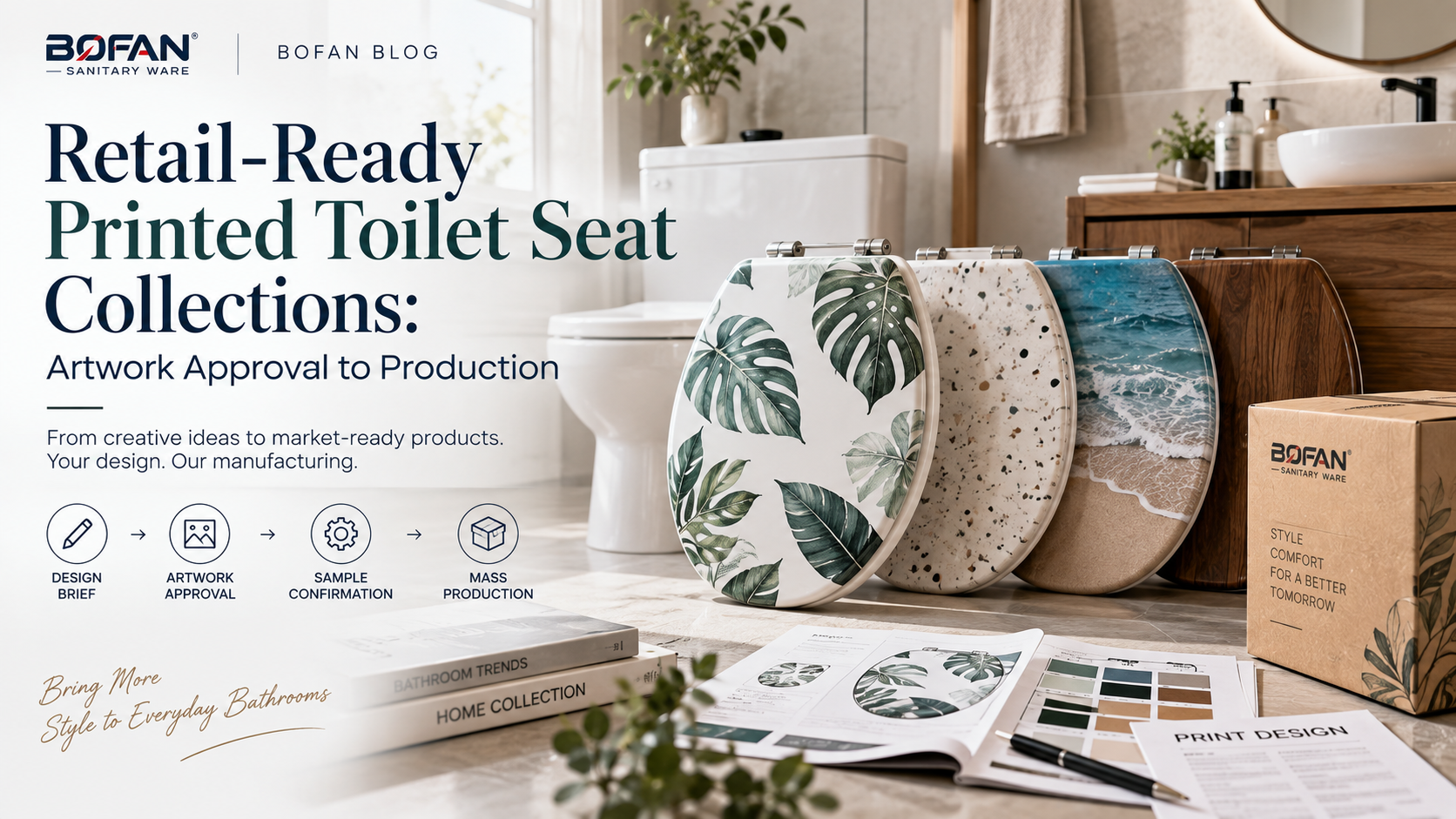
Íbúðarhæf prentuð klósetssæti: Samþykki á myndskreytingu til framleiðslu
Prentuð klósettseti geta hjálpað verslun eða klósettmerki til að búa til auðkennanlega safn án þess að þróa alveg nýja setjahögg. Stjórnuð listaverkefnisforrit getur bætt við ársþema, lífsstílsmynstur, dýrlegra dekoratíva yfirborð eða greinilega merkjaskilning fyrir einkamerki við staðlaðar PP-, MDF-, myndaðar tré- eða valdar UF-vöruflokkana.
En listaverkefni er ekki einfaldur myndskrá sem bætist við í endann á framleiðslu. Það áhrifar yfirborð vörurnar, prentunarferlið, litnið niðurstöðu, umbunðina, SKU-styrktina, lágmarksbestellingu (MOQ) og samþykktartíma.
Safn af klósettsetjum sem eru tilbúin fyrir verslun þarf eitt stjórnuð ferli frá hönnunarskýringu til massafremleiðslu.
Byrjið með vöruhlutinn
Áður en listaverkefni er skoðað, staðfestið hvaða vöruhlut það verður sett á.
Kvörtun:
Vöruefni
Form og mál sæta
Ytra líkan
Hengi og fastgörðarsafn
Funktsjón sem lokar mjúklega eða opnar fljótt
Áætluð verslunarsvæði
Uppfæringarform
Vörustilling
Bæði búin bestellingar magn
Markmiðsútvarpsdagsetning
Sama hönnun getur litið öðruvísi út á glænandi myndaðri viðskiptahólfvið, mattu PP yfirborði eða öðru undirlagi. Myndsköpunin ætti að vera þróuð fyrir raunverulegan vöruplattform, ekki aðeins fyrir flatta stafræna myndmyndun.
Undirbúið myndsköpunarskrárnar rétt
Kaupandinn ætti að veita hreinar, samþykktar upprunaskrár og skýrar merkisleiðbeiningar.
Gagnlegar inntaksskrár fyrir myndsköpun innihalda:
Vigursmyndir þar sem þær eru tiltækar
Myndskrár í hámarksupplausn
Leiðbeiningar fyrir endurtekningar mynsturs
Merki skrár
Litarvísanir fyrir merki
Pantone-vísanir þar sem við á
Framan, hlið og aftan
Uppsetningarsvæði fyrir prentun
Nauðsynleg texti eða táknmyndir
Höfundarréttur eða staðfesting á notkun
Skrár fyrir umbúðamyndir
Strikamerkjadýrð
Leverandinn ætti að staðfesta hvort myndin sé hægt að endurgera með valda ferlinu og hvort einhver svæði, litir eða smáatriði þurfi að breyta.
Skilgreina uppsetningarsvæði og stefnu fyrir prentun
Húsdýrissæti er ekki flat yfirborð. Bökur, brúnir, hengisvæði, opnir og bil áhrifa uppsetningu myndar.
Staðfesta:
Uppsetning myndar á lid
Uppsetning myndar á sætiring
Hvort hönnunin haldir áfram yfir brúnir
Stefna mynstmynsturs
Stefna fram- og aftanáttar
Gæði hengisvæðis
Svæði sem ekki má prenta á
Staðsetning merkisins
Mismunur í miðun
Bókstafleg jafngildi litanna
Verða sætið og lokidiskurinn að vera nákvæmlega eins?
Endurtekin mynster ætti að skoða í kringum lögun vörurnar. Hönnun sem lítur jafnvægt út á skjánum gæti litið ójafnvægt út eftir myndun eða endurmeðhöndlun.
Samþykkja líkamslegan prufuhlut
Ekki samþykkja prentaðar vörur einungis með PDF, myndritun eða skjámynd.
Kaupandiinn skal skoða líkamlegan framleiðslusýnishorn fyrir:
Litur
Prentskilgreining
Myndvirkjun samræmingar
Jafnvægi á brúnunum
Yfirborðsleg jafnheit
Gloss eða matt yfirborð
Útlit hengisvæðis
Virkni vöru
Útlit við hreinsun og meðhöndlun
Pakkun og framsetning
Ef safnið inniheldur nokkur hönnunarmyndmót, skal staðfesta hvert myndmót eða skilgreint samþykkt lit- og prentgæðastandard áður en massafremleiðsla hefst.
Samræma samþykki á myndskreytingu og umbúðum
Verslunardósin verður að sýna nákvæmlega vörurnar inni í henni.
Staðfesta:
Mynd af vöru eða myndskreyting
Hönnunarnafn
Vörumerki
Stríkamerki
Form vörurnar
Hengifall
Lýsing á efni
Samhæfniupplýsingar
Tákn fyrir uppruna lands
Ábendingar
Viðvörunarmerki
Fjöldi í kassanum
Merkingar á ytri pökkun fyrir sendingu
Ekki prenta verslunardósur þar til endanleg myndskreyting á vörunni, strikamerkið og SKU-heitið eru samþykkt. Breyting á prentuðu hönnuninni eftir að dósurnar eru framleiddar getur valdið ónotanlegum umbúðaforða.
Búa til skýr samþykktarvinnuskrá
Stjórnuð prentuð sæti-verkefni geta fylgt þessari röð:
Kaupandi býr til vörusamantekt og sendir myndskrár.
Aðila staðfestir vöruplattform og möguleika á prentun.
Kaupandi samþykkir staðsetningu á vörum og litáttferð.
Aðila undirbýr líklega eða framleiðslu-táknsamlega prufu.
Kaupandi samþykkir útlit og virkni vörunnar.
Myndskrá fyrir umbúðir er lokið.
Kaupandi staðfestir strikamerki, merkingar og kassamerki.
Framleiðsluspecifikationin er lokuð.
Massaframleiðsla og skoðun fer fram.
Samþykktar prufur og myndskrárútgáfa eru geymdar fyrir endurteknar pantanir.
Hver samþykkt ætti að hafa útgáfunúmer og dagsetningu. Þetta krefst ruglings þegar margar hönnunargreinar, endurskoðaðar merkjaskýringar eða mismunandi vörumerki eru í leit.
Skoða prentuð vörur á meðan framleiðsla fer fram
Prentuð klósettseti ættu að vera skoðuð bæði fyrir framleiðsluástand og sjónlega samhverfu.
Athugasemdir við skoðun geta innihaldið:
Rétt vörulína
Rétt útgáfa myndskrár
Litur og staðsetning mynsturs
Flatarmál
Jafnvægi á brúnunum
Hengilás og númer viðhaldspakka
Hlutlæg lokun
Hraðskiptifall
Grafísk hönnun á umbunð
Nákvæmni strikamerkis
Fjöldi í kassanum
Aðgerðarsporvinnsla
Aðilar sem veita vörur ættu ekki að skipta út gamla prentskrá eða mynstur sem lítur líklega út án samþykks kaupanda.
Áætla söfnun fyrir endurskipulagningu
Prentuð vörusvið geta orðið erfitt að stjórna ef hvert hönnun hefur mismunandi umbúðir, tæknihluti eða vöruspecifikationar.
Til að einfalda endurskipulagningu:
Standartíða vörukerfi þar sem mögulegt er.
Nota stýrða hönnunarkóða.
Halda einum strikamerki á hverri SKU.
Skrá útgáfur af umbúðahönnun.
Staðfesta lágmarks magnsöfnun (MOQ) eftir hönnun og umbúðum.
Aðskilja útgerðarlausar mynstur frá grunnhönnunum.
Geyma samþykktar tilbúnarpróf fyrir endurtekna samanburð.
Skrá allar lit- eða prentstikur sem samþykktar eru með kaupanda.
Í verslunarsafni ætti að vera auðvelt fyrir dreifingaraðila, vistvöru og viðskiptamannaþjónustu að auðkenna það – ekki aðeins átt að vera flott í vörumynd.
Hvernig BOFAN styður prentuð sæti fyrir klósetta
BOFAN getur rætt um prentuð og dekoruð klósettasæti á valinum vöruformum, þar á meðal greiningu á listaverki, undirbúning tilbúinna prófa, hengilagningu, verslunarpakkanir og stjórn á skilyrðum fyrir endurtekin pöntun.
Lokaprófun á prentunarmöguleikum er háð valinni vöruefni, listaverki, magni, yfirborði, pakkanir og samþykktarferli.
Kalla til aðgerðar: Sendu listaverk til samþykktar
Erðu að skipuleggja prentuð klósettasæti? Sendu BOFAN markmið fyrir vöruna, skrár með listaverki, forgjörva efni, búist við magni, kröfur um hengi og leiðbeiningar fyrir pakkanir. Við getum greint raunhæfar kosti fyrir samþykkt á prófum og framleiðslu.
Algengar spurningar
Hverjar skrár eru bestar fyrir prentaða mynd á klósettstóll?
Krefjast við vector-myndir eða upprunalegar skrár í hámarkaðri upplausn. Kaupandi ætti einnig að veita litvísanir, staðsetningarskýringar og staðfestar notkunarheimildir.
Getur sama myndin verið notuð á mismunandi efni klósettstóla?
Það gæti verið hægt, en sjónleg útkoman og ferlið geta breyst eftir efni og yfirborði. Hvert áætlað vöruplattform ætti að skoða og prufa.
Af hverju er nauðsynlegt að hafa líkamlega prufu?
Líkamleg prufa staðfestir prentlit, staðsetningu, yfirborðsútlit, kantdekkun og heildarútlit á raunverulegum klósettstól.
Getur safn prentaðra klósettstóla notað blönduð loka-hengi?
Já, viðeigandi prentaðar gerðir geta notað blönduð loka- og hratt-fjarlægja-hengi. Nákvæm vörumerki og hengikerfi ættu að vera samþykkt saman.
Hvað ætti að geyma fyrir endurteknar pantanir?
Geymið samþykktu prufu, útgáfu myndar, vörumerki vörurnar, kóða hengja og fastanirhólfanna, umbunðarmynd, strikamerki, gögn um kartong og tilvísun í inspektion.
Efnisyfirlit
- Íbúðarhæf prentuð klósetssæti: Samþykki á myndskreytingu til framleiðslu
- Byrjið með vöruhlutinn
- Undirbúið myndsköpunarskrárnar rétt
- Skilgreina uppsetningarsvæði og stefnu fyrir prentun
- Samþykkja líkamslegan prufuhlut
- Samræma samþykki á myndskreytingu og umbúðum
- Búa til skýr samþykktarvinnuskrá
- Skoða prentuð vörur á meðan framleiðsla fer fram
- Áætla söfnun fyrir endurskipulagningu
- Hvernig BOFAN styður prentuð sæti fyrir klósetta
- Algengar spurningar