Pasal 11
Judul SEO: Panduan Pembeli untuk Engsel Dudukan Toilet Khusus bagi Proyek OEM
Meta Deskripsi: Pelajari cara pembeli OEM menentukan spesifikasi engsel dudukan toilet khusus, termasuk fitur soft close, quick release, sistem pemasangan, kecocokan dengan keramik, sampel, dan pengendalian perubahan.
Slug URL: /blog/custom-toilet-seat-hinges-oem-projects
Kata kunci utama: engsel dudukan toilet khusus
Kata Kunci Sekunder: Engsel dudukan toilet OEM, engsel dudukan toilet penutupan lembut, engsel dudukan toilet pelepas-cepat, kit pemasangan dudukan toilet khusus
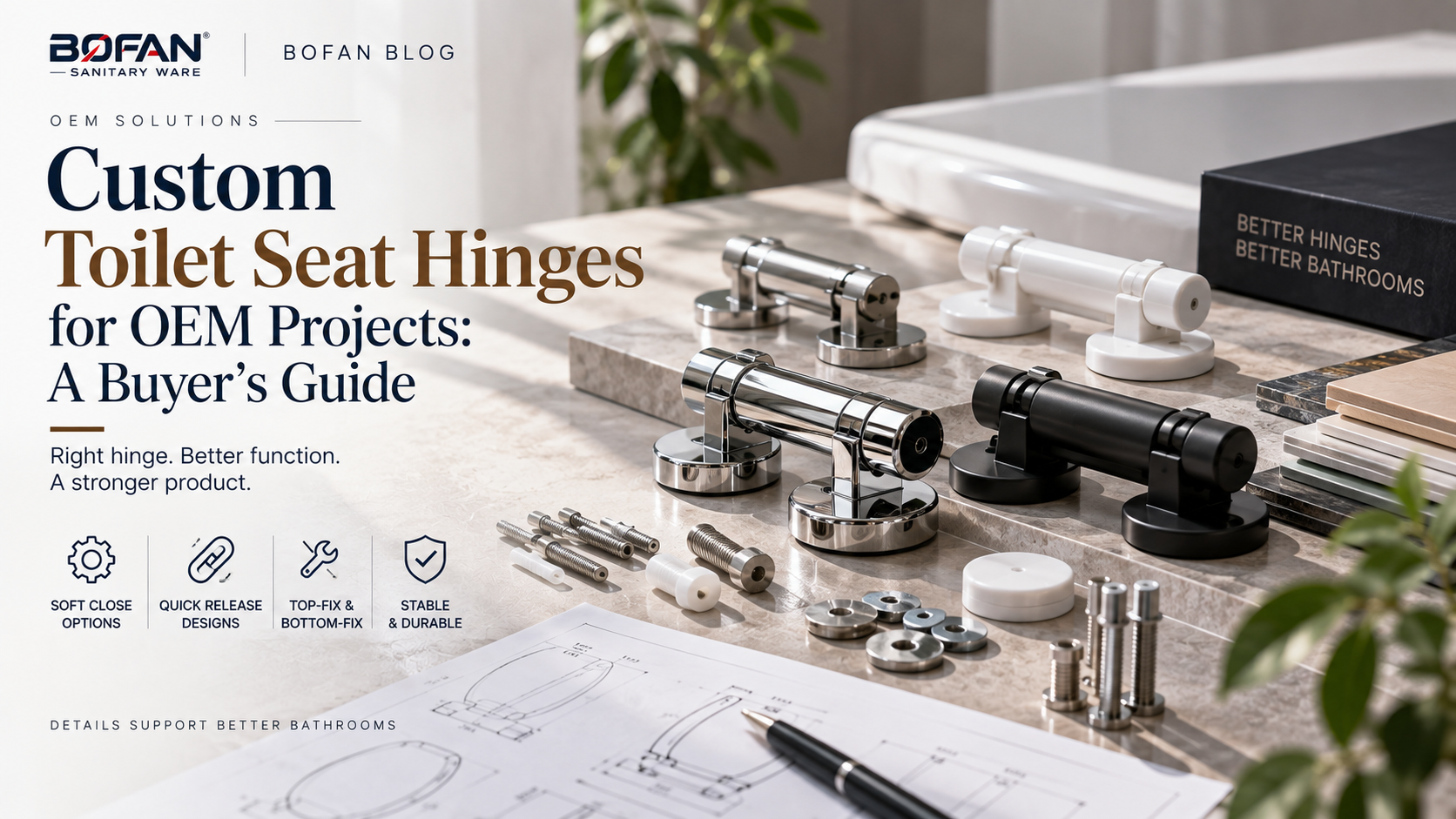
Panduan Pembeli untuk Engsel Dudukan Toilet Khusus bagi Proyek OEM
Engsel dudukan toilet bukan hanya komponen logam atau plastik yang terlihat di bagian belakang produk. Engsel ini merupakan bagian dari sistem terpasang lengkap yang memengaruhi kinerja penutupan, stabilitas, penyesuaian, metode pemasangan, tampilan, serta layanan purna-jual.
Bagi program OEM atau private-label, istilah ‘engsel dudukan toilet khusus’ dapat mengacu pada beberapa hal berbeda. Pembeli mungkin memerlukan fungsi penutupan lembut tertentu, mekanisme pelepas-cepat, lapisan permukaan yang selaras dengan koleksi perlengkapan kamar mandi, kit pemasangan atas untuk keramik tertutup, atau konfigurasi engsel yang cocok dengan dudukan dan mangkuk tertentu.
Langkah pertama adalah menetapkan fungsi yang dibutuhkan secara jelas sebelum membandingkan kutipan harga.
Apa Arti ‘Khusus’ bagi Engsel Dudukan Toilet
Proyek engsel khusus tidak selalu memerlukan cetakan engsel baru sepenuhnya atau desain teknis unik.
Bergantung pada programnya, kustomisasi dapat mencakup:
Memilih engsel dari rentang kompatibel yang tersedia
Memilih fungsi penutupan standar atau penutupan lembut
Menambahkan fungsi pelepasan cepat
Memilih pemasangan dengan pengikatan di bagian atas atau di bagian bawah
Mengganti finishing engsel atau warna penutupnya
Menyesuaikan dengan bahan dan berat dudukan toilet tertentu
Menggunakan konfigurasi baut, ring, dan kit pengikat yang dipilih
Menyesuaikan posisi engsel untuk keramik tertentu
Menyelaraskan tampilan engsel dengan jajaran produk bermerek
Mengembangkan struktur engsel baru ketika opsi yang tersedia tidak memenuhi kebutuhan proyek
Platform engsel yang sudah ada sering kali merupakan titik awal yang lebih praktis apabila memenuhi persyaratan produk, keramik, dan pasar. Desain sepenuhnya baru hanya perlu dipertimbangkan ketika fungsi, tampilan, atau geometri yang dibutuhkan tidak dapat dicapai melalui opsi yang telah disetujui.
Mulailah Dengan Sistem Produk Lengkap
Engsel tidak boleh dipilih sebagai komponen terpisah.
Pembeli harus memberikan informasi mengenai:
Bentuk dan dimensi dudukan toilet
Bahan dudukan: PP, UF, MDF, atau kayu cetak
Berat dudukan dan tutup, jika relevan
Model keramik yang dituju atau rentang kompatibilitasnya
Jarak dan diameter lubang pemasangan
Akses dari sisi atas atau bawah keramik
Sudut pembukaan yang diperlukan
Jarak bebas ke tangki air atau dinding
Kebutuhan fitur soft-close
Persyaratan pelepasan cepat (quick-release)
Pasar sasaran dan lingkungan penggunaan
Jumlah Pesanan yang Diperkirakan
Rencana kemasan serta suku cadang yang diperlukan
Engsel yang cocok untuk kursi PP ringan mungkin tidak memberikan gerakan, stabilitas, atau hasil visual yang sama pada produk kayu cetak yang lebih berat.
Pilih Fungsi Engsel yang Diperlukan
Ruang lingkup fungsional harus dinyatakan dalam spesifikasi produk.
Engsel penutup standar
Engsel penutup standar memungkinkan tutup atau dudukan diangkat dan diturunkan tanpa sistem peredam. Engsel ini dapat sesuai untuk program di mana konstruksi sederhana dan biaya kompetitif menjadi prioritas.
Engsel Penutup Lembut
Engsel dudukan toilet penutup lembut menggunakan mekanisme terkendali untuk memperlambat gerakan penutupan tutup, cincin dudukan, atau keduanya.
Pembeli harus menetapkan:
Apakah tutupnya menutup secara lembut
Apakah cincin dudukannya menutup secara lembut
Apakah kedua komponen beroperasi secara independen
Perilaku penutupan yang diharapkan
Persyaratan untuk penutupan akhir yang halus
Evaluasi sampel dan ketahanan yang diperlukan
Engsel Lepas Cepat
Engsel pelepas-cepat memungkinkan dudukan toilet dilepas dari dudukan engsel untuk pembersihan atau perawatan.
Pembeli harus memastikan:
Metode Pelepasan
Metode penguncian setelah pemasangan kembali
Apakah dudukan engsel tetap terpasang selama proses pelepasan
Instruksi pemasangan yang diperlukan
Kebutuhan suku cadang
Fungsi setelah pelepasan dan pemasangan kembali berulang kali
Engsel kombinasi soft-close dan pelepas-cepat
Banyak program OEM memerlukan kedua fungsi tersebut. Dalam kasus ini, seluruh jok, tutup, basis engsel, peredam, dan kit pemasangan harus dievaluasi secara bersamaan.
Sesuaikan engsel dengan metode pemasangan keramik
Sistem pemasangan sama pentingnya dengan badan engsel yang terlihat.
Sistem pemasangan dari atas
Sistem pemasangan dari atas dipasang dari sisi atas keramik dan dapat berguna ketika sisi bawah toilet tertutup atau sulit dijangkau.
Proyek harus memastikan:
Diameter lubang keramik
Jenis sumbat ekspansi atau sisipan
Metode pengencangan yang disetujui
Jangkauan Penyesuaian
Stabilitas setelah pemasangan
Kompatibilitas komponen dengan mangkuk yang dipilih
Sistem pemasangan dari bawah
Perangkat keras pemasangan dari bawah menembus keramik dan dikencangkan dari sisi bawah menggunakan mur, ring, atau susunan komponen disetujui lainnya.
Proyek harus memastikan:
Akses di bawah lubang pemasangan
Panjang baut
Orientasi pencuci
Mur atau komponen pengunci
Alat pemasangan yang diperlukan
Stabilitas dan penyelarasan akhir
Baik pemasangan di bagian atas maupun di bagian bawah tidak secara otomatis cocok untuk setiap mangkuk toilet. Sistem yang tepat tergantung pada antarmuka keramik spesifik dan konfigurasi produk.
Tentukan setiap komponen engsel dan pengencang
Jangan menyetujui deskripsi produk yang hanya menyebutkan “engsel logam” atau “perangkat pelan-pelan tutup.”
Spesifikasi terkendali harus mengidentifikasi:
| Komponen | Apa yang Harus Dikonfirmasi |
|---|---|
| Badan engsel | Kode engsel, bahan, dan lapisan yang tepat |
| Pengendali | Fungsi, orientasi, dan kode yang disetujui |
| Basis engsel | Desain pelat dasar dan metode penyesuaian |
| Baut pengikat | Bahan, panjang, diameter, dan ulir |
| Pencuci | Bahan, ukuran, dan posisi pemasangan |
| Mur atau komponen pengunci | Jenis dan metode keterkaitan yang tepat |
| Plug ekspansi | Bahan dan rentang lubang yang kompatibel |
| Penutup | Warna, permukaan akhir, dan kecocokan |
| Buffer | Jumlah, posisi, bahan, dan tinggi |
| Alat pemasangan | Alat yang disertakan atau alat pemasang yang diperlukan |
Engsel dan perlengkapan pemasangan yang tampak serupa secara visual belum tentu dapat saling dipertukarkan. Perubahan kecil pada panjang baut, ukuran washer, kode damper, atau pelat dasar dapat memengaruhi pemasangan, kinerja penutupan lembut (soft-close), serta kompatibilitas suku cadang.
Tinjau Penampilan Engsel Bersamaan dengan Fungsinya
Untuk koleksi kamar mandi berlabel pribadi atau premium, engsel dapat menjadi bagian dari identitas visual produk.
Pembeli mungkin menentukan:
Finishing bergaya krom
Finishing hitam matte
Penutup berwarna putih atau senada dengan warna produk
Tampilan berbahan sikat (brushed) atau mengilap (polished)
Gaya engsel tersembunyi (concealed) atau terlihat (exposed)
Bentuk penutup dekoratif
Logo yang terlihat atau ketentuan tanpa logo
Penampilan harus disetujui pada dudukan toilet lengkap, bukan hanya dari foto komponen saja. Penutup engsel, bahan dudukan, warna keramik, dan kemasan produk mungkin perlu diselaraskan sebagai satu tampilan ritel.
Jika diperlukan ketahanan terhadap korosi, ketahanan terhadap bahan pembersih kimia, atau kinerja lingkungan lainnya, nyatakan persyaratan yang berlaku serta harapan pengujian sebelum persetujuan sampel.
Periksa Kisaran Penyesuaian dan Stabilitas Setelah Pemasangan
Engsel yang dapat disesuaikan dapat membantu memusatkan dudukan pada keramik, tetapi suatu produk tidak boleh disetujui hanya karena dapat dipaksakan ke posisi tertentu pada batas penyesuaian.
Tinjauan:
Jarak minimum dan maksimum antar lubang pemasangan
Gerak maju dan mundur
Penyesuaian sisi
Rotasi pelat dasar
Pemusatan akhir dudukan
Kontak bantalan dengan keramik
Gerak lateral setelah pengencangan
Celah tutup
Sudut pembukaan
Stabilitas setelah operasi soft-close
Gunakan keramik yang dimaksudkan atau perlengkapan pengganti yang dikendalikan secara akurat untuk konfirmasi akhir.
Setujui Sampel yang Sudah Terpasang dan Mewakili Produksi
Tahap sampel harus memverifikasi baik penampilan maupun penggunaan nyata.
Periksa:
Model dan bahan dudukan yang benar
Kode engsel dan kit pemasangan yang benar
Penyelarasan produk pada keramik
Gerakan dudukan dan tutup yang halus
Fungsi penutupan lembut di tempat yang memerlukannya
Pengait pelepas-cepat di tempat yang memerlukannya
Stabilitas setelah pengencangan
Kontak bantalan yang benar
Kesesuaian engsel dan penutup
Tidak ada gangguan antara dudukan, tutup, dan keramik
Tas perlengkapan lengkap
Akurasi lembar instruksi
Perlindungan Kemasan
Sampel engsel lepas atau kursi yang dipasang sementara dengan kit pemasangan berbeda tidak cukup untuk persetujuan akhir OEM.
Tentukan Harapan Fungsional dan Ketahanan
Program engsel tahan lama memerlukan lebih dari sekadar pernyataan “kualitas tinggi.”
Sebelum produksi, sepakati persyaratan yang berlaku untuk model yang dipilih. Persyaratan ini dapat mencakup:
Pemeriksaan awal pembukaan dan penutupan
Tinjauan kinerja soft-close
Operasi pelepasan cepat
Evaluasi pengulangan pembukaan dan penutupan
Pemeriksaan stabilitas lateral setelah pemasangan
Inspeksi pasca-siklus
Pemeriksaan penampilan visual
Pemeriksaan penanganan kemasan
Catatan pemeriksaan yang diperlukan
Metode pengujian, jumlah sampel, kondisi, dan kriteria penerimaan harus berlaku untuk produk dan susunan engsel yang tepat. Laporan untuk satu produk tidak boleh secara otomatis digunakan untuk mewakili setiap kursi dengan engsel yang tampak serupa.
Bandingkan Opsi Engsel yang Sudah Ada Sebelum Meminta Perkakas Baru
Engsel baru dapat meningkatkan biaya proyek, waktu pengembangan, dan pekerjaan persetujuan. Sebelum meminta desain khusus, tanyakan:
Engsel mana yang sudah ada yang cocok untuk keramik terpilih?
Opsi engsel mana yang kompatibel dengan bahan kursi yang dipilih?
Apakah fungsi soft close dan quick release tersedia pada platform yang sama?
Finishing dan penutup mana yang praktis?
Berapa MOQ yang berlaku untuk konfigurasi yang dipilih?
Apakah diperlukan kit pemasangan khusus?
Apakah penutup engsel khusus sudah cukup untuk memenuhi tujuan desain?
Apakah proyek ini memerlukan peralatan cetak baru?
Berapa lama waktu pengerjaan sampel dan produksi?
Bagaimana suku cadang pengganti akan dikelola?
Diskusi ini dapat membantu pembeli memutuskan apakah sistem yang dimodifikasi dari yang sudah ada atau pengembangan baru lebih tepat secara komersial.
Cegah Perubahan Komponen Tanpa Persetujuan
Engsel, peredam kejut, dan komponen pemasangan harus merupakan komponen terkendali dalam setiap pesanan pembelian OEM.
Pemasok tidak boleh mengganti komponen dengan komponen lain hanya karena tampak setara. Tinjau setiap perubahan yang diusulkan terhadap:
Badan engsel
Pengendali
Basis engsel
Baut
Pencuci
Baut
Plug ekspansi
Penutup
Buffer
Permukaan akhir
Pelat penyesuaian
Kemasan kit pemasangan
Ulasan harus mencakup fungsi, kompatibilitas keramik, tampilan, biaya, bukti pengujian, instruksi, suku cadang, dan persediaan terkini.
Persetujuan tertulis harus mengidentifikasi lot produksi pertama yang menggunakan konfigurasi yang telah direvisi.
Rencanakan Engsel Cadangan dan Komponen Pengikat untuk Layanan Purna Jual
Bagi distributor, proyek, dan program kamar mandi jangka panjang, komponen cadangan harus diidentifikasi sebelum pengiriman pertama.
Simpan catatan berikut:
SKU pembeli
MODEL PABRIK
Kode engsel
Kode peredam
Kode kit pemasangan
Suku cadang pengganti yang kompatibel
Petunjuk Pemasangan
Informasi lot
Perubahan yang disetujui
Jangan hanya mendeskripsikan suku cadang sebagai “engsel dudukan toilet” atau “sekrup pengikat.” Kode komponen yang tepat diperlukan guna mencegah pengiriman pengganti yang tidak kompatibel.
Cara BOFAN Mendukung Proyek Engsel Dudukan Toilet OEM
BOFAN dapat mendukung diskusi mengenai engsel dan sistem pengikat untuk program dudukan toilet berbahan PP, UF, dan kayu cetak yang telah disetujui.
Bergantung pada proyek yang dipilih, dukungan dapat mencakup:
Tinjauan opsi engsel yang sudah ada
Konfigurasi penutupan lembut dan pelepasan cepat
Diskusi mengenai keramik dan metode pemasangan
Opsi pemasangan atas dan bawah
Koordinasi penutup engsel dan penyelesaian akhir
Persiapan sampel terpasang
Rekaman spesifikasi produk dan komponen
Koordinasi kemasan dan instruksi
Identifikasi komponen pengganti
Kontrol perubahan pesanan berulang
Kompatibilitas akhir, persyaratan pengujian, MOQ, serta waktu tunggu harus dikonfirmasi untuk kursi toilet, keramik, konfigurasi engsel, dan jumlah pesanan yang dipilih.
CTA: Kirim Persyaratan Engsel
Memerlukan solusi engsel khusus untuk program kursi toilet OEM? Kirimkan model kursi, gambar keramik atau ukuran, fungsi engsel yang dibutuhkan, metode pemasangan, finishing, jumlah perkiraan, serta saluran penjualan kepada BOFAN. Tim kami dapat membantu meninjau opsi konfigurasi yang sesuai.
Pertanyaan Umum
Apa arti ‘engsel kursi toilet khusus’?
Istilah ini dapat merujuk pada konfigurasi engsel, finishing, penutup, kit pemasangan, atau fungsi tertentu yang disesuaikan dengan proyek OEM. Tidak selalu diperlukan desain engsel sepenuhnya baru.
Apakah satu engsel dapat dipasang pada semua dudukan toilet?
Tidak. Kesesuaian engsel bergantung pada bahan dudukan, beratnya, dimensi, lubang pemasangan pada keramik, akses pemasangan, rentang penyesuaian, dan fungsi yang dibutuhkan.
Apakah fungsi soft-close dan quick-release harus diuji secara bersamaan?
Ya. Jika kedua fungsi tersebut tersedia dalam satu produk, keduanya harus diperiksa sebagai satu sistem terpasang utuh.
Apa saja yang harus dimasukkan dalam spesifikasi engsel dudukan toilet?
Sertakan kode engsel, kode peredam, pelat dasar, kit pemasangan, baut, ring, mur atau sumbat, penutup, konfigurasi bantalan, finishing, dan metode pemasangan.
Kapan alat cetak (tooling) engsel baru diperlukan?
Alat cetak baru mungkin diperlukan ketika platform engsel yang ada tidak mampu mencapai bentuk, kecocokan, fungsi, atau tampilan yang dibutuhkan. Pemasok harus mengonfirmasi ruang lingkup pengembangan, jadwal, dan MOQ sebelum proyek dimulai.
Daftar Isi
- Panduan Pembeli untuk Engsel Dudukan Toilet Khusus bagi Proyek OEM
- Apa Arti ‘Khusus’ bagi Engsel Dudukan Toilet
- Mulailah Dengan Sistem Produk Lengkap
- Pilih Fungsi Engsel yang Diperlukan
- Sesuaikan engsel dengan metode pemasangan keramik
- Tentukan setiap komponen engsel dan pengencang
- Tinjau Penampilan Engsel Bersamaan dengan Fungsinya
- Periksa Kisaran Penyesuaian dan Stabilitas Setelah Pemasangan
- Setujui Sampel yang Sudah Terpasang dan Mewakili Produksi
- Tentukan Harapan Fungsional dan Ketahanan
- Bandingkan Opsi Engsel yang Sudah Ada Sebelum Meminta Perkakas Baru
- Cegah Perubahan Komponen Tanpa Persetujuan
- Rencanakan Engsel Cadangan dan Komponen Pengikat untuk Layanan Purna Jual
- Cara BOFAN Mendukung Proyek Engsel Dudukan Toilet OEM
- Pertanyaan Umum