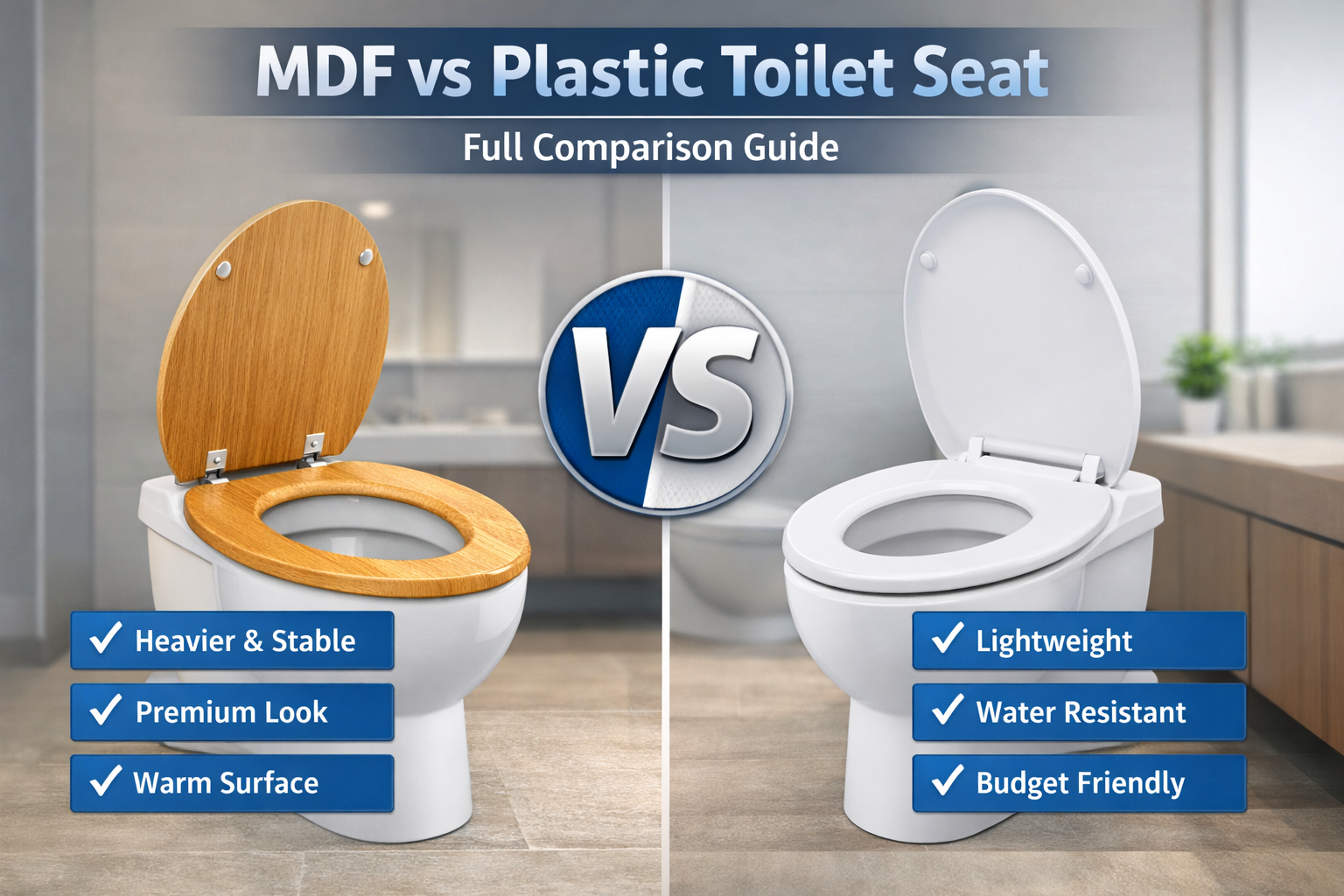
MDF- vs. muovinen wc-istuin: kumpi on parempi?
Kun valitaan wc-istuinta, monet ostajat esittävät saman kysymyksen: MDF- vs. muovinen wc-istuin — kumpi on parempi?
Nykyaikaisissa kylpyhuoneissa käytetään laajalti molempia materiaaleja, ja kummallakin on omat edut sovelluksesta riippuen. Muoviset wc-istuimet ovat kevyitä ja edullisia.
Ne ovat myös hyvin kosteudenkestäviä. MDF-wc-istuimet ovat painavampia ja vaksumpia. Ne antavat premium-näköisen ulkoasun.
Kotitalouksille, urakoitsijoille ja jakelijoille on olennaista ymmärtää näiden kahden materiaalin erot ennen ostopäätöksen tekemistä.
Tässä oppaassa vertailemme MDF- vs. muovinen wc-istuin yksityiskohtaisesti, mukaan lukien:
- Materiaalirakenne
- Kestävyys ja käyttöikä
- Mukavuus ja käyttäjäkokemus
- Huolto ja siivoaminen
- Hintaeroja
- Parhaat käyttösovellukset
Tämän artikkelin lopussa ymmärrät selvästi, mikä kylpyhuoneen istuimen materiaali sopii parhaiten sinun kylpyhuoneeseesi tai projektiisi.
MDF- vs. muovinen kylpyhuoneen istuin: Nopea vastaus
Jos vertaat MDF- vs. muovinen wc-istuin , paras vaihtoehto riippuu tarpeistasi.
- MDF-käymäläistuolit ovat painavampia, vaksumpia ja antavat premium-näköisemmän ulkoasun.
- Muoviset wc-istuimet ovat kevyitä, edullisia ja erinomaisen kosteudenkestäviä.
Useimmissa asuinkäyttöön tarkoitetuissa kylpyhuoneissa MDF-kylpyhuoneen istuimet tarjoavat paremman mukavuuden ja ulkoasun. Kaupallisissa ympäristöissä tai budjettiprojekteissa muoviset kylpyhuoneen istuimet ovat usein käytännöllisempi vaihtoehto.
Mitä on MDF-kylpyhuoneen istuin?
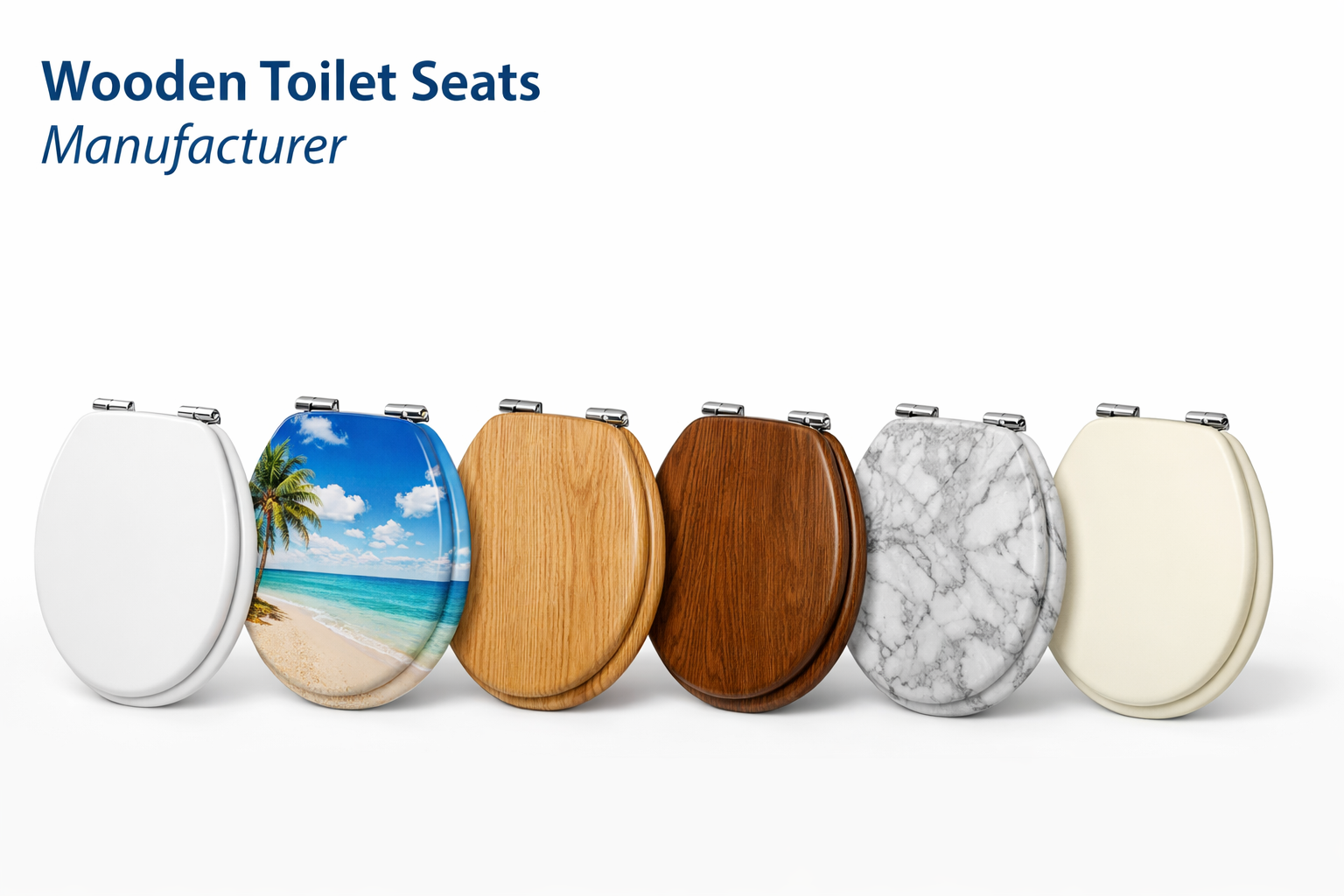
Valmistajat valmistavat MDF-istuimen (Medium Density Fiberboard, keskimäisen tiukkuuden kuitulevy) puristamalla puukuituja yhteen. Kuidut liitetään toisiinsa harmaalla ja kuumennetaan korkeassa paineessa. Tämä valmistusprosessi tuottaa tiukan ja kestävän materiaalin, jota käytetään yleisesti huonekaluissa ja kylpyhuoneen tuotteissa.
Kylpyhuoneen istuinten valmistuksessa valmistajat pinnoittavat MDF-istuimet useilla maalikerroksilla tai suojapinnoitteella. Tämä luo sileän ja vedenkestävän pinnan.
Koska MDF-istuimet ovat vahvasti rakennettuja ja niillä on koristeellinen pinta, monet ihmiset pitävät niitä premiumvalintana verrattuna perusmuovisiin istuimiin.
MDF-kylpyhuoneen istuinten edut
MDF-kylpyhuoneen istuimet tarjoavat useita tärkeitä etuja.
Vakaa ja kova tunne
Tiukka materiaali antaa istuimelle painavamman ja vakavamman tunteen istuessa.
Huippuluokan ulkonäkö
Maalattu pinta mahdollistaa valmistajien luoda elegantteja pintoja, jotka sopivat nykyaikaisiin kylpyhuoneen tyyliin.
MIKELISETTÄvä PINNAN
MDF-istuimet tuntuvat usein lämpimämmiltä kuin muovimateriaalit, erityisesti viileämmässä ympäristössä.
Kestävä rakenne
Korkealaatuiset MDF-istuimet kestävät vuosia päivittäistä käyttöä, kun ne on päällystetty asianmukaisesti.
Mahdolliset haitat
Vaikka MDF-kylpyhuoneen istuimilla on etunsa, niillä on myös joitakin rajoituksia.
Raskaampi paino
MDF-istuimet ovat painavampia kuin muoviset istuimet, mikä voi tehdä asennuksesta hieman vaikeampaa.
Pinnansuojaus vaaditaan
Jos pinnoite vaurioituu, MDF voi imeä kosteutta ajan myötä.
Nykyiset valmistustekniikat ovat kuitenkin huomattavasti parantaneet MDF-käymäläistuinten kosteudenkestävyyttä.
Mikä on muovinen wc-istuin?
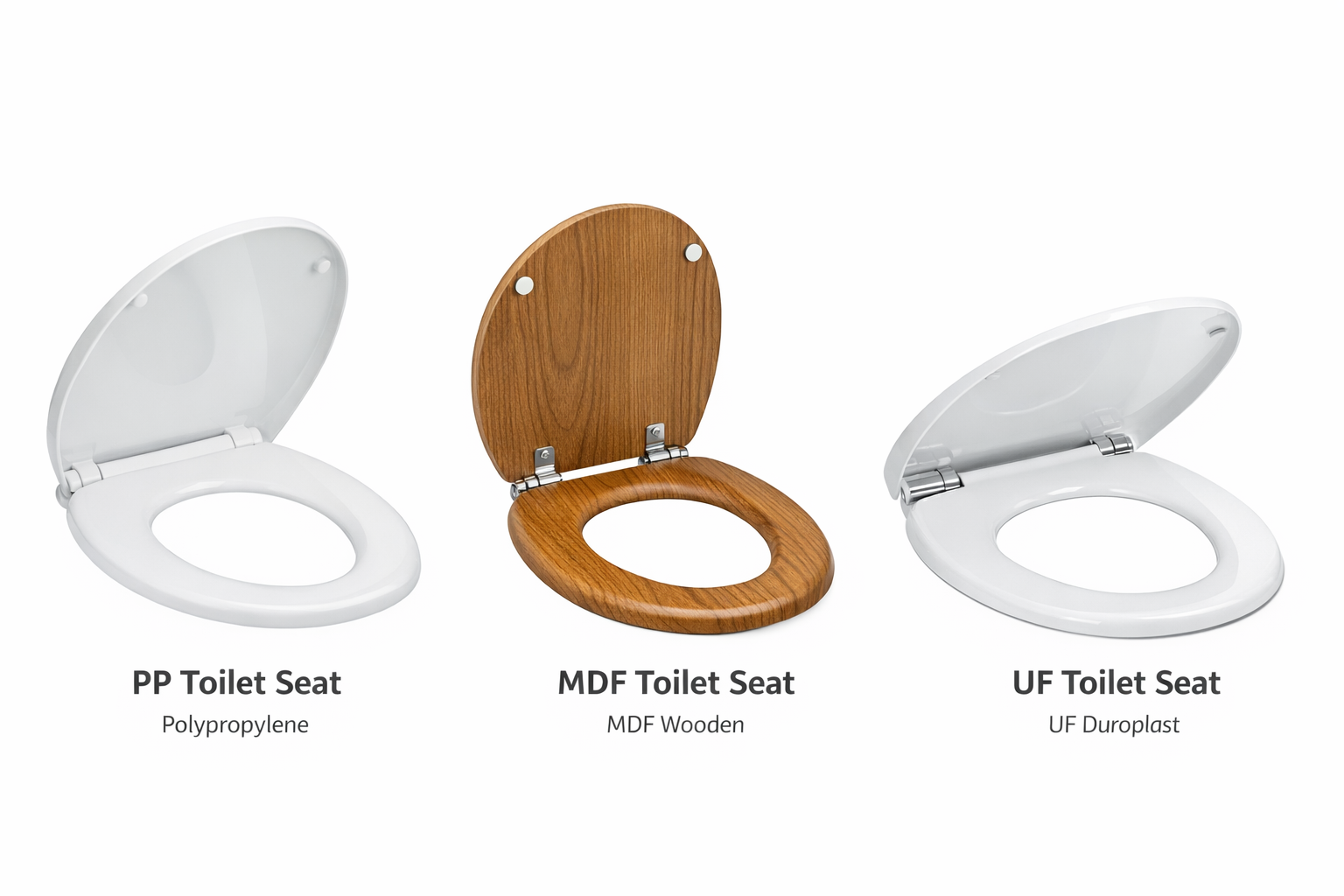
Valmistajat valmistavat yleensä muovinen wc-istuin polypropyleenistä (PP) tai muista termoplastisista materiaaleista käyttäen suurpainatusmenetelmää.
Tämä valmistusprosessi mahdollistaa laajan tuotannon johdonmukaisella laadulla ja alhaisemmalla kustannuksella.
Muoviset käymäläistuimet ovat yleisiä kotitalouksissa ja julkisissa kylpyhuoneissa. Ne ovat kevyitä, kestäviä ja helppokäyttöisiä.
Muovisten wc-istuinten edut
Muoviset käymäläistuimet tarjoavat useita käytännöllisiä etuja.
Kevyempi muotoilu
Muoviset istuimet ovat helppokäyttöisiä ja niiden asennus on helppoa niiden pienemmän painon vuoksi.
Erinomainen kosteuden vastustuskyky
Muovimateriaalit kestävät luonnollisesti vettä ja kosteutta, mikä tekee niistä ideaalin valinnan kylpyhuoneympäristöön.
Helppo huolto
Sileä muovipinta voidaan puhdistaa nopeasti tavallisilla kotitalouspuhdistimilla.
Edullinen hinta
Muoviset istuimet ovat yleensä edullisempia kuin MDF-istuimet.
Mahdolliset haitat
Muoviset wc-istuimet sisältävät myös joitakin haittapuolia.
Vähemmän kova tunne
Koska muovi on kevyempää, se saattaa tuntua vähemmän vankalta istuessa.
Yksinkertaisempi ulkonäkö
Perusmuoviset istuimet ovat usein minimalistisemmin suunniteltuja kuin maalatut MDF-istuimet.
MDF:n ja muovisen wc-istuimen vertailu: materiaalin rakenteen selitys
Jokaisen materiaalin sisäisen rakenteen ymmärtäminen auttaa selittämään niiden suorituskyvyn eroja.
| Ominaisuus | MDF-käymälänistuin | Muovinen wc-istuin |
|---|---|---|
| Materiaali | Tiivistetty puukuitu | Polypropyleenimuovi |
| Paino | Raskaampi ja vakaa | Kevyet |
| Mukavuutta | Lämpimämpi pinta | Hieman viileämpi |
| Ulkonäkö | Premium-maalinpinnalla | Yksinkertainen muovimainen ulkonäkö |
| Huolto | Edellyttää ehjää pinnoitetta | Helppo huolto |
| Kestävyys | Vahva rakenne | Joustava, mutta kestävä |
| Hinta | Keskihintaluokka | Budjettikynnyllinen |
MDF-rakenne
MDF-käymälänistuimet valmistetaan:
- tiivistetyt puukuidut
- harjattavat liima-aineet
- korkeapainekappaleen muovaus
Tämä prosessi tuottaa tiukkaa materiaalia, jolla on erinomainen vakaus.
Muovirakenne
Muoviset kylpyhuoneen istuimet valmistetaan seuraavista materiaaleista:
- polypropeenin (PP) pelletit
- injektiovalettutekniikkaan
- kevytrakenteinen suunnittelu
Materiaalin joustavuus auttaa estämään halkeamia ja pitää istuinta kevyenä.
MDF- ja muovinen kylpyhuoneen istuin: tärkeimmät erot
Seuraava taulukko yhteenvetää pääasiallisia eroja MDF- ja muovisten kylpyhuoneen istuinten välillä.
Molemmat materiaalit toimivat hyvin eri tilanteissa.
Kestävyyden vertailu
Kestävyys on yksi tärkeimmistä tekijöistä, kun valitaan wc-istuinta.
MDF-kestävyys
Koska MDF on tiukka materiaali, se tarjoaa vahvaa rakenteellista tukea ja vakautta. Korkealaatuiset MDF-istuimet voivat kestää useita vuosia asuinrakennuksissa käytettäessä.
Suojakalvot auttavat estämään naarmuja ja kosteusvaurioita.
Muovin kestävyys
Muoviset wc-istuimet ovat joustavia ja halkeamien kestäviä. Ne toimivat myös erinomaisesti kosteissa ympäristöissä.
Vaikka muoviset istuimet saattavat tuntua kevyemmilta, ne ovat erinomaisen kestäviä, kun niissä käytetään laadukkaita materiaaleja.
Mukavuus ja käyttäjäkokemus
Mukavuus on toinen keskeinen tekijä vertailussa MDF- vs. muovinen wc-istuin .
MDF-mukavuus
MDF-istuimet ovat painavampia ja tuntuvat vakavammilta. Maalattu pinta tuntuu myös yleensä lämpimämmältä kuin muovi.
Monet kotitaloudet suosivat MDF-käymälalautasia juuri tästä syystä.
Muovinen mukavuus
Muoviset istuimet tarjoavat riittävän mukavuuden arkipäiväiseen käyttöön, mutta ne voivat tuntua kylmemmiltä ja kevyemmilta verrattuna MDF-istuimiin.
Ihmiset pitävät usein muovisia istuimia käytännöllisinä ja riittävinä korkean käyttötaajuuden käymälöihin.
Huolto ja siivoaminen
Käytettävyyteen vaikuttavat myös huoltovaatimukset, jotka voivat vaikuttaa käymälalautasen materiaalin valintaan.
MDF-istuimen huolto
MDF-istuimet tulee puhdistaa säännöllisesti lievillä puhdistusaineilla. On tärkeää välttää suojaavan pinnoitteen vahingoittamista, jotta kosteus ei pääse tunkeutumaan sisään.
Muovisen istuimen huolto
Muoviset istuimet ovat erinomaisen helppoa puhdistaa. Koska muovi on ei-porous, se vastustaa luonnollisesti vettä ja tahroja.
Tämä tekee muovisista istuimista suosittuja kaupallisissa käymälöissä.
Hintavertailu
Hinta on usein ratkaiseva tekijä kylpyhuoneen istuimien valinnassa.
Muovisen kylpyhuoneen istuimen hinta
Muoviset istuimet ovat yleensä edullisin vaihtoehto, koska niiden valmistus tapahtuu tehokkaalla suurpainevalumallauksella.
Niitä käytetään yleisesti:
- vuokratalot
- liikerakennukset
- budjettirenovoinnit
MDF-kylpyhuoneen istuimen hinta
MDF-kylpyhuoneen istuimet kuuluvat yleensä keskitasoiselle hintaluokalle.
Monet ostajat valitsevat MDF-istuimet niiden premium-ulkonäön ja mukavuuden vuoksi.
Asennus ja yhteensopivuus
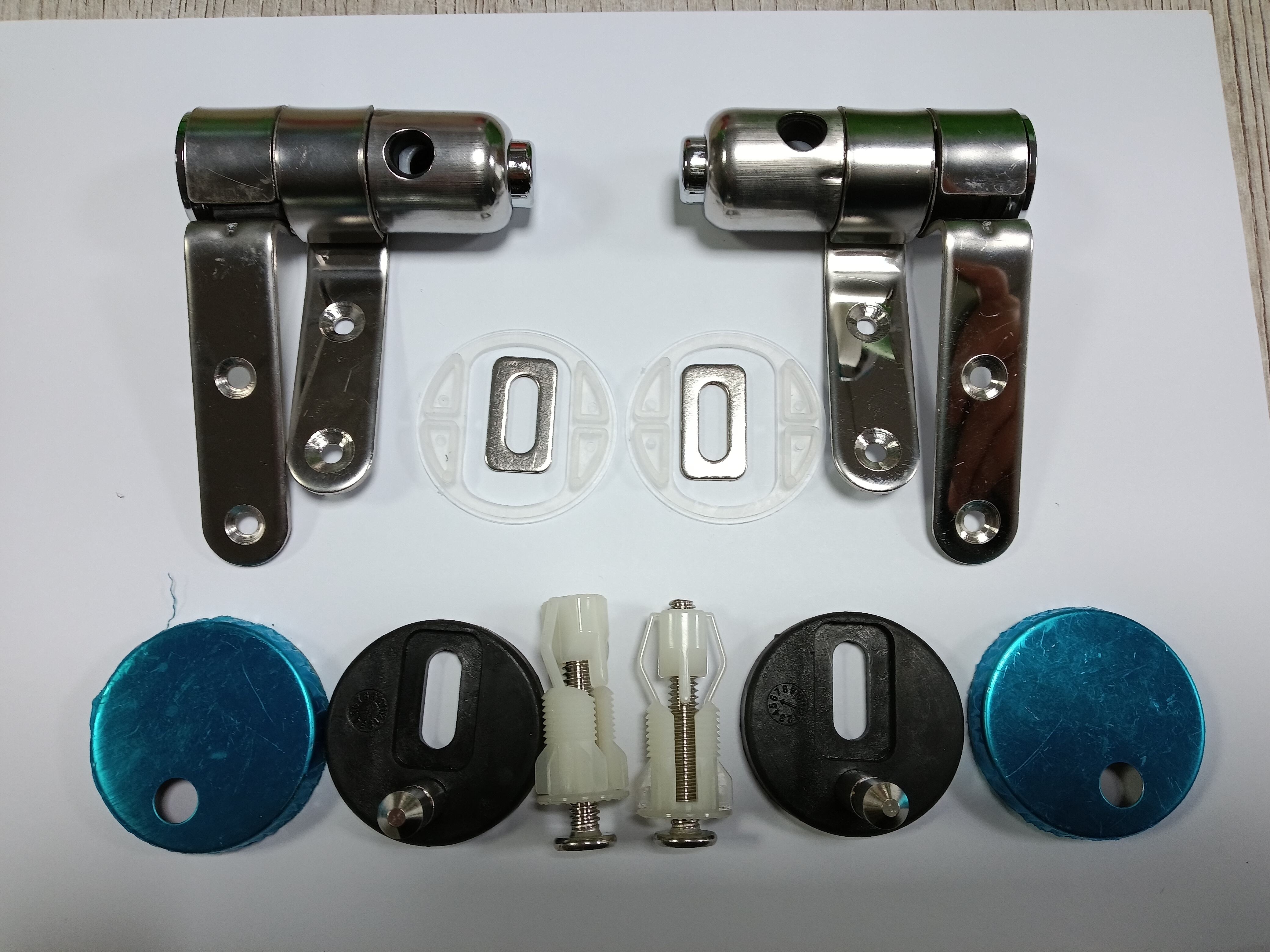
Sekä MDF- että muoviset kylpyhuoneen istuimet ovat yhteensopivia standardikokoisten kylpyhuoneen maljukkien kanssa.
Useimmat kylpyhuoneen istuimet on suunniteltu sopimaan:
- pyöreät vessamaljat
- pitkänomaisiin kylpyhuoneen maljukkiin
- standardi-nivelväli
Modernit istuimet sisältävät myös ominaisuuksia, kuten:
- pehmeästi sulkeutuvat pöylät
- nopea irrotusasennus
Nämä ominaisuudet parantavat käytettävyyttä ja käyttökelvollisuutta riippumatta materiaalista.
Miten valita oikea wc-istuimen materiaali
Valittaessa MDF- ja muovisia wc-istuimia tulee ottaa huomioon seuraavat tekijät.
Kylpyhuoneen ympäristö
Jos kylpyhuoneessa on korkea kosteus, muoviset istuimet saattavat toimia paremmin.
Käyttötiheys
Suurten käyttäjämäärien ympäristöissä, kuten toimistoissa tai julkisissa vessoissa, muovisia istuimia suositaan usein.
Mukavuusmieltymykset
Jos mukavuus ja vakaus ovat tärkeitä, MDF-istuimet voivat olla parempi valinta.
Talousarvio
Kustannusten kannalta herkille projekteille muoviset wc-istuimet tarjoavat edullisemman vaihtoehdon.
Parhaat käyttökohteet kullekin materiaalille
Asuinalueiden kylpyhuoneet
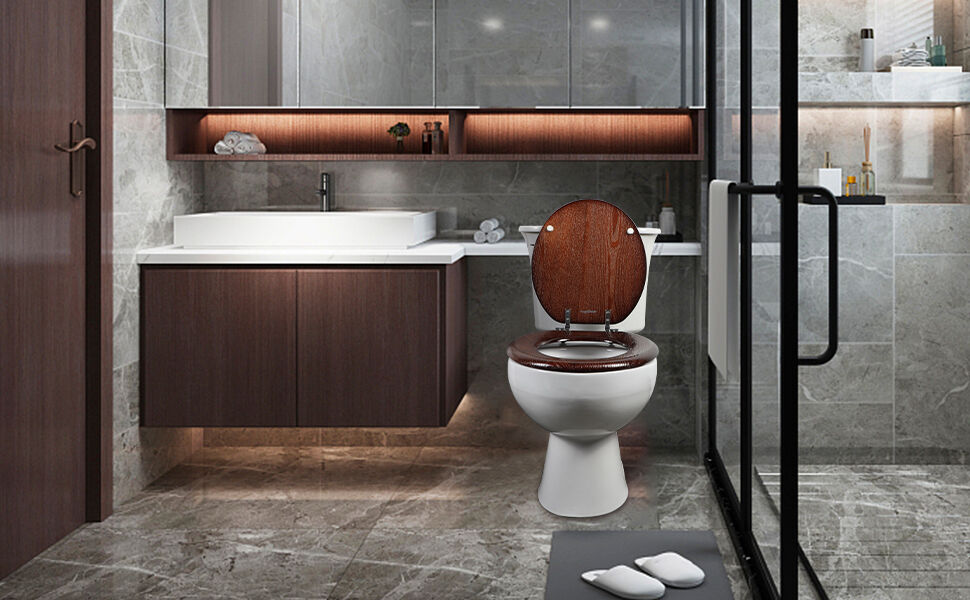
MDF-wc-istuimia käytetään yleisesti kotitalouksissa, koska ne tarjoavat mukavan ja koristeellisen pinnan.
Hotellit ja asunnot
Sekä MDF- että muoviset istuimet voidaan käyttää riippuen suunnittelusta ja budjetista.
Liikerakennukset
Muovisia istuimia suositaan yleensä, koska niitä on helpompi huoltaa ja vaihtaa.
Tukkumyynti
Jakelijat tarjoavat usein sekä MDF- että muovisia istuimia täyttääkseen erilaisten asiakkaiden vaatimukset.
Johtopäätös
Sekä MDF- että muoviset wc-istuimet omistavat omat vahvuutensa ja käytännölliset sovellusalueensa.
MDF-käymäläistuolit tarjoavat premium-ulkoasun, raskaamman rakenteen ja mukavan istumakokemuksen.
Muoviset wc-istuimet tarjoavat erinomaisen kostuudenkestävyyden, helpon huollon ja edullisemman hinnan.
Ymmärrä erojen merkitys MDF ja muovinen wc-istuin s auttaa sinua valitsemaan parhaan vaihtoehdon. Kotitalouksien omistajat, urakoitsijat ja jakelijat voivat käyttää tätä tietoa kylpyhuoneisiin tai muihin projekteihin.
Ennen päätöksen tekemistä harkitse asennuspaikkaa, budjettiasi ja mukavuustarpeitasi. Tämä auttaa sinua valitsemaan parhaan wc-istuimen materiaalin.
UKK MDF- ja muovipohjaisten wc-istuinten eroista
Ovatko MDF-pohjaiset wc-istuimet parempia kuin muoviset?
MDF-pohjaiset wc-istuimet antavat usein vakaamman ja premium-tyyppisen tuntemuksen niiden painavamman rakenteen vuoksi. Muoviset istuimet ovat kuitenkin kostuudenkestävämpiä ja helpompia huoltaa.
Kestävätkö MDF-pohjaiset wc-istuimet pidempään?
Korkealaatuiset MDF-istuimet voivat kestää monia vuosia, kun ne on päällystetty asianmukaisesti. Muoviset istuimet saattavat kestää pidempään erittäin kosteissa ympäristöissä.
Ovatko muoviset wc-istuimet hygienisempiä?
Muoviset wc-istuimet ovat ei-kiinteitä ja niiden puhdistaminen on helppoa, mikä tekee niistä erinomaisen hygienisiä arkipäivän käyttöön.
Mikä wc-istuimen materiaali on paras kaupallisissa kylpyhuoneissa?
Kaupallisissa kylpyhuoneissa suositaan yleensä muovisia wc-istuimia, koska ne ovat kevyitä, kestäviä ja niiden vaihtaminen on helppoa.
Sisällysluettelo
- MDF- vs. muovinen wc-istuin: kumpi on parempi?
- MDF- vs. muovinen kylpyhuoneen istuin: Nopea vastaus
- Mitä on MDF-kylpyhuoneen istuin?
- Mikä on muovinen wc-istuin?
- MDF:n ja muovisen wc-istuimen vertailu: materiaalin rakenteen selitys
- MDF- ja muovinen kylpyhuoneen istuin: tärkeimmät erot
- Kestävyyden vertailu
- Mukavuus ja käyttäjäkokemus
- Huolto ja siivoaminen
- Hintavertailu
- Asennus ja yhteensopivuus
- Miten valita oikea wc-istuimen materiaali
- Parhaat käyttökohteet kullekin materiaalille
- Johtopäätös
- UKK MDF- ja muovipohjaisten wc-istuinten eroista