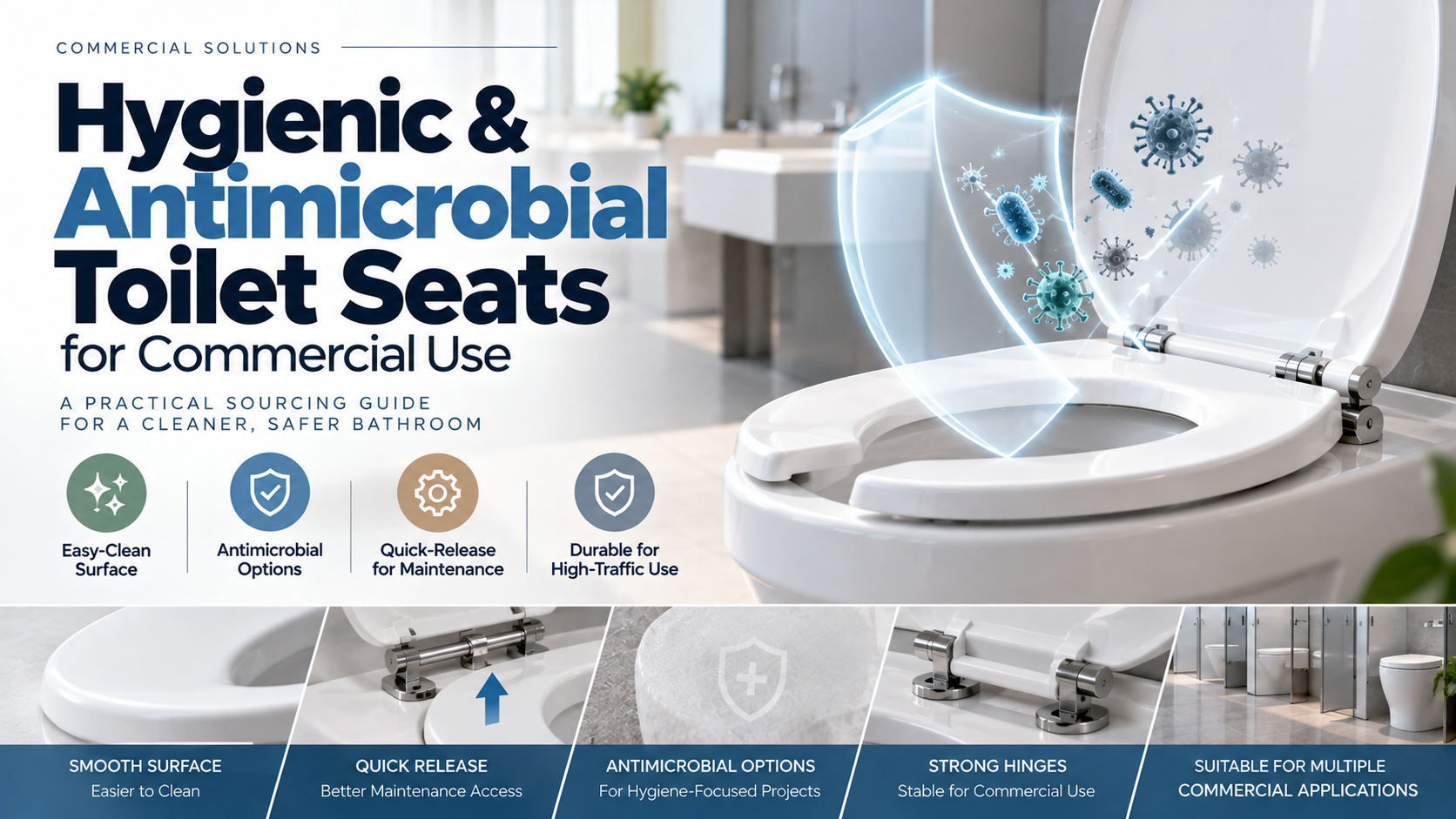
Hygienic & Antimicrobial Toilet Seats for Commercial Use
For hotels, schools, offices, public buildings, healthcare-related environments and facility-management programs, toilet-seat hygiene is a product-selection issue as well as a cleaning-process issue.
Buyers often request an “antimicrobial toilet seat,” but that phrase can mean different things. It may refer to a smooth easy-clean surface, a material containing an additive, a removable quick-release seat or a product supported by specific test evidence.
A responsible commercial sourcing process defines the required performance first, then confirms whether the selected material, construction and documentation support that requirement.
What Makes a Toilet Seat Hygienic?
A hygienic toilet seat is not defined by one material or one marketing claim. In commercial use, hygiene depends on several practical factors:
Smooth, cleanable surface finish
Low number of dirt-trapping gaps
Appropriate seat and lid geometry
Easy access around the hinge area
Quick-release function where suitable
Resistance to the intended cleaning routine
Stable bumpers and fixing parts
Clear maintenance instructions
Correct installation on the ceramic bowl
A seat with a smooth surface but an inaccessible hinge area may be harder to maintain than a seat with a practical quick-release design.
Antimicrobial, Antibacterial and Easy-Clean: What Is the Difference?
These terms should not be treated as interchangeable.
| Term | What it may describe | What buyers should request |
|---|---|---|
| Easy-clean toilet seat | Surface or design that supports routine cleaning | Cleaning instructions and product design review |
| Quick-release toilet seat | Seat can be removed from hinges for access | Locking security and removal process |
| Antimicrobial toilet seat | Product material or surface may include an antimicrobial additive | Exact claim, product scope and supporting evidence |
| Antibacterial toilet seat | May refer to a claimed effect against specified bacteria | Test method, report date and applicability |
| Hygienic toilet seat | Broad product-positioning term | Defined functional and maintenance requirements |
Do not use an antimicrobial or antibacterial claim in retail packaging, a tender document or a website without confirming the applicable regulations and evidence for the exact destination market.
Material Selection for Commercial Hygiene
The most suitable material depends on the project environment, cleaning process and target price.
| Material | Typical commercial consideration |
|---|---|
| PP plastic | Lightweight, practical and commonly used for standard commercial programs |
| UF / Duroplast | Harder surface feel and a refined appearance for higher-spec projects |
| Stainless steel | Used in selected specialist, institutional or vandal-resistant applications |
| MDF / molded wood | More suitable for hospitality or decorative programs than high-frequency public washrooms |
A material should be approved as part of the complete seat, including the hinge, bumpers and fixing kit.
Why Surface Finish Matters
A glossy, matte or textured finish can affect how a seat looks, feels and is cleaned.
Commercial buyers should review:
Surface uniformity
Molded edges and seams
Visible pores or irregularities
Resistance to normal cleaning practice
Staining risk from the expected environment
Appearance after repeated cleaning
Color consistency across seat, lid and hinge covers
For projects using custom colors, printing or decorative finishes, sample approval should include a cleaning and appearance review of the final surface.
Quick Release for Easier Cleaning
A quick-release toilet seat can help maintenance staff access the ceramic around the fixing area. It can be useful in hotels, serviced apartments, retail washrooms and selected public facilities.
Before selecting quick release, confirm:
Whether the seat locks securely after reinstallation
Whether release buttons are easy to identify and operate
Whether removal can be completed without tools
Whether frequent removal is suitable for the project
Whether staff will receive correct cleaning instructions
Whether the hinge remains aligned after repeated removal
Quick release should improve maintenance access without reducing stability or creating misuse risk.
Hinge and Fixing Areas Need Attention
The hinge area is often the most difficult area to clean.
A commercial toilet-seat specification should define:
Hinge type and material
Visible hinge-cover design
Top-fix or bottom-fix installation
Adjustment range
Bumper configuration
Quick-release requirement
Replacement-hinge availability
Cleaning access around the rear ceramic platform
For facilities with high user volume, the hinge and fixing system should be selected for both durability and routine maintenance.
How to Review Antimicrobial Product Claims
If a buyer requires an antimicrobial or antibacterial claim, ask the supplier to clarify:
What is the exact product claim?
Does it apply to the seat, lid or complete product?
Does it apply to the material, coating or additive?
Which product model and color were tested?
What test method was used?
Who issued the report?
When was the report issued?
Does the evidence apply to the destination market?
What wording is permitted on packaging and marketing materials?
Does the claim remain valid after normal cleaning and use?
A generic certificate image is not enough to support a product claim.
Commercial Applications
| Application | Typical priority |
|---|---|
| Hotel guest rooms | Appearance, easy cleaning, quiet close and replacement support |
| Schools | Durable fixing, practical cleaning and stable fit |
| Offices | Standardized model, easy maintenance and project packaging |
| Public washrooms | Robust materials, suitable hinge system and maintenance access |
| Healthcare-related projects | Intended-use review, cleaning protocol and required documentation |
| Residential developments | Ceramic compatibility, appearance and repeat-order consistency |
The exact specification should reflect the use environment rather than using the same seat across every project.
Commercial Sourcing Checklist
Before bulk purchase, confirm:
Building type and intended use
Toilet-bowl drawing or model
Product shape and dimensions
Material and surface finish
Required cleaning method
Hinge and fixing-kit code
Top-fix or bottom-fix installation
Quick-release requirement
Required claim wording and evidence
Packaging and installation instructions
Sample-installation approval
Change-control process for material or hardware substitutions
How BOFAN Supports Commercial Toilet Seat Programs
BOFAN supports PP, UF and molded-wood toilet-seat programs for distributors, retail buyers, hotels, projects and bathroom brands. Depending on the selected model, the team can discuss material options, easy-clean configurations, quick-release functions, hinge systems, packaging and sample approval.
Any antimicrobial, antibacterial or market-specific product claim should be confirmed for the exact product, documentation and destination market.
CTA: Request a Commercial Toilet Seat Review
Planning a hygienic toilet-seat program for a hotel, public building or commercial project? Send BOFAN your ceramic details, material requirement, cleaning routine, hinge preference, quantity and destination. Our team can help review a suitable product configuration.
FAQ
Is every smooth toilet seat antimicrobial?
No. A smooth surface may be easier to clean, but it does not automatically support an antimicrobial claim.
Is UF/Duroplast more hygienic than PP?
Both materials can be suitable when the product has an appropriate surface finish, construction and cleaning process. Material selection should reflect the project requirement.
Are quick-release toilet seats suitable for commercial use?
They can be suitable where maintenance access is valuable. The locking system, cleaning process and intended environment should be reviewed first.
What evidence should buyers request for an antibacterial toilet-seat claim?
Request the exact claim, applicable test method, tested product description, report date, issuing organization and confirmation of market applicability.
Can BOFAN provide antimicrobial toilet seats?
BOFAN can discuss hygiene-focused material, surface, hinge and quick-release requirements. Any antimicrobial claim or related documentation must be confirmed for the specific product and destination market.
Table of Contents
- Hygienic & Antimicrobial Toilet Seats for Commercial Use
- What Makes a Toilet Seat Hygienic?
- Antimicrobial, Antibacterial and Easy-Clean: What Is the Difference?
- Material Selection for Commercial Hygiene
- Why Surface Finish Matters
- Quick Release for Easier Cleaning
- Hinge and Fixing Areas Need Attention
- How to Review Antimicrobial Product Claims
- Commercial Applications
- Commercial Sourcing Checklist
- How BOFAN Supports Commercial Toilet Seat Programs
- FAQ