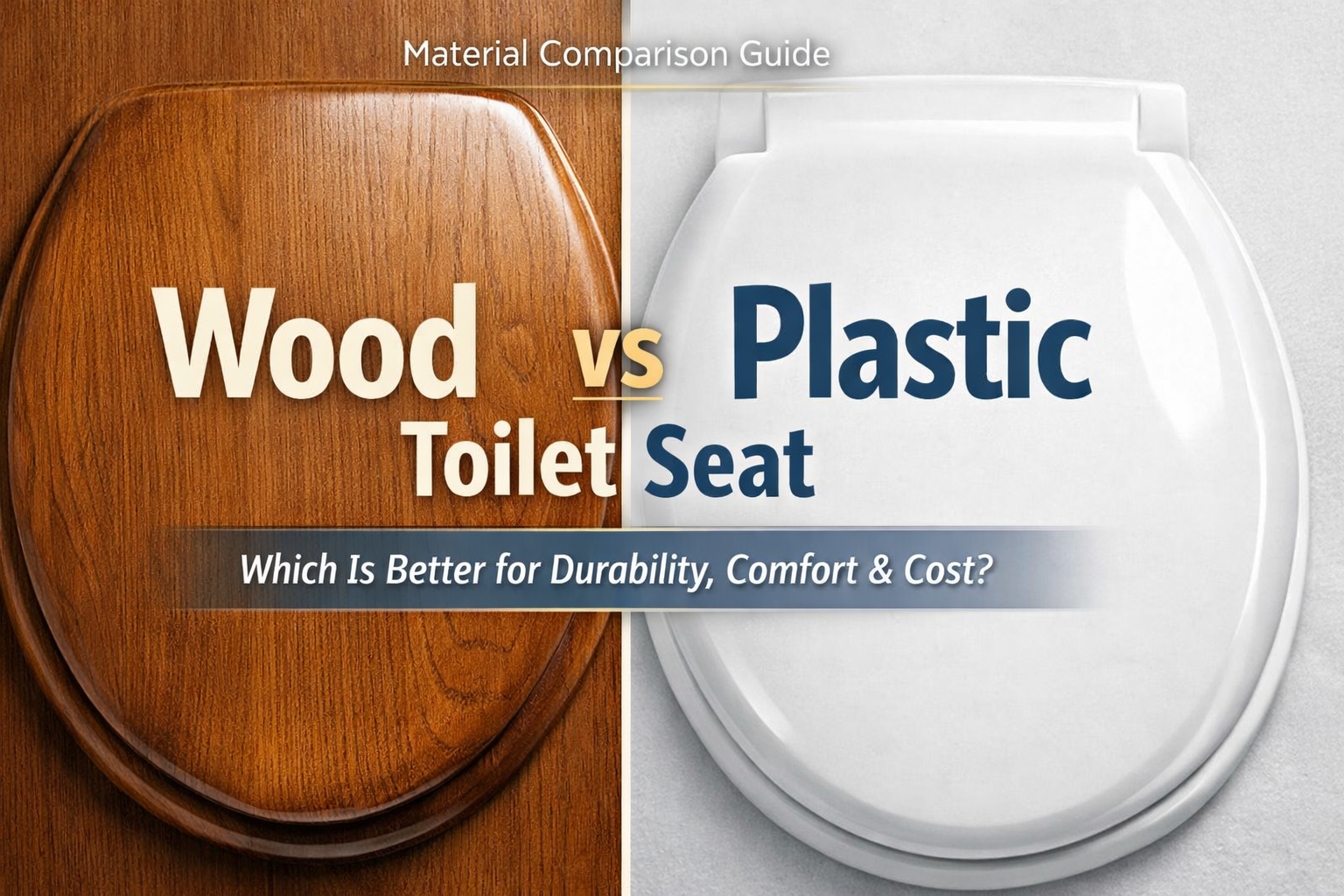
Ahşap mı Plastik mi Tuvalet Kapağı: Hangisi Banyonuz için Daha Uygun?
Bir ahşap veya plastik tuvalet koltuğu , birçok alıcı hangisinin daha uzun ömürlü olduğunu sorar. Aynı zamanda konforu ve uzun vadeli değeri de değerlendirirler. Her iki seçenek de konut ve ticari pazarlarda yaygın olarak mevcuttur; ancak yapıları, görünüşleri, bakım gereksinimleri ve genel performansları açısından önemli ölçüde farklılık gösterir.
Bu kılavuzda, ahşap ve plastik tuvalet kapaklarını ayrıntılı olarak birbirleriyle karşılaştırıyoruz. Dayanıklılık, hijyen, konfor, maliyet ve en uygun kullanım alanlarını ele alıyoruz. Böylece ihtiyaçlarınıza en çok uygun kapağı seçmenize yardımcı oluruz.
Ahşap Tuvalet Koltuğu Nedir?
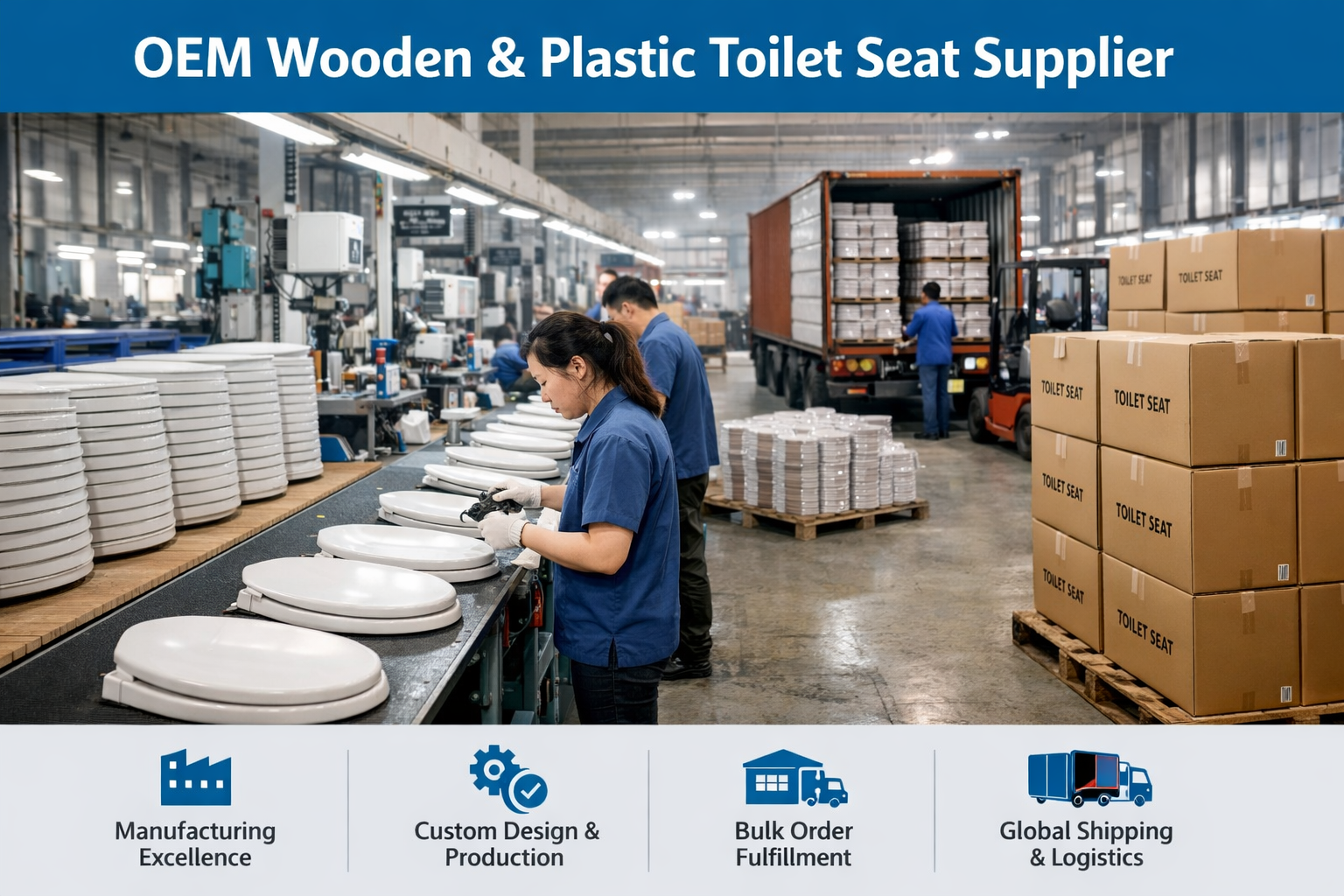
Bir ahşap tuvalet kapağı genellikle aşağıdaki malzemelerden birinden üretilir:
- MDF (Orta Yoğunluklu Fiber Tahta)
- Kalıplanmış Ahşap
- Katı ahşap
- Kompozit çekirdek üzerine ahşap kaplama
Bunlar arasında, kalıplı Ahşap Tuvalet Koltukları ve MDF tuvalet kapakları küresel pazarlarda en yaygın olanlarıdır. Bu kapaklar, yüksek basınç altında odun lifleri sıkıştırılarak üretilir. Ardından yüzeyi vernik, kaplama veya laminat ile kaplanır ve işlenir.
Ahşap Tuvalet Koltuklarının Temel Özellikleri
- Daha ağır ve daha sağlam bir his verir
- Daha sıcak yüzey sıcaklığı
- Premium Estetik Değer
- Yumuşak kapanış menteşeleriyle uyumludur
- Boyali, baskılı veya laminat kaplamalı olarak mevcuttur
Birçok yüksek kaliteli ahşap tuvalet koltuğu artık şunları da içerir yumuşak -kapat kapakların çarpmasını önlemek için hidrolik veya yumuşatılmış menteşeler kullanır.
Ahşap Tuvalet Koltuklarının Avantajları
- Zarif ve üst düzey görünüm
- Kolay Oturma Deneyimi
- Güçlü yapısal stabilite
- Özelleştirilebilir kaplamalar ve renkler
Potansiyel dezavantajlar
- Uygun şekilde kaplanmadığı takdirde uzun süreli nem maruziyetine duyarlıdır
- Daha ağır ağırlık
- Temel plastik modellere kıyasla biraz daha yüksek maliyet
Plastik Tuvalet Koltuğu Nedir?
Plastik tuvalet koltukları genellikle şu malzemelerden üretilir:
- Polipropilen (pp)
- Termoset plastik (UF / Duroplast)
Bu koltuklar enjeksiyon kalıplama teknolojisiyle üretilir; bu nedenle hafif ağırlıklı, maliyet verimli ve yüksek nem direncine sahiptir.
Plastik Tuvalet Koltuklarının Temel Özellikleri
- Hafif yapı
- Düz yüzey
- Suya dayanıklı
- Geniş renk seçeneği
- Kolay bakım
Modern plastik tuvalet koltukları ayrıca şunları da içerebilir: yumuşak kapanma teknolojisi , hızlı sökülme menteşeleri ve antibakteriyel kaplamalar.
Plastik Tuvalet Koltuklarının Avantajları
- Bütçe dostu
- Nem direnci
- Temizlenmesi Kolay
- Yüksek nem oranına sahip ortamlar için uygundur
Potansiyel dezavantajlar
- Daha hafif hissettiren yapı daha az lüks görünmesine neden olabilir
- Yüzey zamanla çizilebilir
- Ahşap kaplamalara kıyasla daha az tasarım derinliği sunar
Ahşap ile Plastik Tuvalet Kapağı Karşılaştırması: Temel Farklar
Aşağıda ahşap ve plastik tuvalet kapağı seçenekleri arasında doğrudan bir karşılaştırma yer almaktadır:
| Özellik | Ahşap tuvalet kapağı | Plastik tuvalet koltuğu |
|---|---|---|
| Ağırlık | Daha ağır, sağlam bir his verir | Hafif |
| Rahatlık | Daha sıcak yüzey | Dokunulduğunda daha serin |
| Dış görünüş | Lüks, doğal görünümlü | Modern, sade |
| Dayanıklılık | Güçlü ancak nem hassas | Son derece nem dirençli |
| Bakım | Uygun mühürleme gerektirir | Temizlemesi çok kolay |
| Gürültü | Genellikle yumuşak kapanma ile birlikte kullanılır | Yumuşak kapanma ile mevcuttur |
| Fiyat | Orta ila yüksek fiyat aralığı | Bütçe dostu ila orta fiyat aralığı |
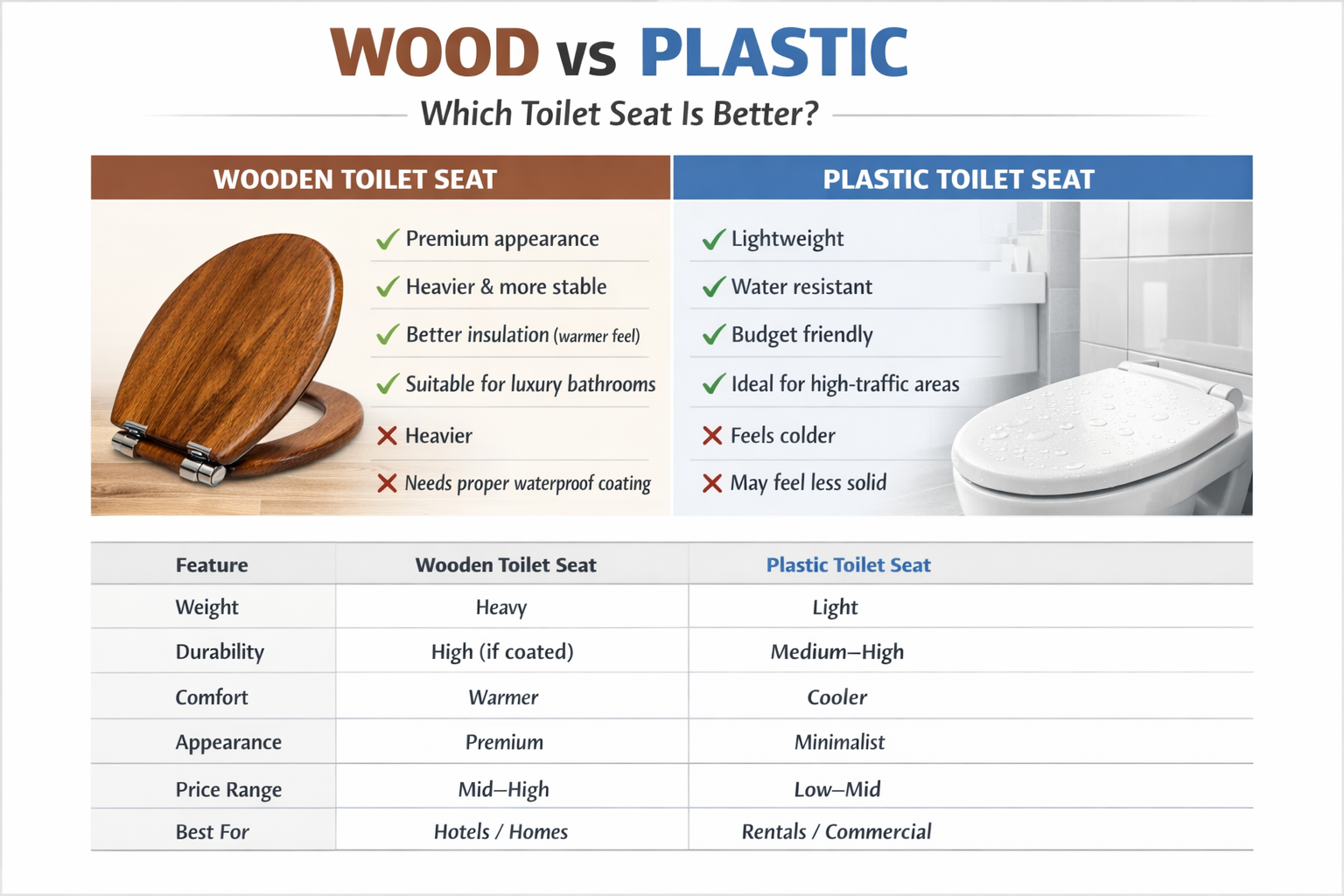
Her iki malzeme de iyi performans gösterir — daha iyi seçim, kullanım amaçlarına ve ortama bağlıdır.
Dayanıklılık: Hangisi Daha Uzun Sürer?
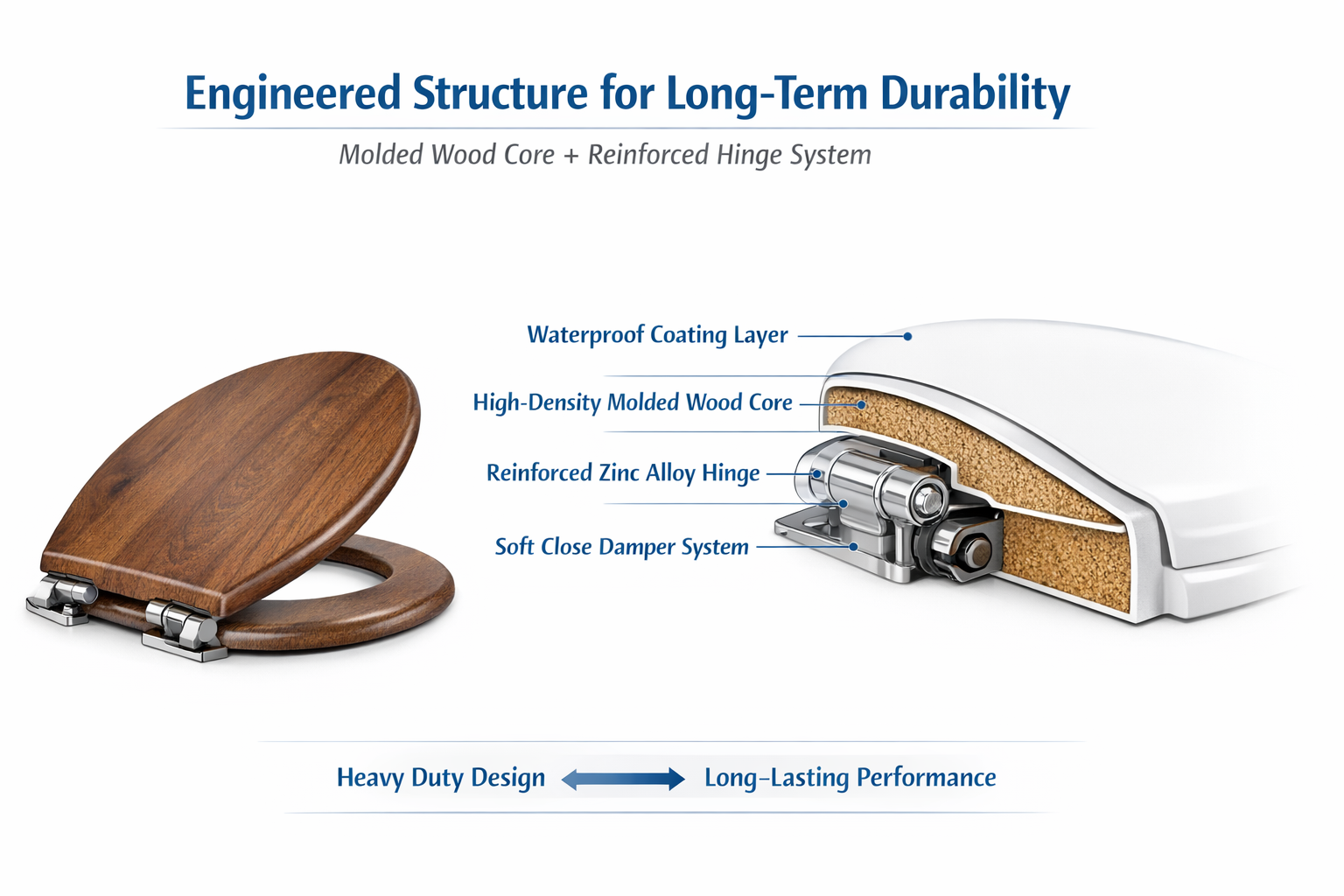
Dayanıklılık, ahşap ile plastik tuvalet kapağı tartışmasında en önemli faktörlerden biridir.
Yüksek kalitede kalıplı Ahşap Tuvalet Kapağı uygun şekilde sızdırmazlık yapıldığında normal konut kullanımında 3–5 yıl dayanabilir. Ticari ortamlarda dayanıklılık, büyük ölçüde menteşe kalitesine ve nem maruziyetine bağlıdır.
Plastik tuvalet kapakları genellikle kalınlığına ve menteşe dayanıklılığına bağlı olarak 2–4 yıl dayanır. Termoset (UF) modeller, standart PP’ye kıyasla daha dayanıklıdır.
Ömür Üzerinde Etkili Olan Temel Faktörler
- Menteşe kalitesi (yumuşak kapanma sistemleri darbe hasarını azaltır)
- Kullanım sıklığı
- Bekleyen suya maruziyet
- Yüzey kaplamasının bütünlüğü
Otel veya yüksek trafikli ortamlar için, malzeme türünden daha fazla önem taşıyan unsurlar, güçlendirilmiş menteşeler ve kalite kontrolüdür.
Konfor ve Estetik Çekicilik
Ahşap ve plastik tuvalet kapağı konforunu karşılaştırırken ahşap kapaklar genellikle daha sıcak ve daha kararlı hissettirir.
Ahşap koltuklar şu alanlarda tercih edilir:
- Lüks banyolar
- Klasik veya geleneksel iç mekân tasarımı
- Yüksek düzeyde konaklama projeleri
Plastik koltuklar şu alanlarda tercih edilir:
- Modern Minimalist Tasarım
- Kiralık emlak
- Bütçe odaklı projeler
Estetik açıdan bakıldığında ahşap tuvalet koltukları, aşağıdaki gibi daha zengin tasarım olanakları sunar:
- Ahşap dokusu kaplamalar
- Boyalı yüzeyler
- Basılı desenler
- Sunta dokuları
Hijyen ve Bakım Karşılaştırması
Hem ahşap hem de plastik tuvalet koltukları, doğru şekilde üretilirse yüksek hijyen standartlarını koruyabilir.
Plastik tuvalet koltukları doğal olarak suya dayanıklıdır ve temizlemesi kolaydır. Birçok model şu özellikleri içerir:
- Antibakteriyel kaplamalar
- Hızlı sökülme menteşe sistemleri
- Pürüzsüz kenar tasarımları
Ahşap tuvalet koltukları, su emilimini önlemek için uygun yüzey mühürleme gerektirir. Ancak modern laminat ahşap tuvalet koltukları nem riskini önemli ölçüde azaltır.
Hızlı Sökülme Avantajı
Her iki malzeme de kullanabilir: hızlı sökülme tuvalet koltuğu menteşeleri . Bunlar, derin temizlik için kolay sökülmesine olanak tanır. Bu, evlerde ve iş yerlerinde önemlidir.
Fiyat Karşılaştırması: Ahşap vs Plastik Tuvalet Koltuğu
Fiyatlar, tasarım, menteşe kalitesi ve yüzey kaplamasına göre değişir.
Perakende Fiyat Aralığı (Genel Pazar)
- Ahşap tuvalet kapağı: Orta ila yüksek fiyat aralığı
- Plastik tuvalet kapağı: Bütçe dostu ila orta fiyat aralığı
Toptan Satış Dikkat Edilmesi Gerekenler
Toplu alım yapanlar için ahşap tuvalet kapağı fiyatı şu faktörlere bağlıdır:
- Malzeme türü (MDF karşılaştırması ile katı ahşap)
- Yüzey bitimi
- Menteşe sistemi (standart karşılaştırması ile yumuşak kapanma)
- Sipariş miktarı
Plastik tuvalet kapakları genellikle daha düşük giriş fiyatları sunar ancak bazı pazarlarda premium algısı eksik olabilir.
Farklı Senaryolar İçin Hangisi Daha Uygun?
Ahşap mı plastik mi tuvalet kapağı — hangisi daha iyidir? sorusunun cevabı, kullanım bağlamına bağlıdır.
Ev Banyoları İçin
Her ikisi de iyi çalışır. Ahşap kapaklar daha fazla konfor ve estetik sunar; plastik kapaklar ise temizliği kolaylaştırır.
Kiralık Mülkler İçin
Plastik kapaklar, maliyet verimliliği ve nem direnci nedeniyle genellikle tercih edilir.
Otel İçin
Birçok otel, daha üst düzey bir görünüm için kalıplı Ahşap Tuvalet Koltukları tercih eder. Yumuşak kapanma sistemleri neredeyse zorunludur.
Ticari kullanım için
Endüstriyel sınıf menteşelerle donatılmış dayanıklı plastik veya takviyeli kalıplı ahşap kapaklar önerilir.
Çevresel Etki Dikkate Alınmalı
Çevresel sürdürülebilirlik giderek daha önemli hale geliyor.
Ahşap tuvalet koltukları şu malzemelerden yapılabilir:
- FSC sertifikalı ahşap
- Bambu Lifi Kompoziti
- Çevre dostu kalıplı ahşap malzemeler
Plastik koltuklar geri dönüştürülebilir PP malzemeleri içerebilir, ancak üretim standartlarına büyük ölçüde bağlıdır.
Çevre bilinci yüksek alıcılar için malzeme kaynağıyla ilgili şeffaflık, yalnızca malzeme türünden daha fazla önem taşır.
İyiler ve Kötüler Özeti
Ahşap tuvalet kapağı
Avantajlar
- Premium görünüm
- Daha sıcak dokunuş
- Özelleştirilebilir Kaplamalar
Dezavantajlar
- Yetersiz mühürlendiyse nem hassasiyeti gösterir
- Daha yüksek maliyet
Plastik tuvalet koltuğu
Avantajlar
- Ucuz
- Suya dayanıklı
- Hafif
Dezavantajlar
- Daha az lüks dokunuş
- Yüzey zamanla çizilebilir
SSS: Ahşap vs Plastik Tuvalet Koltuğu
Ahşap bir tuvalet kapağı, plastikten daha dayanıklı mıdır?
Yüksek kaliteli kalıplı ahşap kapaklar, özellikle güçlendirilmiş menteşelerle birlikte oldukça dayanıklıdır. Ancak plastik kapaklar sürekli nem maruziyetine karşı daha dirençlidir.
Ahşap bir tuvalet kapağı kolayca çatlar mı?
Düzgün üretilmiş ahşap klozet kapakları normal kullanımda nadiren çatlar. Çatlama genellikle su hasarı veya yetersiz yalıtım nedeniyle meydana gelir.
Plastik tuvalet kapakları daha ucuz mudur?
Evet, plastik tuvalet kapaklarının üretim maliyetleri genellikle daha düşüktür; bu nedenle çoğu pazarda daha uygun fiyatlıdır.
Otel için hangisi daha uygundur — ahşap mı yoksa plastik mi?
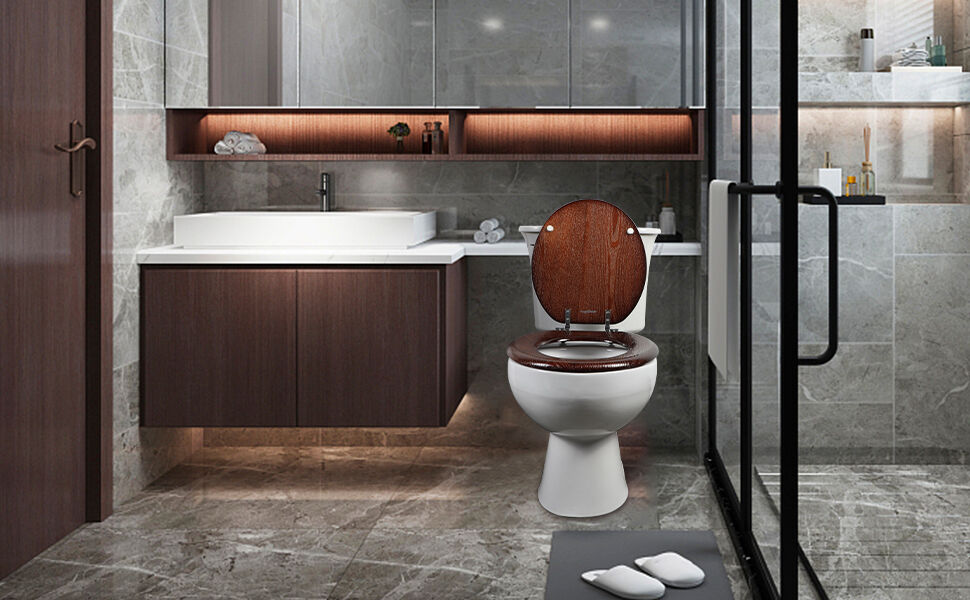
Birçok otel, premium görünüm ve dokunuş elde etmek amacıyla kalıplı ahşap tuvalet kapakları tercih eder.
Ayrıca gürültüyü azaltmak için yumuşak kapanışlı menteşeler kullanırlar.
Sonuç: Ahşap mı Yoksa Plastik mi Tuvalet Kapağı — Hangisini Seçmelisiniz?
Bir ahşap vs plastik klozet kapağı sonuçta önceliklerinize bağlıdır: tasarım, dayanıklılık, maliyet ya da bakım.
Rahatlık, estetik görünüm ve lüks bir banyo tarzı istiyorsanız, kalıplı ahşap veya MDF tuvalet kapağı seçin. Nem direnci, kolay bakım ve daha düşük maliyet önceliğinizse plastik tuvalet kapakları pratik bir çözümdür.
Toplu satın alma veya özel projeler için deneyimli bir tuvalet kapağı üreticisiyle çalışın.
Bu, daha iyi kalite kontrolü, menteşe performansı ve uzun vadeli değer sağlamanıza yardımcı olur.
Bu, herhangi bir malzeme için geçerlidir.
İçindekiler
- Ahşap mı Plastik mi Tuvalet Kapağı: Hangisi Banyonuz için Daha Uygun?
- Ahşap Tuvalet Koltuğu Nedir?
- Plastik Tuvalet Koltuğu Nedir?
- Ahşap ile Plastik Tuvalet Kapağı Karşılaştırması: Temel Farklar
- Dayanıklılık: Hangisi Daha Uzun Sürer?
- Konfor ve Estetik Çekicilik
- Hijyen ve Bakım Karşılaştırması
- Fiyat Karşılaştırması: Ahşap vs Plastik Tuvalet Koltuğu
- Farklı Senaryolar İçin Hangisi Daha Uygun?
- Çevresel Etki Dikkate Alınmalı
- İyiler ve Kötüler Özeti
- SSS: Ahşap vs Plastik Tuvalet Koltuğu
- Sonuç: Ahşap mı Yoksa Plastik mi Tuvalet Kapağı — Hangisini Seçmelisiniz?